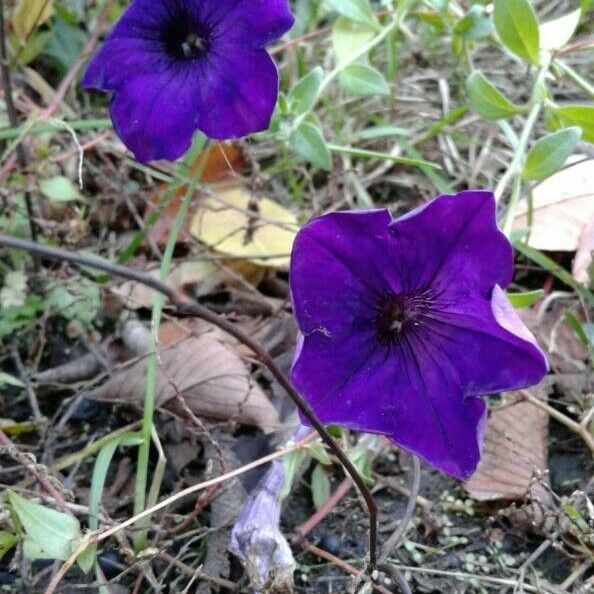
Plant Overview
Often called the Thread-leaf Morning Glory, Ipomoea capillacea is the delicate, "minimalist" cousin of the common garden vine. Native to the rocky grasslands of the Southwestern United States and Mexico, it swaps the broad, heart-shaped leaves of its relatives for fine, needle-like foliage. It is a resilient perennial that hides a sturdy, water-storing secret beneath the soil.
🔍 How to Identify
- 🌿 The Foliage: The most distinct feature is the leaves, which are deeply divided into very thin, thread-like segments, giving the plant a feathery or grassy appearance.
- 🌸 The Bloom: Small but vibrant funnel-shaped flowers, typically in shades of lavender, pink, or magenta with a lighter "throat" at the center.
- 🌱 Growth Habit: Unlike aggressive climbing morning glories, this species is low-growing and sprawling, rarely reaching more than a foot in height.
🏡 In Your Garden
- 🏜️ Drought Specialist: This plant is built for survival. It grows from a woody, tuberous base (a caudex) that stores moisture, making it incredibly drought-tolerant once established in well-drained, rocky soil.
- ☀️ Sun Seeker: It demands full sun to produce its signature blooms. In a garden setting, it works beautifully in rock gardens or as a "spiller" in containers where its fine texture can contrast with broader-leaved plants.
⚠️ Safety & Toxicity
- 🐾 Mildly Toxic: Like many species in the Ipomoea genus, the seeds of the Thread-leaf Morning Glory contain ergoline alkaloids.
- 👶 Keep Away: If ingested by pets or curious children, the seeds can cause digestive upset, lethargy, or coordination issues. It is best to enjoy this plant visually rather than culinarily.
✨ Fun Fact
The species name capillacea comes from the Latin word capillus, meaning "hair." This is a direct reference to its exceptionally fine, hair-like leaves that help the plant reduce water loss in its arid natural habitat.

Detailed Care Instructions
To grow Ipomoea capillacea (also known as Spiderling morning glory), follow these steps:
- Choose the right location: Select a spot that receives full sun for at least 6 to 8 hours a day. The plant thrives in warm and tropical climates.
- Prepare the soil: Ensure the soil is well-draining, loose, and fertile. Amend the soil with organic matter like compost or well-rotted manure to improve its texture and nutrients.
- Planting: Sow the seeds directly into the garden bed or container after the last frost date in your area. The seeds should be planted about 1/4 to 1/2 inch deep and spacing them around 6 to 12 inches apart.
- Watering: Keep the soil consistently moist but not waterlogged. Avoid allowing it to dry out completely between watering, especially during hot weather. Water deeply to encourage root growth.
- Provide support: Install a trellis, fence, or any other support structure near the plant. Ipomoea capillacea is a climbing vine that requires support to grow vertically.
- Mulching: Apply a layer of organic mulch around the base of the plant to help conserve moisture, suppress weed growth, and maintain an even soil temperature.
- Fertilizing: Feed the plant with a balanced slow-release fertilizer or apply a liquid fertilizer every 6 to 8 weeks during the growing season to promote healthy growth and blooming.
- Pruning: As the plant grows, you can prune it to maintain its shape and encourage bushier growth. Pinch off the tips of the vines to encourage side branching.
- Pest and disease control: Watch out for common garden pests like aphids, spider mites, and whiteflies. Treat any infestations promptly using organic pest control methods. Keep an eye out for any signs of diseases and take the necessary precautions to prevent their spread.
- Harvesting seeds: Towards the end of the growing season, allow some flowers to wither and dry on the vine. Collect the seeds by removing the dry seedpods from the plant. Store them in a cool, dry place for future planting.
Remember to check with your local nurseries or gardening centers for specific information on Ipomoea capillacea cultivation in your region, as some variations may apply.

Place in a bright room that is sun drenched almost all day. Or directly in a south-facing window.

To properly water the Ipomoea Capillacea plant, it is important to take into account the plant's soil and environmental conditions. Check the soil regularly, ensuring that it remains moist but not waterlogged. Avoid letting the soil dry out completely, as this can lead to stress and damage to the plant.
When watering, apply water directly to the soil, avoiding the leaves and stems as much as possible. This can help prevent the buildup of moisture that can lead to disease and fungal issues. Use a watering can or hose attachment with a gentle spray to avoid disturbing the plant's roots or compacting the soil.
In addition to regular watering, be sure to also keep an eye on the plant's overall health and growth. If the leaves begin to wilt or the plant shows signs of stress, adjust your watering schedule or soil conditions as needed. By providing appropriate moisture and care, you can help ensure the health and longevity of your Ipomoea Capillacea plant.
- First, prepare a well-draining potting mix or soil in the planting area.
- Use a balanced fertilizer, such as a 10-10-10 or 8-8-8, and mix according to package instructions.
- Apply the fertilizer to the soil evenly, avoiding the stem and leaves.
- Water the plant thoroughly after fertilizing to allow the nutrients to reach the roots.
- Fertilize every 2-3 weeks during the growing season, tapering off in the fall.
- Be careful not to over-fertilize, as this can harm the plant. Always follow the recommended dosage on the fertilizer packaging.
- Consider adding organic fertilizers, such as compost or worm castings, to the soil occasionally for added nutrition.
The Ipomoea Capillacea plant requires well-draining soil that is rich in nutrients, and has a slightly acidic pH level. A mixture of sandy soil and loamy soil can be used to create the ideal growing environment. The soil should be kept moist but not waterlogged, and should be allowed to dry slightly between waterings to prevent root rot. It is recommended to fertilize the plant with a balanced fertilizer every few weeks during the growing season to promote healthy growth and flowering. Avoid using heavy clay soil or soil that retains too much moisture, as this can lead to disease and poor growth.
- Gather a healthy stem cutting from the Ipomoea Capillacea plant. The stem should be at least 4-5 inches long and have several nodes.
- Remove the lower leaves from the stem, leaving only a few leaves at the top.
- Dip the cut end of the stem in rooting hormone powder to stimulate root growth.
- Plant the stem cutting in moist, well-draining soil, burying about half of the stem.
- Keep the soil consistently moist but not waterlogged, and place the cutting in a location with bright, indirect light.
- After a few weeks, the cutting should begin to develop roots and new growth. At this point, it can be transplanted to a larger container or into the ground.
- To ensure successful propagation, avoid letting the soil dry out completely and protect the cutting from extreme temperatures or harsh sunlight.
- With proper care and attention, the new plant will continue to grow and thrive.








