Plant Overview
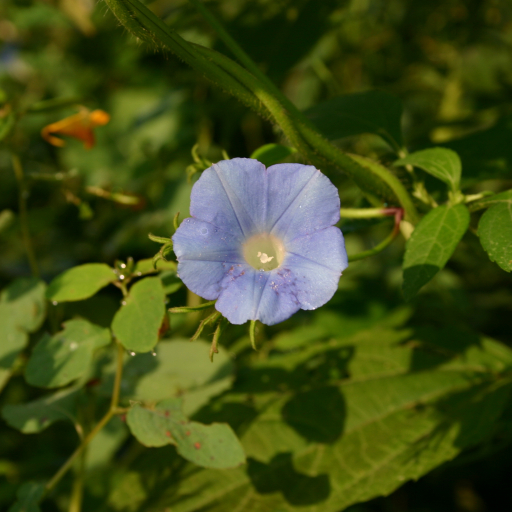
Known widely as the Ivy-leaved Morning Glory, this vigorous climber is a fleeting beauty that reigns over the early morning hours. Often found draping gracefully over old fences or weaving through garden beds, it is famous for its sky-blue blossoms that seem to capture the essence of the dawn. While many gardeners cherish its delicate look, it is a spirited pioneer species that can quickly transform a backyard into a lush, green jungle if left untamed.
🔍 How to Identify
- 🍃 Ivy-Like Foliage: The most distinguishing feature is the leaf shape; unlike the heart-shaped leaves of other morning glories, these have three distinct, pointed lobes that closely mimic the appearance of English Ivy.
- 🌸 Color-Shifting Blooms: The funnel-shaped flowers typically open in a vibrant sky-blue or deep purple with a bright white center. As the day progresses and the flower prepares to wilt, the color often shifts toward a soft pink or magenta.
- 🧶 Hairy Stems: If you look closely at the stems and the base of the flower (the sepals), you will notice they are densely covered in tiny, stiff hairs that point downwards, giving the vine a slightly rough texture.
🏡 In Your Garden
- 🧗 The Master Twiner: This plant doesn’t use tendrils; instead, the entire stem "twines" around supports. It is excellent for quickly screening a trellis or a chain-link fence, but be careful—it can easily "strangle" delicate ornamental shrubs if it decides to climb them instead.
- 🌱 Persistent Reseeder: Because it is an annual that produces a high volume of hardy seeds, it may "volunteer" in your garden year after year. It thrives in disturbed soil and full sun, making it a rugged survivor that requires very little pampering once established.
⚠️ Safety & Toxicity
- 🚫 Toxic Seeds: The seeds of Ipomoea hederacea are the most dangerous part of the plant. They contain ergoline alkaloids which, if ingested, can cause significant distress.
- 🐾 Risk to Pets & Kids: Keep a close eye on curious pets or toddlers. Ingesting the seeds can lead to upset stomachs, vomiting, or in some cases, blurred vision and disorientation. It is best treated as an ornamental plant to be admired, not touched or tasted.
✨ Fun Fact
The genus name Ipomoea is derived from the Greek words ips (worm) and homoios (resembling). This "worm-like" description refers to the plant’s winding, creeping growth habit as it searches for a way to climb toward the sunlight!

Detailed Care Instructions
To grow Ipomoea hederacea, or morning glory vine, you can follow these steps:
- Choose a suitable planting location. Morning glory prefers a spot with full sunlight exposure.
- Prepare the soil by loosening it with a garden fork or tiller. Remove any weeds or grass and ensure the soil is well-drained.
- Soak the morning glory seeds in water for about 24 hours before planting. This process helps to improve germination rate.
- Sow the seeds directly into the soil after the danger of frost has passed, typically in spring or early summer. Plant the seeds about ½ inch deep and space them 6-8 inches apart.
- Water the seeds immediately after planting and keep the soil evenly moist throughout the growing season. Do not over-water, as morning glory thrives in average moisture conditions.
- As the morning glory vine grows, provide support such as a trellis, fence, or arbor for it to climb. This plant is a vigorous climber and will happily twine around any available support.
- Monitor the plant regularly for pests such as aphids or spider mites. If necessary, control them using organic insecticidal soap or horticultural oil.
- Morning glory tends to self-seed, so you may have new plants sprouting up the following year. Consider removing unwanted seedlings to prevent them from becoming invasive.
- Prune the plant as needed to control its growth and keep it tidy. Morning glory flowers only last a day, so removing spent blooms can encourage the production of new flowers.
- In colder climates, morning glory may be treated as an annual plant and replanted each year. However, in warmer regions, it can be a perennial and continue flowering year after year.
Remember that morning glory vines can become invasive if not controlled, so it's advisable to monitor their growth and prevent the plant from spreading into unwanted areas.

Place in a window with dappled sun or a spot in the middle of a room. Or directly in a window facing west or east.

To properly water this plant, you should first check the soil moisture levels by inserting your finger about an inch deep into the soil. If the soil feels dry, it is time to water the plant. Slowly pour water into the soil at the base of the plant, making sure not to pour too quickly or too much at one time. Allow the water to soak in before checking the soil again to make sure it is thoroughly moistened. Avoid getting water on the leaves, as this can encourage fungal growth. Water this plant regularly, but be careful not to overwater, as this can lead to root rot.
To fertilize this plant, you can use a balanced, water-soluble fertilizer. The recommended ratio is 20-20-20. Mix the fertilizer with water according to the instructions on the package. Apply the fertilizer solution to the soil around the plant, avoiding the foliage. Fertilize every 2-3 weeks during the growing season, which is typically from spring to fall. Be careful not to over-fertilize, as this can cause damage to the plant.
Ipomoea Hederacea plant grows best in a well-draining soil that is rich in organic matter. A soil pH level of 6.0 to 7.0 is ideal for this plant. A mixture of loam, sand, and perlite can provide good drainage while retaining enough moisture for the plant's growth. The soil should be kept moist at all times, but not waterlogged. Adding compost or aged manure to the soil before planting can help to improve its nutritional value. It is important to note that this plant is a fast-growing vine that can quickly cover large areas, so provide ample space for it to grow and support it with a trellis or other support structure.
The propagation of this plant can be done through seeds or stem cuttings. For seeds, they can be collected from mature plants and sown directly into the soil or started indoors. Soil should be kept moist and warm until germination occurs, which may take up to two weeks.
For stem cuttings, healthy stems should be selected and cut at a length of about 6 inches. The lower leaves should be removed, and the stems should be dipped in a rooting hormone before being planted in a well-draining soil mixture. The soil should be kept moist, but not waterlogged, and the cutting should be kept in a warm and bright location. Once roots have developed, the cutting can be transplanted into a larger pot or into the garden.
Common pests of the ivy-leaved morning-glory include Spider mites, aphids, thrips, larvae. Make a habit of checking your ivy-leaved morning-glory frequently for pests so that any infestations can be caught and managed early.








