Plant Overview
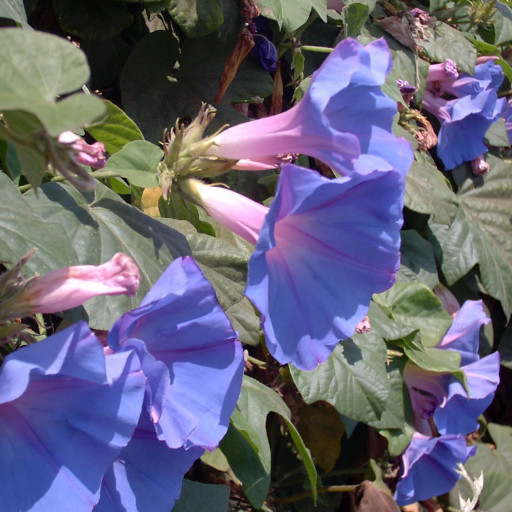
Often called the "Oceanblue Morning Glory," Ipomoea indica is a botanical acrobat that transforms gardens into a sea of sapphire. Known for its fleeting but intense blooms, this perennial vine is a favorite for those wanting quick vertical coverage. While it is a breathtaking beauty, it is also a fierce competitor, often nicknamed the "Blue Dawn Flower" for the way it "wakes up" and dominates the landscape at sunrise.
🔍 How to Identify
- 🌸 Trumpet Blooms: Large, funnel-shaped flowers that emerge a brilliant deep blue in the morning. As the day progresses, they often shift toward a purplish-pink hue.
- 🍃 Lush Foliage: Soft, velvety leaves that are typically heart-shaped, though they can occasionally show three distinct lobes on the same vine.
- 🌀 Twining Stems: Fast-growing, hairy stems that lack tendrils but climb by wrapping themselves tightly around any available support in a counter-clockwise spiral.
🏡 In Your Garden
- 🏗️ Vertical Ambition: This plant is a born climber. It requires a sturdy trellis, fence, or arbor. Without a structure, it will quickly turn into a dense groundcover that can smother smaller plants.
- ✂️ Vigorous Management: Because it grows so rapidly, it is considered "invasive" in certain tropical regions. In a garden setting, regular pruning is necessary to keep it from leaping over the fence into your neighbor's yard.
- ☀️ Sun Chaser: To get the best floral display, it needs full sun. If it’s too deep in the shade, you’ll get plenty of green leaves but very few of those iconic blue trumpets.
⚠️ Safety & Toxicity
- 🚫 Toxic Seeds: The seeds of Ipomoea indica contain alkaloids that can be highly toxic if ingested by humans or animals.
- 🐾 Pet Safety: Keep this vine away from curious dogs, cats, and horses. Ingestion can lead to digestive distress, lethargy, or even disorientation.
- 🧤 Skin Sensitivity: While not common, some gardeners may experience mild skin irritation from the hairy stems; wearing gloves while pruning is a wise precaution.
✨ Fun Fact
The color-changing magic of the petals isn't just a trick of the light! It is caused by a physiological change in the plant's cell pH. As the flower ages throughout the day, the cells become less acidic, shifting the pigment from "Morning Blue" to "Evening Purple."

Detailed Care Instructions
| Lighting | Full Sun |
| Hardiness Zones | 9A - 11 |
To grow Ipomoea Indica, also known as blue morning glory, you can follow these steps:
- Climate and soil requirements: Ipomoea Indica thrives in full sun and prefers a well-draining soil with organic matter. It can tolerate a wide range of soil pH levels.
- Obtaining seeds or cuttings: You can find Ipomoea Indica seeds or purchase young plants from nurseries or online seed stores.
- Germinating seeds: Soak the seeds in warm water for 24 hours to enhance germination. Sow the seeds directly into the soil, about 1 inch deep and 6 inches apart. Keep the soil moist until the seedlings emerge.
- Planting cuttings: If using cuttings, select healthy stems about 6-8 inches long with a few leaves. Remove the lower leaves and dip the cut end into a rooting hormone. Plant the cutting in a pot filled with well-draining potting soil, keeping it moist until roots develop.
- Transplanting: If you started with seedlings, transplant them to their final location once they have a few sets of leaves. Space them around 12-18 inches apart.
- Supporting the vine: Ipomoea Indica is a climbing vine and needs support to grow properly. Install a trellis, fence, or any suitable structure for the vine to wrap around and climb.
- Watering: Keep the soil consistently moist but avoid overwatering, as this can lead to root rot. Water deeply, especially during dry spells, but allow the soil to partially dry out between waterings.
- Fertilizing: Apply a balanced slow-release fertilizer or a liquid fertilizer every month during the growing season to provide nutrients. Follow the manufacturer's instructions for application rates.
- Pruning: Prune the plant regularly to control its growth and maintain shape. Remove dead or damaged parts, and trim back overly long or tangled vines. This will also promote better flowering.
- Pests and diseases: Monitor the plant for pests like aphids, spider mites, or whiteflies. Treat infestations if necessary using organic or chemical insecticides. Watch out for fungal diseases like powdery mildew, and promptly address any issues with appropriate treatments.
- Overwintering: In colder climates, Ipomoea Indica may not survive frost. Consider growing it as an annual or bring potted plants indoors before winter for overwintering.
With proper care and attention, your Ipomoea Indica plant should grow well and reward you with beautiful blue flowers.

Place in a bright room that is sun drenched almost all day. Or directly in a south-facing window.

To water this plant, you should ensure that the soil is dry before watering it. You can check if the soil is dry by sticking your finger into the soil up to the second knuckle. If the soil feels dry, then it's time to water the plant.
When watering, be sure to water deeply to encourage deep root growth. You can achieve this by watering until the water starts to seep out of the drainage holes at the bottom of the pot. However, be careful not to overwater as this can lead to root rot.
It's also important to avoid getting water on the leaves of the plant, as this can lead to fungal diseases. Instead, aim to water directly onto the soil.
During the warmer months, you may need to water this plant more frequently as it will require more water to cope with the heat. However, be sure to adjust your watering schedule depending on the specific needs of the plant.
To fertilize this plant, make sure to use a balanced fertilizer with equal parts nitrogen, phosphorus, and potassium. Apply the fertilizer every two to four weeks during the growing season, which is typically in the spring and summer. Be careful not to over-fertilize as this can lead to burnt leaves and stunted growth. Instead, use a lighter dose than recommended on the fertilizer packaging and monitor the plant's growth and health. Water the plant thoroughly after applying the fertilizer to help it absorb the nutrients.
The ideal soil for growing this plant should be a medium to light texture with good drainage. It should have a pH level of 5.5-7.5 and be well-aerated, allowing roots to penetrate through easily. Adding organic matter such as compost or well-rotted manure can help improve soil structure and nutrient availability. Avoid heavy clay soils, which can retain too much water and suffocate the roots. Additionally, regular fertilization with a balanced fertilizer can help promote strong growth and blooming.
Ipomoea Indica is a flowering plant that belongs to the family Convolvulaceae. It is a species that propagates easily by cuttings. To propagate the plant, follow these steps:
- Select a healthy, mature stem that has several leaves.
- Cut a 6-inch section from the stem at a 45-degree angle using a sharp, clean knife.
- Strip the lower 3 inches of leaves from the stem, leaving a few leaves at the top.
- Dip the cut end of the stem into a rooting hormone.
- Fill a small pot with well-draining soil, and make a hole in the center using a pencil.
- Insert the cutting into the hole, and gently press the soil around it.
- Water the soil until it is moist but not wet.
- Cover the pot with a clear plastic bag or use a propagator to create a humid environment.
- Place the pot in a bright, warm spot, but away from direct sunlight.
- Check the soil daily, and water as needed to keep it moist.
- After a few weeks, the cutting should have rooted and started to grow new leaves.
- Once the cutting has established roots, it can be planted in a larger pot or in the ground.
Propagation through cuttings is a simple and effective way to reproduce Ipomoea Indica plants and can be completed within a few weeks.
Common pests of the blue dawnflower include Spider mites, aphids, thrips. Make a habit of checking your blue dawnflower frequently for pests so that any infestations can be caught and managed early.








