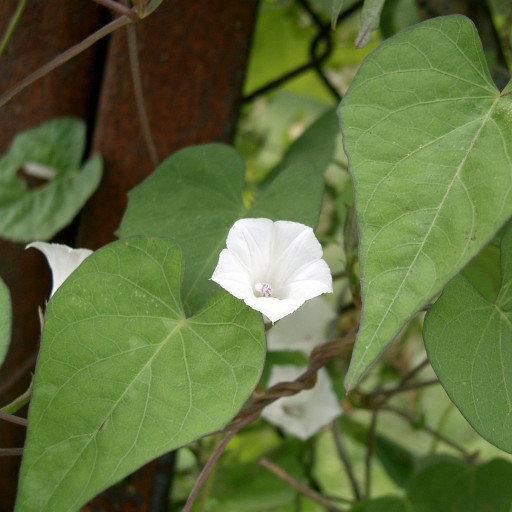
Plant Overview
Often called the Pitted Morning Glory or the Whitestar Potato, Ipomoea lacunosa is a native North American vine that sits on the fine line between a delicate wildflower and a persistent garden guest. While its famous blue cousins often steal the spotlight, this variety offers a more subtle, starry charm with its snowy blossoms. It is a master of the "morning climb," waking up early to unfurl its petals before the afternoon heat sets in.
🔍 How to Identify
- 🌸 The Blossom: Small, white, funnel-shaped flowers (about 1 inch wide) that occasionally feature a soft lavender or pink tint at the edges of the "star."
- 🍃 The Foliage: Deep green, heart-shaped (cordate) leaves that usually have three pointed lobes and may sport thin purple margins.
- 💜 The Anthers: If you peek inside the white tube, you’ll see tiny, distinct purple or pinkish stamens, which distinguish it from other white morning glories.
🏡 In Your Garden
- 🧗 The Twining Habit: Unlike vines that use "fingers" (tendrils) to grab, this plant wraps its entire stem around its support. It is a vigorous climber that will happily scale a trellis, but it can quickly overwhelm smaller, slower-growing plants if left unchecked.
- 🌱 Self-Seeding Nature: It is a prolific "volunteer" plant. It produces small, hairy seed capsules that drop to the ground, ensuring it returns year after year. If you want to keep it contained, you must remove the spent flowers before they turn into seed pods.
⚠️ Safety & Toxicity
- 🐾 Toxic to Pets: Most parts of the plant, especially the seeds, contain alkaloids (similar to LSD) that are toxic to dogs, cats, and horses. Ingestion can cause vomiting, diarrhea, and disorientation.
- 👶 Child Safety: The seeds are highly concentrated with toxins. Keep this plant away from areas where small children might be tempted to "harvest" the pods, as ingestion can lead to significant stomach upset and neurological symptoms.
✨ Fun Fact
The species name lacunosa is Latin for "pitted" or "full of hollows." This doesn't refer to the flower, but to the tiny, microscopic depressions found on the surface of its seeds—a detail that helps botanists identify it under a lens!

Detailed Care Instructions
To grow Ipomoea Lacunosa (White Morning Glory), follow these steps:
- Seeds: Obtain Ipomoea Lacunosa seeds from a reputable nursery or online seed supplier. Make sure the seeds are fresh and in good condition.
- Soak the seeds: Soak the seeds in warm water for 24 hours. This helps to soften the hard seed coat and aids in germination.
- Planting: Fill small seedling pots or trays with a well-draining seed starting mix. Plant the soaked seeds about 1/4 inch deep in the soil. Space the seeds at least 4-6 inches apart.
- Lighting: Place the pots or trays in a location that receives full sunlight or partial shade. Ipomoea Lacunosa thrives in bright light conditions, so make sure they get at least 6-8 hours of direct sunlight each day.
- Watering: Keep the soil consistently moist but not waterlogged. Water the seedlings gently, allowing the water to penetrate the soil deeply. Avoid overwatering as it can lead to root rot.
- Transplanting: Once the seedlings have grown to a height of about 4-6 inches and have developed a few sets of true leaves, they can be transplanted to larger pots or directly into the garden. Make sure to harden off the seedlings by gradually exposing them to outdoor conditions for a week before transplanting.
- Soil and location: Ipomoea Lacunosa prefers a fertile, well-draining soil. Choose a location with good air circulation to prevent fungal diseases. If planting directly in the ground, space the plants at least 12-18 inches apart.
- Support: Provide a trellis or a similar support structure for the vines to climb. Ipomoea Lacunosa is a climbing vine and requires support to reach its full height.
- Maintenance: Regularly water the plants, especially during dry periods. Mulching around the base of the plants can help conserve moisture and suppress weeds. Remove any weeds that compete for nutrients.
- Pruning: Prune the vines as needed to keep them in check and to encourage bushier growth. Pinch back the tips of the vines to promote branching and more flowering.
- Pests and diseases: Monitor the plants for any signs of pests or diseases. Common issues include aphids, spider mites, and fungal diseases. Treat any problems promptly using appropriate organic or chemical methods.
With proper care and attention, your Ipomoea Lacunosa plant should grow and flourish, producing beautiful white flowers throughout the season.

Place in a window with dappled sun or a spot in the middle of a room. Or directly in a window facing west or east.

To water this plant, it is important to keep the soil consistently moist but not waterlogged. The frequency of watering may depend on factors such as the temperature and humidity of the environment, as well as the size of the pot. It is generally recommended to water deeply and less frequently rather than lightly and frequently, as this promotes deeper root growth. Additionally, it may be helpful to observe the leaves of the plant for any signs of drooping or wilting, which can indicate that it needs water.
To fertilize the Ipomoea Lacunosa plant, mix a balanced fertilizer with equal parts nitrogen, phosphorus, and potassium. Apply the fertilizer in early spring before new growth appears. Avoid applying fertilizer during periods of drought or excessive rain. Water the plant immediately after fertilizing to help the nutrients reach the roots. Repeat the application once a month during the growing season.
The ideal soil for this plant is moist, well-drained and fertile. It should be a loamy soil with a pH between 6.0-7.5. The plant prefers slightly acidic to neutral soils. The soil should be rich in nutrients and organic matter to promote healthy growth. A soil that is too heavy or compacted will not allow the plant to establish well. It is important to avoid using soils that are prone to waterlogging, as this can result in root rot. It is recommended to add compost and other organic matter to the soil before planting to improve soil structure, moisture retention, and nutrient content. Regular fertilization and irrigation will help to keep the plant healthy and promote good growth.
Ipomoea Lacunosaplant can be propagated by collecting its seeds. After collecting the seeds, they should be allowed to dry in a well-ventilated place. The dried seeds can then be sown directly in the soil or in pots filled with a good quality potting mix. The seeds should be covered with a thin layer of soil after sowing and watered regularly until they germinate.
Another way to propagate Ipomoea Lacunosa plant is by stem cuttings. The stem cuttings should be taken from healthy and mature plants. The cuttings should be at least 6 inches long and should be taken from the top of the plant. The lower 2 inches of the cuttings should be stripped of leaves and the cuttings should be allowed to dry for a few hours. Once the cuttings have dried, they can be planted in pots filled with a good quality potting mix. The cuttings should be watered regularly and should be placed in a location with bright, indirect sunlight.
Both methods of propagation should be done during the growing season, preferably in the spring or summer. With proper care and attention, new Ipomoea Lacunosaplants can be grown successfully using these methods.








