Plant Overview
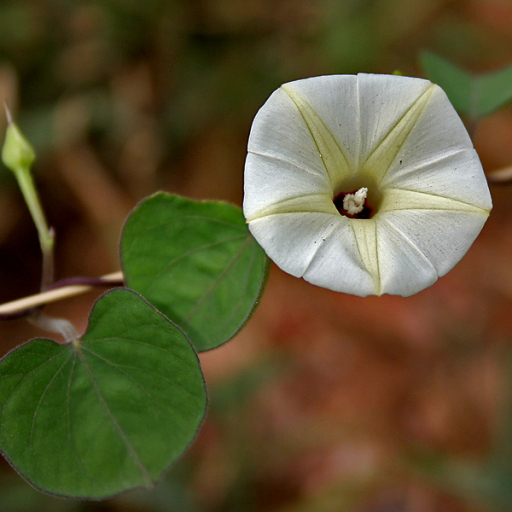
Often called the Small White Morning Glory, this delicate vine is a more modest, understated cousin of the vibrant garden Morning Glory. Native to tropical Africa and Asia, it has traveled the world, often popping up uninvited in gardens like a charming, flowery surprise. Its scientific name, obscura, refers to its subtle, less-flashy nature compared to its giant blue and purple relatives.
🔍 How to Identify
- 🌸 The "Dark Eye": The funnel-shaped flowers are small and white or buttery cream. Their most striking feature is the deep maroon or dark purple "throat" at the center, which looks like a tiny pupil.
- 🍃 Heart-Shaped Foliage: The leaves are classic "morning glory" style—perfectly heart-shaped (cordate), thin, and bright green with smooth edges.
- 🧶 Twining Habit: It features slender, wiry stems that love to wrap themselves around fences, taller plants, or even crawl across the ground to form a dense green mat.
🏡 In Your Garden
- 🌞 The Hardy Pioneer: This plant is an expert at surviving in "disturbed" soil. If you find it in your yard, it’s likely because it found a sunny spot where other plants might struggle; it thrives on neglect and can handle heat very well.
- 🏃 Fast-Paced Growth: It grows incredibly fast from seed. While its blooms are delicate, be cautious—it doesn't always know when to stop and can quickly smother smaller, slower-growing perennials if you don't provide it with a dedicated trellis.
⚠️ Safety & Toxicity
- 🐾 Toxic to Ingest: Like many members of the Convolvulaceae family, Ipomoea obscura contains alkaloids that are harmful if eaten.
- 🚫 Keep Away from Pets & Kids: The seeds, in particular, are the most concentrated source of toxins. If swallowed by dogs, cats, or curious toddlers, it can cause digestive upset or, in larger quantities, more serious neurological symptoms.
✨ Fun Fact
In various parts of Southeast Asia and India, this "weed" is actually a respected guest in traditional medicine! It has been used for centuries in poultices to treat skin ailments and inflammation, proving that even the simplest backyard vines often have hidden powers.

Detailed Care Instructions
| Humidity | Normal |
| Difficulty | Medium |
| Hibernation | Warm Period |
| Hardiness Zones | Min 5B |
To grow Ipomoea obscura, follow these steps:
- Choose a suitable location: Select a spot that receives partial to full sunlight (at least six hours of direct sunlight per day) and has well-draining soil.
- Prepare the soil: Ipomoea obscura prefers fertile, loamy soil. Mix organic matter like compost or well-rotted manure into the soil to improve its fertility and drainage.
- Planting: Plant the seeds or seedlings in the prepared soil. If starting from seeds, sow them about ¼ inch deep and space them around 12-18 inches apart. Water gently after planting to settle the soil around the seeds/seedlings.
- Watering: Keep the soil consistently moist but not waterlogged. Water regularly, especially during dry spells, to promote healthy growth. Avoid overwatering, as it can lead to root rot.
- Mulching: Apply a layer of organic mulch around the base of the plant to conserve moisture, suppress weed growth, and maintain a stable soil temperature.
- Fertilizing: Feed the plant with a balanced, slow-release fertilizer once a month during the growing season. Alternatively, you can use a liquid fertilizer every two weeks according to the instructions on the package.
- Pruning: Ipomoea obscura can become vigorous climbers, so support structures like trellises or fences can help them grow vertically. If needed, prune the plant to manage its size and shape, and to encourage bushier growth.
- Pests and diseases: Ipomoea obscura can be susceptible to aphids, spider mites, and fungal diseases. Regular monitoring and prompt action can help prevent and control such issues. If pests or diseases become a problem, consult a local garden center for appropriate treatments.
- Harvesting and propagation: Ipomoea obscura produces attractive flowers, followed by seed pods. If desired, collect the seeds for propagation in the following season. Allow the pods to mature and dry on the vine before harvesting the seeds.
By following these steps, you can successfully grow Ipomoea obscura and enjoy its beautiful flowers.

Place in a bright room that is sun drenched almost all day. Or directly in a south-facing window.

To water this plant, it is important to first understand its watering requirements. This plant prefers soil that is consistently moist but not waterlogged, so it is important to water it regularly but not excessively.
When watering, gently pour water onto the soil around the base of the plant, being careful not to get water on the leaves or flowers. It is best to water in the morning or evening when temperatures are cooler to prevent wilting or burning of the foliage.
Check the soil moisture level before watering by sticking your finger into the soil about an inch deep. If it feels dry, it is time to water. If the soil feels moist, wait a day or two before checking again.
During hot, dry weather, this plant may require more frequent watering. Conversely, during periods of heavy rain or high humidity, watering needs may decrease.
Overall, it is important to keep a close eye on this plant and adjust watering as needed to ensure it receives the appropriate amount of moisture for optimal health and growth.
To fertilize this plant, choose a balanced fertilizer with equal amounts of nitrogen, phosphorus, and potassium. Apply the fertilizer sparingly, as over-fertilizing can damage the roots. Mix the fertilizer with water according to the instructions on the package and use it to water the plant every two to three weeks during the growing season. Avoid fertilizing in winter when the plant is dormant.
For the Ipomoea Obscura plant, it is recommended to use a well-draining soil that is rich in organic matter. The soil pH should be slightly acidic, with a range of 5.5 to 6.5. A mixture of sand, perlite, and peat moss can be used to improve drainage and aeration. It is important to avoid using heavy clay soils that can hold too much water and impede root growth. Regular fertilization with a balanced fertilizer can also help keep the plant healthy and promote vigorous growth.
Ipomoea obscura is a vine-like plant that can be propagated through stem cuttings. To do this, select a healthy stem from the parent plant, preferably one with several leaves. Using a sharp, sterile knife or scissors, cut a section of the stem that is about 6 inches long, making sure to make the cut just below a leaf node.
Remove the lower leaves from the cutting, leaving only a few leaves near the top. Dip the cut end of the stem in rooting hormone powder, which will help stimulate root growth. Plant the cutting in a pot filled with a well-draining potting mix, making sure that at least one node is buried below the soil.
Water the cutting thoroughly and keep the soil moist but not waterlogged. Cover the pot with a clear plastic bag or a plastic wrap to help create a humid environment that will encourage the cutting to root. Place the pot in a bright, but indirect light, and keep it away from direct sunlight. The cutting should start to produce roots within a few weeks.
Once the cutting has rooted and new growth appears, it can be gradually acclimated to direct sunlight and transferred to a larger pot or planted directly in the ground.








