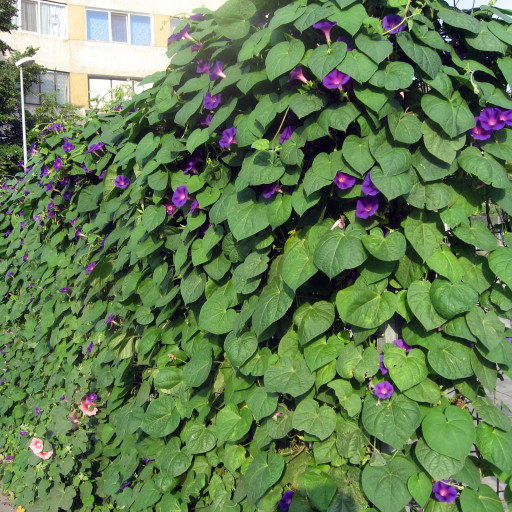
Plant Overview
Often called the Common Morning Glory, Ipomoea purpurea is a romantic favorite that has climbed its way through garden history since the 1700s. Originally hailing from the warm regions of Mexico and Central America, these vines are famous for their "ephemeral" beauty—blooming in the cool dawn and closing before the afternoon sun takes hold. They are the ultimate "morning people" of the botanical world, greeting each day with a fresh, vibrant display of trumpet-shaped flowers.
🔍 How to Identify
- 💜 The Flowers: Large, trumpet-shaped blooms that typically appear in shades of royal purple, deep blue, magenta, or white, often featuring a contrasting white or yellow "throat" at the center.
- 💚 The Leaves: Distinctly heart-shaped (cordate) and soft to the touch, with fine hairs covering the surface and a bright green color.
- 🌀 The Growth Habit: A vigorous "twining" vine that lacks tendrils; instead, the entire stem spirals counter-clockwise around any support it can find, from fences to neighboring sunflowers.
🏡 In Your Garden
- 🧗 The Climbing Spirit: Because these plants grow by wrapping their stems, they require a trellis, twine, or fence to thrive. If left without a vertical path, they will scramble across the ground, creating a dense, leafy carpet.
- ☀️ Sun Chasers: While they open their flowers to greet the sun, they are quite sensitive to heat. In very hot climates, providing some afternoon shade can help the blooms stay open a few hours longer before they shrivel.
- 🌱 Self-Seeding Power: Be mindful that Ipomoea purpurea is a prolific seed-maker. If you don't "deadhead" (remove) the spent flowers, they will drop seeds that can lead to an army of volunteer vines next spring—sometimes becoming a bit too enthusiastic in small garden spaces.
⚠️ Safety & Toxicity
- 🚫 Toxic Seeds: The seeds of the Morning Glory are the primary concern. They contain alkaloids (specifically LSA) that are toxic if ingested.
- 🐾 Pet & Child Alert: Eating the seeds can cause significant stomach upset, nausea, and in some cases, blurred vision or hallucinations. Keep these plants away from curious pets and young children who might be tempted by the pea-sized seed pods.
✨ Fun Fact
In the "Language of Flowers" popularized during the Victorian era, the Morning Glory symbolized unrequited love or affection. This was a poetic nod to the flower’s short lifespan—it blooms, loves the sun for a few hours, and vanishes by noon!

Detailed Care Instructions
It's the seeds that contain the toxic alkaloids but as a precaution, you should keep children and pets away from the entire plant, or abstain from growing it at all.
Is morning glory an invasive plant?
It can become invasive because it reseeds itself freely and its vigorous growth can choke out other plants.
Is morning glory a creeper or a climber?
It depends on the species. The common morning glory is a climber that needs a trellis or some other sort of support whereas the coast morning glory (Ipomea cairica) is a creeper.
| Color | Purple, Pink, Blue, White |
| Soil Ph | Neutral, Acidic |
| Humidity | High |
| Invasive | Weed |
| Lighting | Full Sun |
| Toxicity | Poisonous |
| Soil Type | Moist, Well-Drained |
| Bloom Time | Summer, Fall |
| Difficulty | Medium |
| Plant Type | Annual |
| Mature Size | 6–10 Ft. Tall, 3–6 Ft. Wide |
| Native Area | North America |
| Temperature | 30°C - 35°C |
| Sun Exposure | Full |
| Hardiness Zones | 2–11 |
To grow Ipomoea purpurea, also known as Morning Glory, you can follow these steps:
- Choose a location: Morning glories thrive in full sun, so choose a spot that receives at least 6-8 hours of direct sunlight per day.
- Prepare the soil: Morning glories prefer well-draining soil. Ensure the soil is loose, fertile, and well-drained. If your soil is heavy clay, you can improve drainage by adding compost or organic matter.
- Sow the seeds: Seeds can be directly sown into the ground in the spring once the soil has warmed up or started indoors about 4-6 weeks before the last frost date. If starting indoors, fill small pots or seed trays with seed starting mix and plant the seeds about 1/4 inch deep. Keep the soil moist until the seeds germinate.
- Transplanting (if required): If you started the seeds indoors, allow them to grow until they have at least two sets of true leaves. Then, gently transplant them outdoors after the last frost date.
- Watering: Keep the soil consistently moist, but not waterlogged, during the growing season. Morning glories can tolerate some drought once established but still appreciate regular watering, especially during hot and dry periods.
- Support structure: Morning glories are vines that need support to climb. Install a trellis, fence, or provide any other support structure for them to grow and twine around.
- Fertilizer: Apply a balanced fertilizer, such as a 10-10-10 or 14-14-14, once a month during the growing season to promote healthy growth and blooming. Follow the package instructions for the specific fertilizer you are using.
- Pruning: Trim back any excessive growth or to control the plant's spread if needed. Cutting back the plants can promote bushy growth and encourage more flowers.
- Watch for pests and diseases: Keep an eye out for common pests like aphids, spider mites, and snails as well as diseases such as powdery mildew. Treat any infestations or diseases promptly to prevent them from spreading.
- Harvesting seeds (optional): Morning glories produce pretty seed pods once the flowers have faded. If you want to collect seeds for future planting, wait until the seed pods turn brown and dry on the plant. Then, collect the pods and allow them to dry completely. Remove the seeds from the pods and store them in a cool, dry place for the next planting season.
By following these steps, you should be able to successfully grow Ipomoea purpurea plants in your garden.

Place in a window with dappled sun or a spot in the middle of a room. Or directly in a window facing west or east.

To properly water this plant, it is important to first understand its water requirements and soil preferences. This plant prefers a well-draining soil that is moist but not waterlogged. It also prefers to be watered deeply but infrequently, rather than receiving shallow, frequent waterings.
To water this plant, start by checking the soil moisture level. Stick your finger about an inch into the soil and feel for moisture. If the soil feels dry at this depth, it is time to water. When watering, use a watering can or hose with a gentle spray nozzle to apply water directly to the base of the plant. Avoid getting water on the leaves as this can increase the risk of disease.
Water until the soil feels moist throughout the root zone, which is typically about 6-8 inches deep. Make sure to water deeply enough to encourage the plant's roots to grow deeper into the soil, which will help it access water and nutrients more easily.
During hot or dry weather, you may need to water this plant more frequently to prevent it from becoming stressed. However, be careful not to overwater, which can lead to root rot and other issues.
Overall, proper watering is essential for the health and vitality of this plant, and getting it right will help it thrive and produce beautiful blooms throughout the growing season.
To properly fertilize this plant, you should start by using a general-purpose fertilizer that is well-balanced and contains equal parts of nitrogen, phosphorus, and potassium.
Next, you'll want to mix the fertilizer into the soil around the base of the plant, being careful not to let it come into direct contact with any foliage or flowers.
Water the plant thoroughly after fertilizing and continue to water as needed to keep the soil consistently moist.
For best results, fertilize every two to three weeks during the growing season (spring through fall). You can reduce or stop fertilizing in the winter when growth tends to slow down.
The ideal soil for the Ipomoea Purpurea plant should have good drainage capability, be rich in organic matter and nutrients, and have a slightly acidic to neutral pH level of around 5.5 to 7.0. The soil should also have good moisture retention but not be waterlogged or too dry. A mixture of topsoil, compost, and sand is recommended to provide the plant with a balanced and fertile growing environment. It is important to avoid using heavy clay soils as they can lead to waterlogging and stunt the growth of the plant. Additionally, the use of synthetic fertilizers should be minimized in favor of organic options like compost or aged manure to promote long-term soil health.
Ipomoea Purpurea plant can be propagated using stem cuttings or by collecting and planting its seeds. To propagate using stem cuttings, choose a healthy stem and cut a section about 5 to 6 inches long. Make sure the cutting has at least one leaf node. Remove the leaves from the lower half of the stem and dip the cut end in rooting hormone. Plant the cutting in well-draining soil, keep it moist, and place it in a bright area with partial shade. Roots will begin to form in about 2 to 4 weeks.
To propagate by collecting and planting seeds, wait until the plant has finished flowering and the seed pods have formed. Harvest the pods when they have turned brown and dried out. Carefully remove the seeds from the pods and plant them in well-draining soil, about 1/4 inch deep. Keep the soil moist but not waterlogged, and place the pot in a bright area with partial shade. Seedlings will emerge in about 2 to 3 weeks.
Common pests of the common morning glory include Spider mites, aphids, thrips. Make a habit of checking your common morning glory frequently for pests so that any infestations can be caught and managed early.








