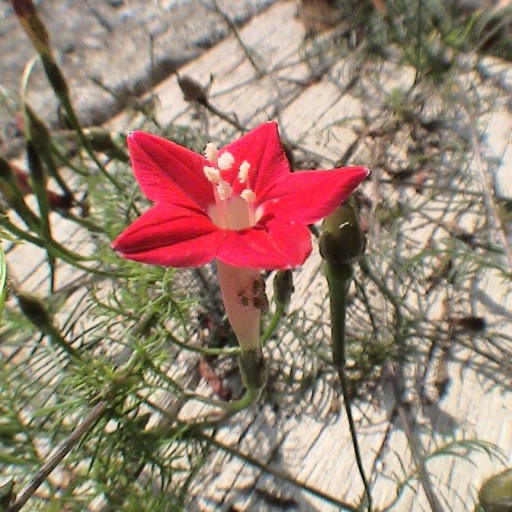
Plant Overview
Often called the Cypress Vine, Cardinal Climber, or Star Glory, this delicate-looking vine is a powerhouse in the summer garden. Known for its brilliant "Star of Bethlehem" flowers and lacy textures, it’s a favorite in tropical folklore and is often used to create "living curtains" on porches to catch the morning breeze.
🔍 How to Identify
- 🌿 The Foliage: Unlike the broad, heart-shaped leaves of most Morning Glories, this plant features fine, thread-like leaves that look like a soft green fern or cypress needles.
- 🎺 The Blooms: It produces small, trumpet-shaped flowers that flare out into a perfect five-pointed star. While most famous in a vibrant scarlet red, you may occasionally find pink or white varieties.
- 🌀 The Twining Stem: The stems are thin, green, and wire-like. They don't use tendrils; instead, the entire stem "twines" or wraps itself tightly around any vertical support it can find.
🏡 In Your Garden
- 🐦 The Hummingbird Magnet: This plant is a biological billboard for hummingbirds. The bright red color and deep nectar tubes are perfectly designed for their long beaks, making it a must-have for bird lovers.
- 🚀 Fast and Furious: While it looks fragile, it is a rapid grower. It thrives in the "dog days" of summer when other plants wilt. However, be mindful that it is a prolific self-seeder; one plant this year can lead to a dozen "volunteers" in your soil next spring.
- 🏗️ Support System: Because it has a vigorous climbing habit, it needs a trellis, fence, or string. Avoid planting it near delicate shrubs, as its dense lacy foliage can quickly "smother" slower-growing plants.
⚠️ Safety & Toxicity
- 🐾 Toxic to Pets: The seeds of the Ipomoea Quamoclit are the most dangerous part. They contain alkaloids (similar to LSA) that can cause vomiting, diarrhea, or lethargy in cats, dogs, and horses.
- 👶 Child Safety: Keep the dried seed pods away from curious children. Ingestion of a large number of seeds can cause distress or mild hallucinations.
- 🧤 Skin Sensitivity: While not common, some gardeners experience mild skin irritation when handling the sap of crushed stems.
✨ Fun Fact
In the Victorian "Language of Flowers," the Cypress Vine was often associated with "busybody-ness" or "ambition." This is likely a nod to its restless nature—it is constantly moving and reaching upward to find the highest point in the garden!

Detailed Care Instructions
While the vine technically only lasts one season as an annual, its self-seeding ability allows it to spontaneously regrow the following year. Cypress vines should be monitored, though, to make sure they don't seed themselves into an invasive problem with neighbors or wildlands because these plants can spread aggressively.
What are alternatives to cypress vines?
Climbing hydrangeas (Hydrangea anomala) are a great alternative to cypress vines because they are perennial flowering climbers that are not considered invasive.
Can cypress vines grow indoors?
While, in theory, you could grow a cypress vine indoors, you would need to be prepared to trellis an aggressively growing climber that can reach 10 feet tall.
| Color | Red; Less Commonly, Pink Or White |
| Soil Ph | Neutral To Slightly Acidic Or Slightly Alkaline |
| Humidity | Normal |
| Invasive | Weed |
| Soil Type | Fertile, Well-Drained, And Kept Evenly Moist |
| Bloom Time | June To October |
| Difficulty | Medium |
| Plant Type | Annual Vine |
| Mature Size | 6 To 15 Feet In Length, With A Spread Of Three To 6 Feet |
| Native Area | Tropical America |
| Sun Exposure | Full Sun |
| Hardiness Zones | 11 To 12 |
To grow Ipomoea quamoclit, also known as Cypress vine or Cardinal climber, follow these steps:
- Select a suitable location: Choose a sunny area in your garden or a spot where the plant can receive at least 6-8 hours of direct sunlight daily.
- Prepare the soil: Ipomoea quamoclit prefers well-draining soil. Loosen the soil by removing any weeds or rocks and amend it with organic matter like compost or aged manure to improve its fertility and drainage.
- Planting seeds: Directly sow the seeds into the prepared soil after the danger of frost has passed and the soil is warm. The ideal temperature for germination is around 70-75°F (21-24°C). Sow the seeds 1/4 inch deep and space them 6-12 inches apart. You can also start the seeds indoors 4-6 weeks before the last frost date and transplant them outside after all frost danger has passed.
- Watering: Keep the soil evenly moist during germination and establishment. Once the plant has developed a strong root system, it becomes more drought-tolerant. Water the plant deeply whenever the top inch of soil feels dry.
- Provide support: Ipomoea quamoclit is a climbing vine that requires support like a trellis, fence, or arbor. Install the support structure near the planting area before sowing seeds or transplanting young plants, ensuring it is strong and sturdy enough to bear the weight of the vine.
- Fertilization: Apply a balanced liquid or granular fertilizer every 2-4 weeks during the growing season to promote healthy growth and flowering. Follow the instructions on the fertilizer package for the appropriate dosage.
- Pruning: Although not necessary, you can prune the plant to maintain its shape and encourage bushier growth. Pinch or trim back the vine tips to promote branching and more flowering.
- Mulching: Applying a layer of organic mulch, such as wood chips or straw, around the base of the plant helps conserve moisture, control weeds, and regulate temperature.
- Pest and disease control: Ipomoea quamoclit is relatively resistant to most pests and diseases. However, pests like aphids or spider mites may occasionally infest the plant. Regularly check for any signs of pests and apply appropriate organic or chemical control methods if necessary.
With proper care and conditions, Ipomoea quamoclit should grow rapidly and produce vibrant red or pink flowers throughout the summer, attracting hummingbirds and butterflies to your garden.

Place in a bright room that is sun drenched almost all day. Or directly in a south-facing window.

The plant in question requires regular watering to thrive, especially during dry spells or periods of heat. However, it is important not to overwater the plant, as this can lead to root rot. Ideally, the soil should be allowed to slightly dry out between waterings. When watering, it is best to do so deeply and thoroughly, rather than giving the plant a light sprinkle. This encourages the roots to grow deeper into the soil, which helps the plant access water more efficiently. It is also a good idea to water near the base of the plant, rather than from above, as this can prevent fungal diseases from taking hold. Finally, it may be beneficial to provide a layer of mulch around the base of the plant, as this can help to retain moisture in the soil.
To fertilize this plant, use a balanced fertilizer with equal amounts of nitrogen, phosphorus, and potassium. Apply the fertilizer every two weeks during the growing season, following the instructions on the package for the proper ratio and amount. Be sure to water the plant thoroughly before and after applying fertilizer to prevent root burn.
The ideal soil for growing this particular plant is a well-draining soil that is rich in organic matter and has a slightly acidic pH level. The soil should be loose and well-aerated to encourage good root development and proper drainage. It is also important to avoid using heavy, clay soils, as they can become waterlogged and lead to root rot. Adding compost or other organic matter to the soil before planting can help improve soil quality and fertility, as well as promote healthy growth for the plant. In general, it is important to choose a soil type that is appropriate for the specific needs of the plant, which can vary depending on factors such as climate, sun exposure, and water availability.
To propagate this plant, you will need to collect seeds from its flower capsules. Wait for the flowers to wilt and fall off, leaving behind small green capsules. Allow the capsules to dry on the plant until they turn brown and start to split open. Harvest the capsules and gently break them open to collect the small black seeds inside.
Fill a seed tray or small pots with a well-draining soil mix and plant the seeds at a depth of 1/4 inch. Water the soil and place the tray or pots in a warm, bright location. Keep the soil moist but not wet, and within a few days, the seeds should start to germinate.
As the seedlings grow, water them regularly and place them in a location with bright, indirect sunlight. When they reach a height of 4-6 inches, they can be transplanted into larger pots or directly into the garden. When transplanting, be sure to handle the delicate roots carefully to avoid damage.
Provide the young plants with regular water and fertilization to encourage healthy growth. With proper care, they should quickly grow into mature plants that produce beautiful blooms.
Common pests of the hummingbird vine include Spider mites, aphids, thrips. Make a habit of checking your hummingbird vine frequently for pests so that any infestations can be caught and managed early.








