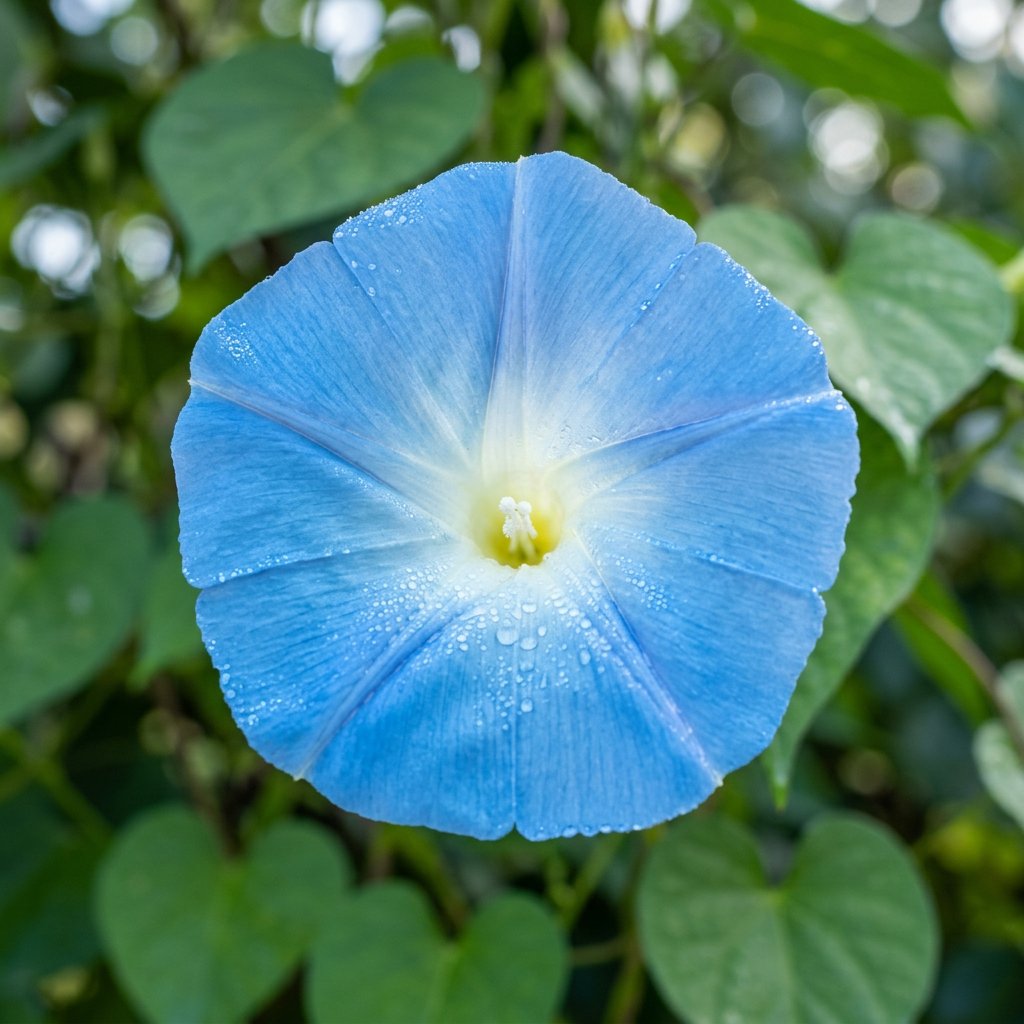
Plant Overview
Known most famously by the cultivar "Heavenly Blue," the Ipomoea tricolor is the quintessential morning glory of the cottage garden. Native to the tropical Americas, these vigorous climbers are celebrated for their ephemeral beauty, with each flower blooming for only a single day. In ancient Mesoamerican cultures, these vines were not just ornaments but were deeply integrated into spiritual rituals and traditional medicine.
🔍 How to Identify
- 🌿 The Foliage: Dense, lush, heart-shaped leaves that grow rapidly to create a thick "living curtain" on fences or trellises.
- 🎺 The Bloom: Striking trumpet-shaped flowers, most commonly a vivid azure blue with a bright white or yellow "throat" (center).
- 🌀 The Spiral: Before they open, the flower buds are twisted into elegant, tight spirals that unfurl rapidly as the sun rises.
🏡 In Your Garden
- 🧗 The Twining Habit: Unlike vines with sticky pads or tendrils, this plant climbs by wrapping its entire stem around a support. It prefers thin structures like twine, netting, or wire over thick wooden posts.
- 🌱 Root Sensitivity: These plants are notorious homebodies; they have a sensitive taproot and often suffer from "transplant shock." It is best to sow seeds directly into their final sunny spot rather than moving them from a nursery pot.
- ☀️ Morning Performance: To see the best display, plant them where they catch the very first rays of the morning sun. By mid-afternoon, especially in high heat, the blooms will "spend" themselves and curl up.
⚠️ Safety & Toxicity
- 🐾 Toxic to Pets: The seeds are highly toxic to dogs, cats, and horses. Ingestion can lead to vomiting, lack of coordination, and in some cases, tremors.
- 👶 Human Warning: The seeds contain ergoline alkaloids (similar to LSD) and are dangerous if swallowed. Keep seed packets and drying seed pods well out of reach of curious children.
✨ Fun Fact
The Ipomoea tricolor is a biological pH indicator! The flowers change from purple-pink to bright blue as they open because the plant actively increases the pH level within the petal cells. As the flower dies at the end of the day, the pH drops, and the flower often turns back to a reddish-purple hue.

Detailed Care Instructions
| Humidity | Normal |
| Lighting | Full Sun |
| Toxicity | Poisonous |
| Soil Type | Well-Drained Soil |
| Difficulty | Medium |
| Temperature | 5°C - 25°C |
| Sun Exposure | Full Sun |
| Hardiness Zones | 10A - 11B |
To grow Ipomoea Tricolor (Morning Glory) plants, follow these steps:
- Choose a sunny location: Morning glory plants thrive in full sun, so select a spot that receives at least 6-8 hours of direct sunlight each day.
- Prepare the soil: Morning glories prefer well-draining soil that is rich in organic matter. Amend the soil with compost or well-rotted manure to enhance its fertility and drainage.
- Sow the seeds: You can sow the seeds directly into the garden after the last frost date in your area, or you can start them indoors 4-6 weeks before the last frost. Plant the seeds 1/4 inch deep and 6-12 inches apart in the soil. If starting them indoors, transplant them after the danger of frost has passed.
- Water regularly: Keep the soil consistently moist but not waterlogged. Water deeply once or twice a week, depending on rainfall and the moisture needs of your specific location.
- Provide support: Morning glory plants are climbers, so they will require support to grow vertically. Install trellises, fences, or other support structures for the plants to climb on. Alternatively, you can also let the plants trail along the ground as ground cover.
- Monitor for pests and diseases: Keep an eye out for common pests such as aphids, spider mites, and snails. Treat them as soon as possible with organic pest control methods to prevent damage to the plants. Morning glories are generally resistant to diseases.
- Prune if desired: Morning glories can become quite bushy, and pruning can help control their growth and shape. Prune back any overly vigorous or untidy growth throughout the growing season, if desired.
- Harvest and save seeds: Once the morning glory flowers fade and dry up, seed pods will develop. Once these pods are brown and dry, harvest them and collect the seeds. Store the seeds in a cool, dry place for future sowing.
Following these steps will help you successfully grow beautiful Ipomoea Tricolor (Morning Glory) plants. Enjoy the colorful flowers and watch them attract pollinators to your garden!

Place in a bright room that is sun drenched almost all day. Or directly in a south-facing window.

The Ipomoea Tricolor plant can be watered by first checking the soil moisture level before watering. The soil should be moist but not waterlogged as this can cause root rot. It is important to water the plant thoroughly and evenly to ensure all parts of the root system are hydrated. Watering should be done in the early morning or late afternoon to prevent evaporation and water loss due to heat. A watering can or a hose with a gentle spray nozzle can be used to water the plant, and care should be taken not to damage the leaves or flowers. If the plant is in a container, ensure that there are drainage holes to allow excess water to escape. In periods of extreme heat or drought, the plant may need to be watered more frequently to prevent stress and wilting.
To properly fertilize this plant, use a balanced slow-release fertilizer during the growing season. Apply the fertilizer according to package instructions, being careful not to over-fertilize as this can lead to leaf burn and other plant problems. It is also important to water the plant well before and after fertilization. Additionally, consider supplementing the soil with organic matter such as compost or manure to improve the overall health and vitality of the plant.
In order to grow the plant commonly known as Ipomoea Tricolor, it is important to use a well-draining, nutrient-rich soil. The soil should be slightly acidic to neutral with a pH range of 6.0 to 7.0. It is recommended to mix a high-quality potting soil with a coarse sand or perlite to ensure proper drainage and aeration. Additionally, adding some organic matter such as compost or aged manure can help improve soil structure and fertility. It is important to avoid heavy or clay-based soils that can become waterlogged and suffocate the plant's roots.
Ipomoea Tricolor is a tropical plant that belongs to the family Convolvulaceae. Propagation of this plant can be done through seed germination or stem cutting.
To propagate Ipomoea Tricolor through seed germination, first, collect mature seedpods from a healthy plant. Let the seedpods dry naturally and then remove the seeds from the pod. Soak the seeds in water for several hours or overnight to help soften the seed coat. Fill a seedling tray with a well-draining potting mix and sprinkle the seeds on top of it. Cover the tray with a plastic wrap until the seeds germinate. Make sure to keep the soil moist but not waterlogged, and place the tray in a warm, bright spot with indirect sunlight. After a few days, the seedlings will emerge, and you can thin them out to one seedling per cell or pot.
To propagate Ipomoea Tricolor through stem cutting, take a healthy stem cutting from the parent plant with a sharp and sterile knife. Make sure the cutting is at least 6 inches long and has a few sets of leaves. Remove the lower leaves from the cutting, leaving only two to three sets of leaves at the top. Dip the cut end of the stem cutting in rooting hormone powder, and plant it in a pot filled with well-draining potting mix. Water the cutting until the soil is moist but not waterlogged and place it in a bright spot with indirect sunlight. Keep the soil moist and watch for new growth.
Propagation of Ipomoea Tricolor is easy and rewarding, and with proper care and attention, you can have a beautiful and healthy plant.
Common pests of the mexican morning glory include Spider mites, aphids, thrips, larvae. Make a habit of checking your mexican morning glory frequently for pests so that any infestations can be caught and managed early.








