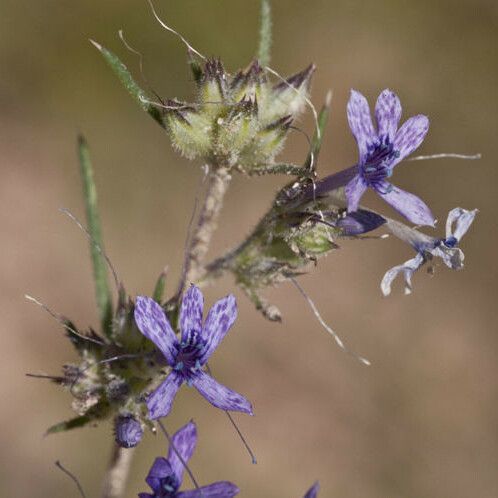
Plant Overview
Often called the Manyflowered Gilia, this desert gem transforms arid landscapes into a sea of lavender trumpets. A staple of the American Southwest, it is celebrated for its rugged resilience and its ability to invite a flurry of winged visitors to even the driest landscapes. It belongs to the Phlox family, carrying that signature delicate beauty with a surprisingly tough constitution.
🔍 How to Identify
- 🌸 Trumpet Blossoms: Slender, tubular flowers that flare out at the end into five distinct lobes. They typically range from a pale, misty lavender to a vibrant sky blue or white.
- 🌿 Fern-like Foliage: The leaves are deeply lobed and feathery, giving the plant an airy, delicate texture that contrasts beautifully with its stiff, upright stems.
- 📏 Branching Stems: It typically grows in a multi-stemmed clump, with the flowers clustered toward the top of each branch, creating a "bouquet" effect in the wild.
🏡 In Your Garden
- 🏜️ Drainage is Key: Being a native of rocky hillsides and sandy plains, this plant thrives in "lean" soil. It hates "wet feet," so ensure your soil is well-draining to prevent root rot.
- 🐦 The Hummingbird Straw: The long, narrow shape of the flower is specifically evolved for hummingbirds and long-tongued moths. Planting these is like installing a natural neon sign for pollinators.
- 🌱 Taproot Sensitivity: Like many desert natives, it develops a deep taproot early on to find water. This makes it very drought-tolerant but very difficult to transplant—it's best to sow seeds directly where you want them to grow.
⚠️ Safety & Toxicity
- ✅ Low Risk: Ipomopsis multiflora is generally considered non-toxic to humans and common household pets.
- 🐾 General Caution: While not known to be poisonous, it’s always wise to discourage pets from grazing on ornamental plants to avoid minor digestive upset or potential reactions to garden fertilizers.
✨ Fun Fact
The genus name Ipomopsis is derived from the Greek words ipo (to strike) and opsis (appearance), likely referring to the striking, showy nature of the flowers that "hit" the eye when you see them in the wild!

Detailed Care Instructions

Place in a bright room that is sun drenched almost all day. Or directly in a south-facing window.

Some plants require more regular watering than others, which should be done every few days. It's critical to maintain the soil moist all of the time. The water requirements of the same plant placed in pots with varying sizes will differ. Because the water in the smaller pot evaporates faster than the water in the larger pot, it will require more watering. Regardless of pot size, the surface should constantly be maintained moist.








