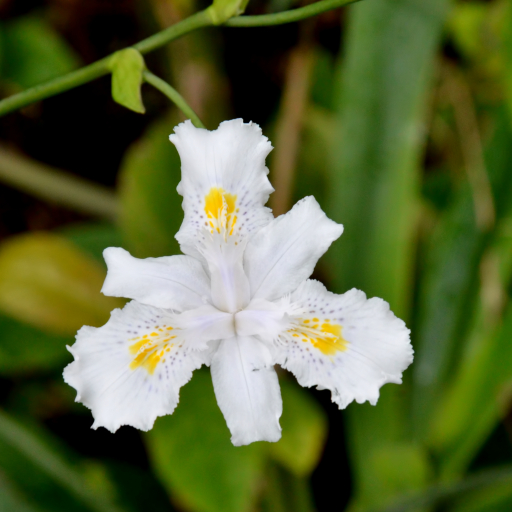
Plant Overview
Often called the Bamboo Iris or Crested Iris, this plant is a master of disguise. While most irises grow in low clumps, this species rises on slender, jointed stalks that mimic miniature bamboo canes. Native to the misty forest edges of China and the Himalayas, it brings an ethereal, woodland elegance to gardens, producing airy clouds of flowers that look more like delicate orchids than traditional irises.
🔍 How to Identify
- 🎋 The "Bamboo" Stems: Unlike its cousins, it features distinct, woody-looking stalks that can reach 2 to 3 feet in height, giving it a unique vertical profile.
- 🍃 Fan-Shaped Foliage: The glossy, sword-shaped leaves are clustered at the very tips of the stems, spreading out in a perfect, flat fan shape.
- 🌸 Fringed Blooms: The flowers are typically pale lavender or snowy white, featuring heavily ruffled edges and intricate "crests" of orange and yellow in the center.
🏡 In Your Garden
- 🌳 The Woodland Aesthetic: Because it originates from forest floors, this iris thrives in dappled shade. It is the perfect choice for brightening up those tricky "in-between" spaces under large trees where grass won't grow.
- 🌱 Shallow Travelers: The plant spreads via surface-running rhizomes. These roots prefer to stay right at the soil line; burying them too deeply can prevent the plant from flowering and may lead to root rot.
- ✂️ Post-Bloom Maintenance: Once a stem has finished flowering, it won't bloom again. Cutting the old "cane" back to the ground encourages the plant to send up fresh, vigorous new shoots for the next season.
⚠️ Safety & Toxicity
- 🐾 Toxic to Pets: Like all members of the Iris family, Iris confusa contains irisin and various terpenoids. If ingested by dogs or cats, it can cause vomiting, drooling, and lethargy.
- 🧤 Skin Irritation: The sap within the stems and rhizomes can cause mild dermatitis in some people. It’s a good idea to wear gloves if you are dividing a large colony or pruning the stalks.
✨ Fun Fact
The species name confusa isn't a coincidence—botanists spent years confusing this plant with its close relative, Iris wattii. It was mislabeled in herbariums for decades until it was finally recognized as a unique species and given a name that honors its "confusing" history!

Detailed Care Instructions
To grow Iris Confusa plants, you can follow these steps:
- Choose a location: Iris Confusa prefers partial shade to full sun, so select a location that receives morning sun and afternoon shade, or filtered sunlight throughout the day. It also prefers well-draining soil, so ensure your soil is loose and not waterlogged.
- Prepare the soil: Amend the soil with organic matter, such as compost, to improve its fertility and drainage. Remove any weeds or grass from the planting area.
- Planting: Dig a hole slightly larger than the plant's root ball. Place the Iris Confusa in the hole, ensuring the top of the rhizome (thickened underground stem) is level with or slightly above the soil surface. Backfill the hole with soil and gently pack it down around the plant.
- Watering: Water the plant thoroughly after planting, and then provide regular watering during the growing season. Keep the soil evenly moist, but not waterlogged, as Iris Confusa prefers consistent moisture.
- Mulching: Apply a layer of organic mulch, such as wood chips or straw, around the plant to help conserve soil moisture and suppress weed growth. Avoid placing the mulch too close to the stem to prevent rotting.
- Fertilizing: Iris Confusa does not require much fertilizer. However, you can apply a balanced, slow-release fertilizer in early spring or after flowering to provide some nutrients. Follow the package instructions for proper dosage.
- Pruning: After flowering, remove any spent flower stalks by cutting them back to the base. The foliage can be left to die back naturally or trimmed back to maintain a tidy appearance.
- Pests and diseases: Iris Confusa is generally free from serious pest and disease issues. However, keep an eye out for common problems like aphids, slugs, or snails. If necessary, take appropriate measures to control pests using organic methods.
- Division: Iris Confusa plants can be divided every few years to maintain their health and vigor. This is typically done in late summer or early autumn when the plant is dormant. Dig up the clump, separate the rhizomes, and replant them at the same depth as before.
By following these guidelines and providing the suitable growing conditions, you can successfully grow Iris Confusa plants in your garden.

Place in a window with dappled sun or a spot in the middle of a room. Or directly in a window facing west or east.

To water this particular plant, it is important to keep in mind that it requires consistent moisture but should never be overwatered. It is recommended to water deeply once a week or whenever the top inch of soil feels dry to the touch. When watering, it is important to avoid getting the leaves wet as this can lead to fungal issues. Instead, it is best to water at the base of the plant using a watering can or hose. To ensure proper drainage, make sure the pot or planting area has adequate drainage holes. In addition to regular watering, it can also benefit from occasional fertilization during the growing season.
To fertilize this plant, apply a balanced fertilizer with equal amounts of nitrogen, phosphorus, and potassium. Use a slow-release fertilizer and apply it in the spring just as new growth begins to emerge. Avoid getting the fertilizer on the leaves or crowns of the plant as it may cause burn damage. Water the plant thoroughly after fertilizing.
Iris Confusa is a plant that requires well-draining soil. It prefers sandy loam that is slightly acidic in nature, with a pH range between 5.5 and 6.5. The soil should be rich in organic matter to provide the plant with the necessary nutrients. A good potting mix for Iris Confusa can be prepared by mixing equal parts of peat moss, vermiculite, and perlite. It is important to ensure that the soil is moist but not waterlogged, as the plant can be susceptible to root rot. Adding a layer of mulch around the base of the plant can help to retain moisture and keep the soil cool. Additionally, regular fertilization with a balanced fertilizer can promote healthy growth and vibrant blooms.
To propagate this particular plant, known by its scientific name Iris Confusa, you can start by selecting a healthy parent plant. Then, wait until the plant has finished flowering and the leaves begin to yellow and wither. At this point, carefully dig up the plant and separate the rhizomes.
Inspect the rhizomes and cut off any damaged or diseased bits with a sharp, clean knife. Each section of rhizome should have one or two healthy leaf fans attached.
Prepare a well-draining potting mix in a container with drainage holes. Place the rhizomes on top of the soil, burying the roots slightly but keeping the tops of the rhizomes mostly exposed. Water the new plant well and place it in a bright, shady area.
Over the next few weeks, keep the soil evenly moist but not waterlogged. You can transplant the new plants into the ground in the fall once they have developed a good root system. With patience and care, you can successfully propagate Iris Confusa and enjoy its lovely blooms in your garden for years to come.








