Plant Overview
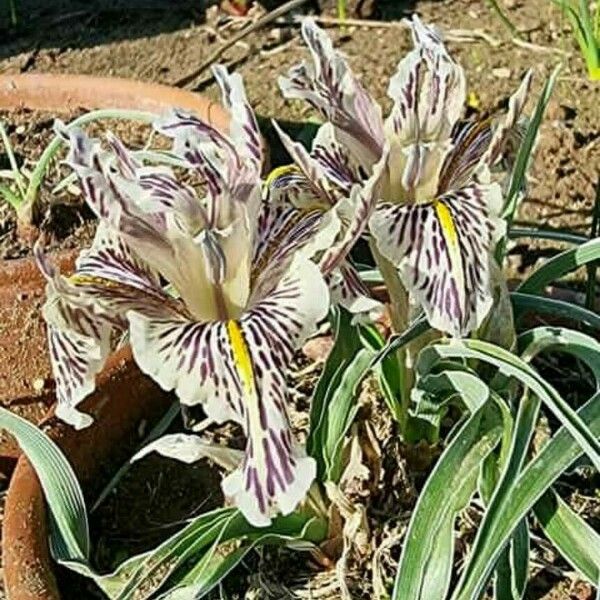
The Iris edomensis, or the Edom Iris, is a rare and striking "Juno" iris that feels like a discovery from an ancient world. Named after the historical region of Edom in southern Jordan, this desert dweller defies the harsh, rocky wilderness to produce intricate, speckled blooms during the transition from winter to spring. It is a prized specimen for alpine house collectors and those who love plants that tell a story of survival in extreme environments.
🔍 How to Identify
- 🌸 The Bloom: Small but dramatic flowers featuring white or pale lavender petals that are heavily "peppered" with dark purple-to-black speckles and intricate veining.
- 🌿 Leaf Structure: As a "Juno" iris, its leaves grow in a distinct, architectural fan-like arrangement, resembling a miniature corn stalk or leek before the flower emerges.
- 🌕 The Crest: A prominent, bright yellow or orange ridge (the "crest") runs down the center of the lower petals, acting as a vivid "landing strip" for early-season pollinators.
🏡 In Your Garden
- ⛰️ Alpine Specialist: This is not your average garden iris; it requires "sharp" drainage. In its native Jordan, it lives in rocky crevices where water never pools. In a home setting, it thrives best in a dedicated rock garden or an alpine trough.
- ☀️ The Summer Bake: To trigger next year's bloom, the bulb requires a completely dry, warm summer dormancy. If you live in a rainy climate, it is best kept in a pot under a "rain shadow" or in a greenhouse to mimic its desert home.
⚠️ Safety & Toxicity
- 🐾 Toxic to Pets: Like most members of the Iridaceae family, the Edom Iris contains compounds like iridin. If ingested by cats or dogs, it can cause lethargy, drooling, and digestive upset.
- 🧤 Skin Sensitivity: The sap within the bulbs and leaves can cause mild skin irritation for sensitive individuals. It is always a good idea to wear gloves when dividing or handling the bulbs.
✨ Fun Fact
- 🕰️ A Rare Sight: Iris edomensis is so specialized to its tiny geographic range in Jordan that it is rarely seen in the wild. It is considered a "holy grail" for botanical photographers traveling through the Middle East.

Detailed Care Instructions








