Plant Overview
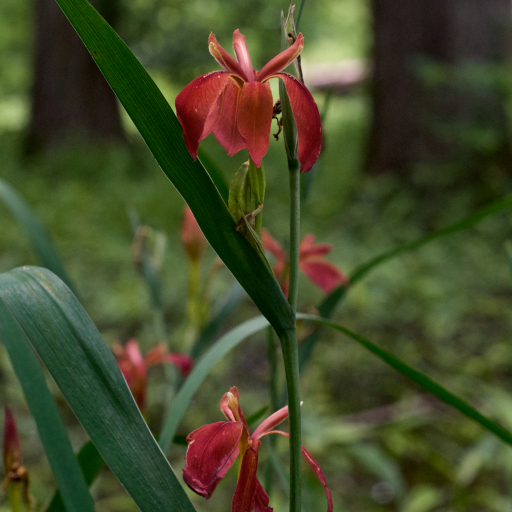
The Copper Iris is a standout in the botanical world, famous for its rare, warm-toned petals that look like burnished terracotta. Native to the wet marshes of the Mississippi Valley, this "swamp beauty" breaks the mold of traditional blue and purple irises. It is a favorite among gardeners looking to add a touch of sunset hues to their pond edges or rain gardens.
🔍 How to Identify
- 🎨 The Bloom: Unlike the upright standards of many iris species, the Iris fulva features six drooping (reflexed) petals in shades of copper, brick-red, or deep rust.
- 🗡️ Foliage: The leaves are bright green, sword-shaped, and slightly arching, often reaching about 18 to 30 inches in height.
- 🌿 The Stem: The flower stalks are unique for their "zig-zag" appearance, often leaning slightly rather than standing perfectly rigid.
🏡 In Your Garden
- 💧 Wetland Specialist: This plant thrives with "wet feet." It is the perfect choice for heavy clay soils or the edges of a backyard pond where other plants might rot.
- 🐦 Hummingbird Magnet: While bees love most irises, the bright red-copper color and tubular shape of these blooms are specifically designed to attract hummingbirds, who serve as its primary pollinators.
- 🌱 Rhizome Spread: It grows via underground rhizomes. Because it spreads horizontally, it can help stabilize soil in boggy areas, but it may need occasional thinning to keep it from wandering too far.
⚠️ Safety & Toxicity
- 🚫 Status: Toxic to humans and pets.
- 🐾 The Risks: All parts of the Copper Iris—especially the rhizomes (roots)—contain irisin, which causes stomach upset, vomiting, and lethargy if ingested by cats, dogs, or horses.
- 🧤 Skin Sensitivity: Some gardeners may experience mild skin irritation or "iris rash" when handling the sap or bruised rhizomes, so wearing gloves during division is recommended.
✨ Fun Fact
The Copper Iris is one of the "founding fathers" of the famous Louisiana Iris hybrids. It contributed its unique red genes to help create the spectacular rainbow of colors seen in modern water-loving iris varieties today!

Detailed Care Instructions
To grow Iris fulva plants, follow these steps:
- Choose a suitable location: Select a sunny or partially shaded area in your garden that has moist, well-draining soil. Iris fulva prefers slightly acidic to neutral soil.
- Planting time: Plant the rhizomes in the late summer or early fall. This allows them to establish root systems before the winter.
- Prepare the soil: Dig a hole that is wide and deep enough to accommodate the rhizome. Loosen the soil and mix in compost or well-rotted manure to improve drainage and fertility.
- Planting the rhizomes: Place the rhizome horizontally in the hole, making sure the top is just below the soil surface. Cover it with soil, firm it gently, and water thoroughly.
- Watering and maintenance: Iris fulva requires consistently moist soil, so water regularly, especially during dry periods. Mulching around the plants helps retain moisture and control weeds. Be cautious not to bury the rhizome with excessive mulch.
- Fertilization: In early spring, apply a balanced slow-release fertilizer or a low-nitrogen fertilizer. Follow the manufacturer's instructions for proper dosage and application.
- Protect from pests and diseases: Keep an eye out for pests like iris borers and diseases such as bacterial soft rot. Inspect the plants regularly and take necessary actions if any issues arise.
- Division and transplanting: Every few years, divide the plant by separating the rhizomes. Dig up the clump and gently separate them into individual rhizomes, ensuring each has healthy roots and foliage. Replant the divided rhizomes following the same planting steps.
Remember, Iris fulva plants are native to wetland environments and may also thrive near natural or artificial ponds, bog gardens, or rain gardens. By providing them with the right conditions and care, you can enjoy the beautiful blooms of Iris fulva in your garden.

Place in a bright room that is sun drenched almost all day. Or directly in a south-facing window.

1. Determine the watering requirements of Iris Fulva: To water Iris Fulva, it is crucial to consider its watering requirements. This can be easily done by doing some research or consulting with a local horticulturist.
2. Observe soil moisture levels: Keep an eye on the soil moisture levels of Iris Fulva. Ideally, the soil should be moist but not waterlogged. To check the moisture level, stick your finger into the soil up to the second knuckle. If it feels dry, then it's time to water; if it feels damp, wait a day or two.
3. Water deeply and infrequently: Iris Fulva prefers to be watered deeply and infrequently. This means that it is better to water the plant thoroughly once a week than to water it lightly every day. Make sure the water penetrates deep into the soil to promote healthy root growth.
4. Avoid overwatering: Overwatering can cause the roots of Iris Fulva to rot. This is because the roots need to breathe, and excess water can lead to a lack of oxygen.
5. Consider drainage: Proper drainage is crucial when watering Iris Fulva. Make sure the soil has good drainage and that excess water can flow away from the plant, preventing waterlogging.
6. Provide shade during hot weather: During hot weather, provide some shade for Iris Fulva to protect it from excessive heat and prevent water loss due to evaporation.
7. Water during the early morning or late evening: Watering during the early morning or late evening is best for Iris Fulva. This helps to reduce water loss due to evaporation during the hotter parts of the day.
To fertilize an Iris Fulva plant, apply a balanced fertilizer with equal amounts of nitrogen, phosphorus, and potassium. Scatter the fertilizer around the base of the plant, avoiding contact with the leaves. Water thoroughly after fertilization. Repeat fertilization every four to six weeks during the growing season. Avoid fertilizing during the winter months when the plant is dormant.
Iris Fulva plant requires well-drained soil with a slightly acidic to neutral pH level. The soil should be rich in organic matter and nutrients. It is best to avoid heavy soils that hold water for a long time, as this can cause root rot. A sandy loam soil or a loamy soil mixed with sand and perlite is ideal for this plant. The soil should also be loose, friable, and airy to promote good drainage and aeration. Adding compost or well-decomposed manure can improve soil quality and fertility. Mulching with organic material such as pine straw or leaves can help regulate soil moisture and temperature. Regularly checking the pH, moisture, and nutrient levels of the soil can ensure healthy growth and blooming of the Iris Fulva plant.
Iris Fulva can be propagated through several methods, including seed propagation, division of rhizomes, and tissue culture.
Seed propagation involves collecting mature seeds from the plant pods and planting them in a well-draining soil mix. The seedlings should be kept moist and placed in a shaded area until they are established enough to be transplanted.
Division of rhizomes is a common and easy method of propagation for Iris Fulva. This involves carefully digging up mature plants and dividing the rhizomes into smaller sections with a sharp knife. Each new section should have at least one healthy leaf and root system. The new sections can then be planted.
Tissue culture is a more advanced and technical method of propagation. It involves taking small sections of the plant tissue and growing them in a laboratory under sterile conditions. This method can produce a large number of plantlets in a short amount of time and allows for the propagation of plants that may not propagate easily through other methods.








