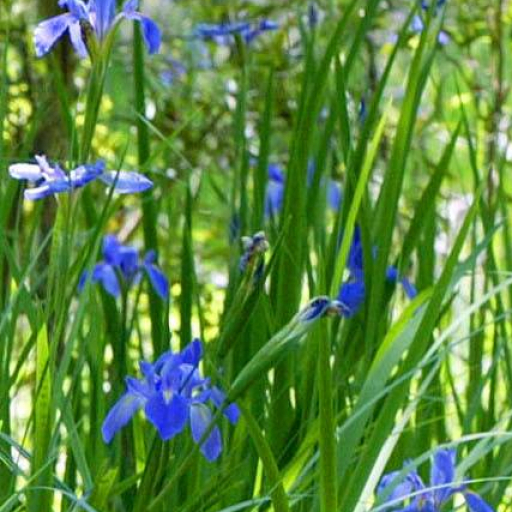
Plant Overview
Standing tall as a monarch of the American bayous, the Iris giganticaerulea is the undisputed heavyweight of the North American iris family. Often called the Giant Blue Iris, this southern beauty transforms swampy wetlands into a sea of regal violet-blue every spring. It is the architectural anchor of the "Louisiana Iris" group, prized by gardeners for its sheer scale and its ability to turn a muddy patch of ground into a high-end floral display.
🔍 How to Identify
- 🌸 The Bloom: Massive flowers, sometimes reaching 6 inches across, featuring three drooping "falls" in deep blue or lavender, each marked with a brilliant yellow or white "signal" patch to attract bees.
- 🌿 The Foliage: Stiff, sword-shaped leaves that are exceptionally tall, often reaching 3 to 5 feet in height, maintaining a bright, lime-green color throughout the growing season.
- 🌱 The Growth Habit: It grows from thick, fleshy horizontal rhizomes (underground stems) that creep along the soil surface, eventually forming dense, lush colonies.
🏡 In Your Garden
- 💧 A True Water-Lover: This isn't a plant for a dry rock garden. It is a wetland specialist that thrives in "wet feet"—it can grow in several inches of standing water or boggy, heavy clay that other plants would rot in.
- ☀️ Sun and Sustenance: To reach its "giant" potential, it requires at least six hours of full sun. It is a "heavy feeder," meaning it appreciates rich organic compost or aquatic fertilizers to fuel its rapid spring growth.
- 🧤 Handling with Care: Because it grows via a shallow root system, it dislikes being moved during its active flowering stage. If you need to divide it, wait until the heat of late summer when the plant goes semi-dormant.
⚠️ Safety & Toxicity
- 🚫 Toxic if Ingested: All parts of the Giant Blue Iris contain the compound irisin. If eaten, it can cause significant digestive upset, including nausea, vomiting, and diarrhea.
- 🐾 Pet & Child Safety: The rhizomes (roots) are the most concentrated source of toxins. Keep curious dogs and toddlers away from the base of the plant, as the roots can look like interesting "tubers" to dig up.
- 👋 Skin Irritation: Some people experience mild skin irritation (dermatitis) after handling the sap or bruised leaves. Wearing gloves while pruning is a smart precaution.
✨ Fun Fact
The Iris giganticaerulea is a coastal survivor! Unlike many freshwater plants, this iris has a remarkable tolerance for salinity, allowing it to survive the occasional saltwater storm surges that roll through the marshes of Louisiana and Texas.

Detailed Care Instructions
To grow Iris giganticaerulea, also known as the Giant Blue Iris, you can follow these steps:
- Climate: Check if your climate is suitable for growing this plant. Iris giganticaerulea is native to wetlands, so it prefers damp or wet conditions. It is typically found in parts of North America, like the southern United States and Canada.
- Soil: Prepare a suitable soil mix. Iris giganticaerulea prefers moist, acidic soil with good drainage. A mix of peat moss, compost, and sand can be used to create a well-draining and fertile soil.
- Planting: Plant your Iris giganticaerulea rhizomes in the soil during the dormant season. This is usually in late summer or early fall. Dig a shallow hole and place the rhizomes horizontally, with the top slightly exposed. Space them about 1-2 feet apart.
- Sunlight: Provide your iris plant with ample sunlight. Iris giganticaerulea prefers full sun to light shade. It needs at least six hours of direct sunlight daily to flourish.
- Watering: Keep the soil consistently moist but not waterlogged. Ensure the soil is well-draining to prevent root rot. Water deeply once or twice a week, depending on the weather conditions, to avoid drying out the plant.
- Fertilizing: Apply a balanced fertilizer, such as a slow-release granular fertilizer or compost, once in early spring. Avoid over-fertilizing, as it can lead to excessive foliage growth instead of flower formation.
- Mulching: Apply a layer of organic mulch around the plants to retain moisture, suppress weed growth, and regulate soil temperature.
- Maintenance: Remove any dead or decaying foliage to prevent the spread of diseases. Divide the rhizomes every 3-4 years to maintain healthy growth and encourage blooming.
- Pests and diseases: Monitor your plants for common pests like aphids and iris borer larvae. Treat infestations promptly with appropriate measures, such as insecticidal soap or nematodes. Iris giganticaerulea is generally quite resistant to diseases.
By following these guidelines, you should be able to grow Iris giganticaerulea successfully. Remember to provide appropriate care, and you may soon enjoy the vibrant blue blooms of this stunning plant!

Place in a bright room that is sun drenched almost all day. Or directly in a south-facing window.

To properly water the Iris Giganticaerulea plant, you should first assess the soil moisture level by sticking your finger about an inch into the soil. If the soil feels dry, it's time to water the plant. Use a watering can or hose to gently water the base of the plant, being careful not to get water on the foliage or flowers. Water deeply and thoroughly, making sure the soil is moistened all the way down to the roots. Avoid overwatering, as this can lead to root rot and other problems. Water the plant regularly, but reduce watering frequency during periods of heavy rainfall or high humidity. Additionally, make sure the plant is located in a spot with good drainage to prevent water from sitting around the roots for too long.
To fertilize an Iris plant, use a balanced fertilizer such as a 10-10-10 mixture and apply it in mid-spring. Use a small scoop or measuring spoon to apply the fertilizer around the base of the plant, being careful not to get any on the leaves or blooms. Water the plant thoroughly after fertilizing to help the fertilizer soak into the soil. Repeat the application of fertilizer every four to six weeks during the growing season to promote healthy growth and vibrant blooms.
The ideal soil for the Iris Giganticaerulea plant is a well-draining, slightly acidic soil with a pH level of 6.0 to 6.5. It should be rich in organic matter and have a good balance of nutrients, especially nitrogen and potassium. The soil should be loamy, with a good amount of sand and clay, to allow for proper drainage and root aeration. It is important to avoid heavy, clay soils that will retain too much water, potentially causing root rot. Additionally, the soil should be moist but not constantly wet, to prevent waterlogging. Regular fertilization throughout the growing season can help ensure healthy growth and flowering.
I am an AI language model and do not have personal views, but I can provide you with instructions on propagating Iris Giganticaerulea plant without using its common names.
Iris giganticaerulea is a plant that can be propagated through division. The best time to do this is in fall when the plant is going dormant. Follow these steps:
- Lift the plant from the ground and remove the soil around the roots.
- Divide the rhizomes (horizontal stems) by carefully pulling them apart or using a clean, sharp knife.
- Each new division should have at least one healthy shoot and a few roots.
- Discard any old, woody parts of the rhizome or any sections that appear diseased.
- Plant each division in a new location or container and water well.
- Keep the newly divided plants moist but not waterlogged until they become established.
- Once established, treat the plants as you would mature specimens and provide regular care and maintenance.
Propagation of Iris Giganticaerulea through seed is also a possibility, but it requires preparation of the soil and patience as it takes longer to see results.








