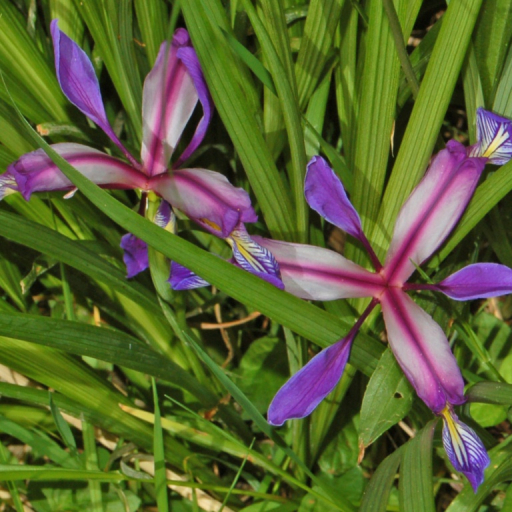
Plant Overview
Often called the Plum-scented Iris or Grass-leaved Iris, this European native is a master of disguise. While most irises scream for attention with tall, towering stalks, Iris graminea prefers a subtle approach, tucking its jewel-toned flowers beneath a dense fountain of grassy foliage. It is a favorite for sensory gardens because of its surprisingly intense fruity fragrance.
🔍 How to Identify
- 🌿 The Foliage: True to its name (graminea means "grassy"), the leaves are long, slender, and glossy green, forming a thick mound that looks like ornamental grass when not in bloom.
- 🌸 The Flower: Intricate blossoms featuring violet-blue upright "standards" and reddish-purple "falls" decorated with delicate white and yellow veining.
- 📏 The Stature: Unlike the common Bearded Iris, these flowers bloom on short stems, often sitting slightly lower than the tips of the leaves, giving the plant a "hidden gem" appearance.
🏡 In Your Garden
- 🍑 The "Plum" Scent: The primary reason gardeners love this plant is the scent. If you tuck a flower into a bouquet, it will fill the room with the distinct aroma of sun-ripened plums or apricots.
- 🌤️ Sun & Soil: While it enjoys the sun, this iris is much more tolerant of partial shade than its cousins. It prefers rich, loamy soil and appreciates consistent moisture, making it perfect for the edges of woodland gardens.
- 🌱 Low Maintenance: Once established, it is a tough, clump-forming perennial that rarely suffers from the "iris borer" pests that plague larger varieties.
⚠️ Safety & Toxicity
- 🐾 Toxicity Level: Moderate. Like all members of the Iris family, this plant contains the compound irisin.
- 🧤 Details: All parts of the plant, especially the rhizomes (roots), are toxic if ingested by pets or humans, leading to stomach upset. The sap can also cause mild skin irritation, so wearing gloves during division is recommended.
✨ Fun Fact
In the Victorian "Language of Flowers," Iris graminea was often associated with "hidden beauty" because the gardener has to physically move the leaves aside to fully appreciate the stunning, sweet-smelling blossoms hidden within.

Detailed Care Instructions
To grow Iris Graminea plants, you can follow these steps:
- Select a suitable planting location: Iris Graminea prefers full sun to partial shade. Choose a spot with well-draining soil that is slightly acidic or neutral.
- Prepare the soil: Amend the soil with organic matter, such as compost, to improve its fertility and drainage.
- Planting: Dig a hole large enough to accommodate the plant's roots. Place the Iris Graminea rhizome (root portion) horizontally in the hole with the top of the rhizome slightly above the soil surface. Make sure the roots are spread out. Fill the hole with soil and gently firm it around the rhizome.
- Watering: Water the plant thoroughly after planting to settle the soil. Keep the soil evenly moist but not waterlogged throughout the growing season. Iris Graminea does not tolerate excessive moisture, so allow the top few inches of soil to dry out between waterings.
- Fertilizing: Iris Graminea benefits from a balanced fertilizer, such as a 10-10-10, in early spring before new growth emerges. Follow the package instructions for application rates.
- Mulching: Apply a layer of organic mulch, such as wood chips or straw, around the plant to help retain moisture, suppress weed growth, and regulate soil temperature.
- Maintenance: Remove any weeds that may compete with the Iris Graminea plant. Cut off spent flower stems after blooming and remove any damaged or yellowing leaves.
- Division: Iris Graminea can become crowded over time. Divide the plant every 3-4 years in late summer or early fall. Dig up the rhizomes and separate them, ensuring each new division has several healthy roots and a part of the rhizome. Replant the divisions following the same planting instructions.
- Winter care: Iris Graminea is hardy and typically does not require much winter care. In colder regions, a layer of mulch can be added to protect it from freezing temperatures.
By following these steps and providing proper care, your Iris Graminea plant should thrive and grow well in your garden.

Place in a bright room that is sun drenched almost all day. Or directly in a south-facing window.

Iris Graminea is a type of perennial plant that requires proper watering to thrive. When watering this plant, it is important to provide enough water, but not to overwater it. Overwatering can lead to root rot and other diseases that can harm the plant's growth and health.
The best way to water Iris Graminea is to water deeply but less frequently. This means that you should water the plant until the soil is moist, but not waterlogged. The frequency of watering will depend on your climate, soil type, and other environmental factors.
Before watering, check the soil moisture by sticking your finger into the soil up to the second joint. If the soil feels dry, it's time to water. If the soil is still moist, wait a few days and check again.
When watering, make sure to water the base of the plant and avoid splashing water on the leaves. This can prevent fungal diseases from developing. Watering early in the day is also recommended, as this allows the plant to absorb the water before the sun and heat cause it to evaporate.
During dry spells or when the temperature is higher than usual, you may need to water more often. If your soil is sandy, you may also need to water more frequently as it drains faster.
Overall, Iris Graminea is a beautiful plant that can add vibrancy and life to any garden or landscape. Proper watering is crucial for its health and longevity, so make sure to pay attention to its needs and adjust accordingly.
The best time to fertilize this plant is in early spring or late fall. Use a balanced fertilizer with a higher middle number (such as a 10-10-5 or 5-10-10), and apply it according to the package instructions, usually about one tablespoon per square foot of soil. Be sure to water the plant thoroughly after applying the fertilizer. Avoid over-fertilizing, as this can lead to excessive vegetative growth at the expense of flowers.
The recommended soil type to use for the Iris Graminea plant is a well-draining, slightly acidic soil that is rich in organic matter. It should not be heavy or compacted, as this can lead to waterlogging and root rot. The ideal pH for the soil should be between 5.5 and 6.5. The plant prefers full sun to partial shade and should be watered regularly, but not excessively. It is also important to fertilize the soil with a balanced, slow-release fertilizer in the spring and summer months.
There are several ways to propagate this plant, but one common method is by dividing the rhizomes. First, prepare the new planting location by loosening the soil and adding organic matter such as compost. Then, dig up the original plant and gently remove the excess soil from the root system. Using a sharp knife, cut the rhizomes into sections, making sure that each section has at least one healthy shoot and a portion of the root system. Plant each section in the prepared location, making sure that the top of the rhizome is no deeper than the soil surface. Water the new plants thoroughly and continue to keep the soil moist until they are established. Another method to propagate this plant is by collecting the seeds and planting them in a well-draining soil mix, making sure to keep the soil moist but not waterlogged. The seeds will typically germinate within several weeks.








