Plant Overview
The Iris iberica, often hailed as the "Goddess of the Caucasus," is one of the most breathtaking members of the Oncocyclus group. Native to the rugged mountains of Georgia, Armenia, and Turkey, this iris is famous for its almost ethereal, oversized blooms that look like they were hand-painted by a master artist. While it has a reputation for being a "diva" in the garden, its dramatic, veined petals make it a holy grail for rare plant collectors.
🔍 How to Identify
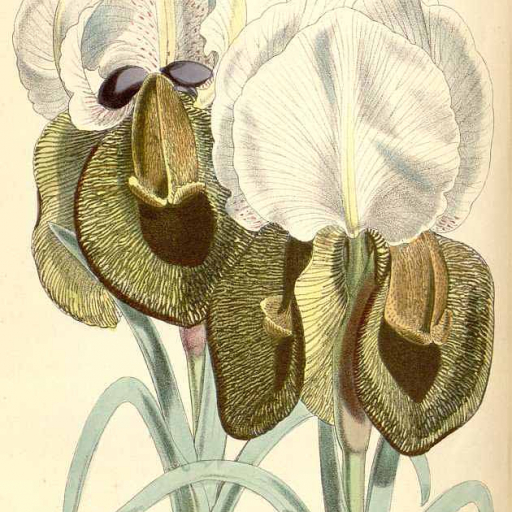
- 🎨 The Standards: The three upright petals (standards) are unusually large and papery, featuring a silvery-white or pale lavender base covered in a delicate web of fine, dark purple veins.
- 🍫 The Falls: The drooping lower petals (falls) are shorter and broader, densely covered in deep chocolate-brown or velvety maroon veins that create a much darker, richer appearance than the top of the flower.
- 🎯 The Signal Spot: At the center of each fall is a prominent, velvety dark "signal" patch, which acts like a landing strip for pollinators seeking shelter or nectar.
🏡 In Your Garden
- ☀️ The Summer Baking: This plant comes from regions with harsh, dry summers. To survive, the rhizomes need a "summer baking" period where the soil stays almost entirely dry and hot; if they get wet during their dormant stage, they will quickly rot.
- 🪨 Perfect Drainage: In its natural habitat, it clings to rocky slopes. If you are planting it at home, think of it as an alpine treasure—it requires extremely gritty, well-draining soil and a sunny spot protected from heavy winter rains.
⚠️ Safety & Toxicity
- 🐾 Mildly Toxic: Like most members of the Iris family, the Iris iberica contains compounds called iridin, primarily concentrated in the rhizomes (bulbs).
- 🖐️ Irritant Potential: While not deadly, ingestion can cause stomach upset in pets or curious children. Some gardeners with sensitive skin may experience mild irritation after handling the rhizomes, so wearing gloves during division is a smart move.
✨ Fun Fact
The intricate dark patterns on the Iris iberica are thought to be a form of "thermal mimicry." Because the dark patches absorb heat from the sun more quickly than the rest of the flower, they provide a warm, cozy micro-climate that attracts bees looking for a place to rest and warm up!

Detailed Care Instructions

Place in a bright room that is sun drenched almost all day. Or directly in a south-facing window.

Some plants require more regular watering than others, which should be done every few days. It's critical to maintain the soil moist all of the time. The water requirements of the same plant placed in pots with varying sizes will differ. Because the water in the smaller pot evaporates faster than the water in the larger pot, it will require more watering. Regardless of pot size, the surface should constantly be maintained moist.








