Plant Overview
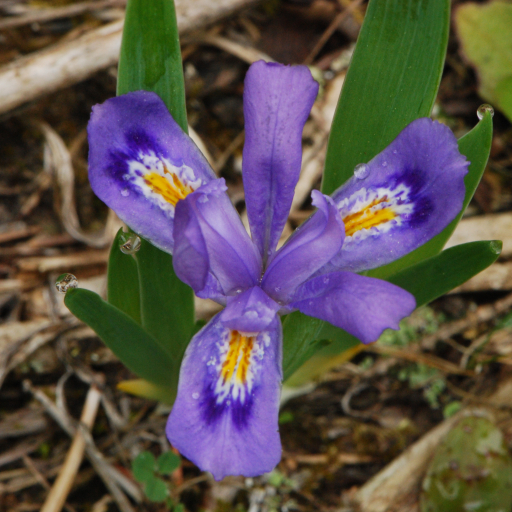
The Dwarf Lake Iris is a tiny, vibrant treasure found almost nowhere else on Earth except the shores of the Great Lakes. Known as a "glacial relict," this miniature beauty has survived in its specific niche since the last Ice Age. Because of its rarity and striking sky-blue color, it was proudly named the official state wildflower of Michigan.
🔍 How to Identify
- 🟦 The Bloom: Features stunning deep blue to violet-purple flowers with three upright petals and three downward-curving "falls" marked with a bright yellow-and-white crested signal.
- 📏 Miniature Stature: Unlike your typical garden iris, this species is incredibly short, rarely growing taller than 3 to 6 inches, making it look like a floral carpet.
- 🗡️ Sword-like Leaves: The leaves are narrow, flat, and arranged in a fan-like shape, maintaining a soft green hue throughout the growing season.
🏡 In Your Garden & Habitat
- 🌲 Specific Sanctuary: In the wild, it thrives in the "semi-shaded" zone between open beaches and dense cedar or spruce forests. It loves the dappled light where the sun peeks through the canopy.
- 🏖️ Cool & Sandy: This plant prefers moist, alkaline, and sandy or gravelly soil. It is very sensitive to heat; if the soil gets too warm or dry, the plant will struggle to survive.
- 🚫 Conservation Note: Because it is a federally threatened species, you should never harvest this plant from the wild. If you wish to grow it, ensure you source it from a certified native plant nursery that specializes in Great Lakes flora.
⚠️ Safety & Toxicity
- 🚫 Toxic if Ingested: Like all members of the Iris family, the Dwarf Lake Iris contains a compound called iridin, primarily in its underground rhizomes (roots).
- 🐾 Pet & Child Safety: It is toxic to dogs, cats, and humans if eaten, leading to stomach upset, drooling, or lethargy. The sap can also cause mild skin irritation for those with sensitive skin.
✨ Fun Fact
The Dwarf Lake Iris is so picky about its home that 95% of the entire world’s population of this plant is found only in the state of Michigan! It is perfectly adapted to the thin, rocky soils left behind by retreating glaciers thousands of years ago.

Detailed Care Instructions
To grow Iris Lacustris, follow these steps:
- Choose the right location: Iris Lacustris prefers full sun to partial shade. Look for a spot with well-draining soil that is slightly acidic to neutral. Ensure the area has good air circulation as well.
- Prepare the soil: Loosen the soil and remove any weeds or debris. Add organic matter like compost or well-rotted manure to improve the soil's fertility and drainage.
- Planting: Iris Lacustris can be planted in spring or early fall. Dig a hole that is wide and deep enough to accommodate the plant's roots without crowding. Place the plant into the hole, making sure the rhizome (thickened stem) is level with the soil surface. Space multiple plants about 12-18 inches apart.
- Watering: After planting, water the Iris Lacustris thoroughly to settle the soil. Keep the soil consistently moist but not waterlogged during the growing season. Water deeply when needed, especially during dry spells.
- Mulching: Apply a layer of organic mulch around the plant to help retain soil moisture, suppress weed growth, and regulate the temperature of the soil.
- Fertilization: Apply a slow-release balanced fertilizer in spring when new growth appears. Follow the package instructions for the proper amount to use. Avoid over-fertilizing as it may lead to excessive foliage growth at the expense of flowers.
- Maintenance: Remove spent flowers to encourage more blooms and prevent seed production. After blooming, cut back any yellowing or damaged leaves. Dividing the rhizomes every 3-4 years in late summer or early fall can help rejuvenate the plant.
- Pest and disease control: Iris Lacustris is generally resistant to pests and diseases. However, watch out for common iris pests like thrips or iris borers. Inspect the plants regularly and take appropriate measures if any infestation is observed.
- Winter care: Iris Lacustris is hardy to USDA zones 3-8. In colder regions, apply a layer of mulch around the plants in late fall to insulate and protect the roots from freezing temperatures.
By following these steps, you can successfully grow Iris Lacustris and enjoy its beautiful blooms.

Place in a bright room that is sun drenched almost all day. Or directly in a south-facing window.

Iris Lacustris plant is a species of perennial flowering plant that requires regular watering to thrive. When watering this plant, it is important to avoid overwatering as it can lead to root rot. The plant should be watered when the soil becomes dry to the touch, usually once or twice a week depending on the climate and humidity.
To water the plant, gently pour water at the base of the stem, being careful not to splash the leaves or flowers. It is best to use room temperature water as cold water can shock the plant and hot water can scorch the roots. Watering should be done in the morning or evening when the temperatures are cooler to reduce water loss through evaporation.
During the summer months or in particularly hot and dry climates, it may be necessary to water the plant more frequently to prevent dehydration. However, it is still important to monitor the soil moisture to avoid overwatering. The plant should also be regularly checked for signs of stress such as wilted or yellowing leaves which may indicate underwatering or overwatering.
Overall, providing consistent and adequate watering for Iris Lacustris plant is key to maintaining a healthy and thriving plant.
To fertilize this plant, choose a balanced, water-soluble fertilizer with equal amounts of nitrogen, phosphorus, and potassium. Dissolve the fertilizer in water according to the manufacturer's instructions. Apply the fertilizer when watering the plant during the growing season, usually every two weeks. Avoid over-fertilizing, as this can lead to excessive growth and reduced flowering. Water the plant regularly and provide it with well-draining soil and full sun or partial shade.
Iris Lacustris should be grown in a soil that is well-draining and rich in organic matter. The soil should ideally have a pH range of neutral to slightly acidic. It does well in loams, sandy and clay soil types, but doesn't do well in heavy clay soil types. Incorporating compost or well-rotted manure into the soil will help it retain moisture and improve the soil texture. Adding perlite or vermiculite into the soil mix will improve the drainage. This type of soil makes it easier for the Iris Lacustris plant to properly grow and develop.
To propagate this plant, you should start by taking a cutting from a mature plant in the spring or summer. Cut a stem with several nodes, making sure to cut just below a node. Remove the bottom leaves from the stem, leaving only a few at the top. Dip the cut end of the stem in rooting hormone powder and plant it in a pot filled with moist soil. Place the pot in a sunny location that receives a few hours of shade each day. Keep the soil moist and the plant warm, but not in direct sunlight. In about three to four weeks, the cutting should have developed roots and begin to grow new leaves. Once the plant is well established, you can transplant it to a larger container or outside in a suitable location.








