Plant Overview
Often called the "Fried Egg Iris" for its striking white and gold blooms, Iris orientalis is a tall, elegant perennial hailing from the sun-drenched landscapes of Greece and Turkey. This "Spuria" type iris is a favorite for those seeking architectural height and a touch of Mediterranean class without the fuss of more delicate garden varieties. It is renowned for its vigor and its ability to return year after year with minimal intervention.
🔍 How to Identify
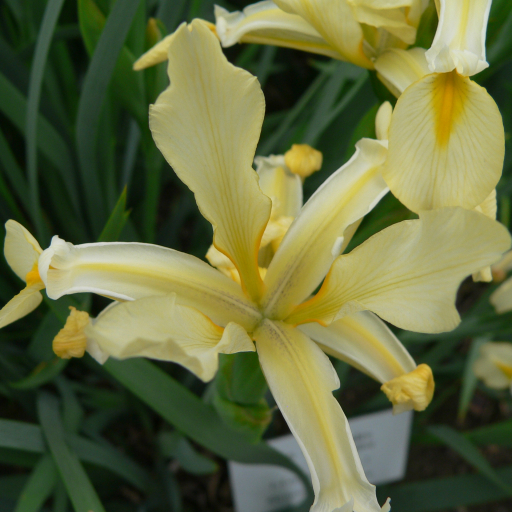
- 🍳 The "Fried Egg" Bloom: The flowers feature large, snowy-white petals with a brilliant, saturated yellow blotch (the "signal") in the center of the falls, creating a distinct egg-like appearance.
- 🌿 Sword-like Foliage: It produces stiff, upright, grayish-green leaves that resemble swords and stay attractive even after the flowering period has ended.
- 📏 Stately Stature: This is a giant of the iris world, frequently reaching heights of 3 to 5 feet, providing a dramatic vertical element to any landscape.
🏡 In Your Garden
- 🏛️ Soil Preference: Unlike many garden plants, this iris thrives in heavy, alkaline, or lime-rich soils. It is particularly well-suited for clay-heavy gardens where other plants might struggle with drainage.
- ☀️ Sun Seeker: To get those iconic blooms, it needs a position in full sun. While it can handle some dry spells once established, it appreciates consistent moisture during its spring growth spurt.
- 🧘 Minimal Disturbance: This plant possesses a deep taproot and thick rhizomes that hate being moved. Choose its "forever home" carefully, as it can take a year or two to recover and bloom again after being transplanted.
⚠️ Safety & Toxicity
- 🐾 Toxic to Pets: Like all members of the Iris family, this plant contains irisin. If ingested by dogs, cats, or horses, it can cause vomiting, drooling, and lethargy.
- 🧤 Skin Irritation: The sap and the rhizomes (bulbs) can cause minor skin irritation or dermatitis in some people. It is always a good idea to wear gloves when dividing the clumps.
✨ Fun Fact
Because of its incredible durability and salt tolerance, Iris orientalis is one of the few ornamental irises that can thrive in coastal gardens, standing up to salty sea breezes that would wither more sensitive flowers.

Detailed Care Instructions
To grow Iris orientalis (Belamcanda chinensis) successfully, follow these steps:
- Location: Choose a sunny spot in your garden that receives at least 6-8 hours of direct sunlight each day. Iris orientalis prefers well-draining soil, so improve the soil's drainage if necessary.
- Soil preparation: Dig the soil and remove any weeds or rocks. Add organic matter like compost or well-rotted manure to enrich the soil. This will enhance drainage and provide nutrients to the plant.
- Planting: Plant the Iris orientalis rhizomes in early spring or late summer. Dig holes that are about 4-6 inches deep and spacing them around 12-15 inches apart. Place the rhizomes in the holes with the pointed end facing up and cover them with soil, ensuring they are not planted too deeply.
- Watering: Iris orientalis prefers moderate watering. Water the plants deeply but allow the soil to dry out between waterings. Avoid overwatering as it can lead to root rot.
- Mulching: Apply a layer of mulch around the plants to retain moisture, suppress weed growth, and keep the soil cool. Pine straw, wood chips, or compost can be used as mulch.
- Fertilizing: Feed your Iris orientalis with a balanced fertilizer during the growing season. Apply the fertilizer according to the package instructions, usually every 6-8 weeks. Be careful not to over-fertilize, as this can damage the plant.
- Deadheading: Remove faded flowers to encourage new blooms and prevent the plant from putting energy into seed production.
- Division: Every 3-4 years, divide your Iris orientalis clumps to promote healthy growth and maintain vigor. Lift the rhizomes carefully, separate them, and replant them.
- Protection: In colder climates, the plant will benefit from a layer of mulch or straw during the winter months to protect it from freezing temperatures.
By following these steps and providing the necessary care, you can successfully grow Iris orientalis plants and enjoy their beautiful blooms.

Place in a bright room that is sun drenched almost all day. Or directly in a south-facing window.

Iris Orientalis plant requires adequate watering to thrive and grow well. One should water the plant regularly, especially during the growing season, to maintain a healthy moisture level in the soil. The soil around the plant should be kept moist but not waterlogged. One should avoid overwatering the plant as it can cause waterlogging and root rot, leading to the plant's death. It is best to water the plant early in the morning or in the evening when the temperature is cooler to minimize water loss through evaporation. One should also water the plant at the base instead of overhead to avoid wetting the foliage, which can increase the risk of foliar diseases. During the dormant season, water should be reduced to prevent waterlogging. It is advisable to use a well-draining soil mix and a pot with drainage holes to prevent waterlogging in potted plants.
To fertilize the Iris Orientalis plant, apply a balanced slow-release fertilizer in early spring before new growth appears. Use a fertilizer low in nitrogen, high in phosphorus, and moderate in potassium. Apply the fertilizer at the base of the plant, being careful not to get any on the foliage. Water thoroughly after fertilizing. Repeat the process annually for optimal growth and blooms.
The ideal soil for Iris Orientalis should be well-draining and nutrient-rich. It should have a pH level between 6.0 and 7.5, which is slightly acidic to mildly alkaline. The soil should not be too heavy or compact as it can retain too much moisture, posing a risk of root rot. Adding organic matter such as compost or leaf mold will improve the soil structure and provide the necessary nutrients. When planting Iris Orientalis, it is recommended to dig a hole two times the width of the plant's root ball and mix some organic matter in the planting hole. Water regularly but avoid overwatering to prevent waterlogging.
The Iris Orientalis can be propagated through division. Start by digging up a mature plant during the fall season. Gently shake the soil off the root ball and separate the clumps by pulling them apart. Be careful not to damage the roots. Each clump should have healthy leaves and roots attached. Replant the divided clumps in a well-draining soil mixture, ensuring that the top of the rhizomes are just covered with soil. Water the newly planted divisions thoroughly and continue to keep the soil moist until new growth appears.








