Plant Overview
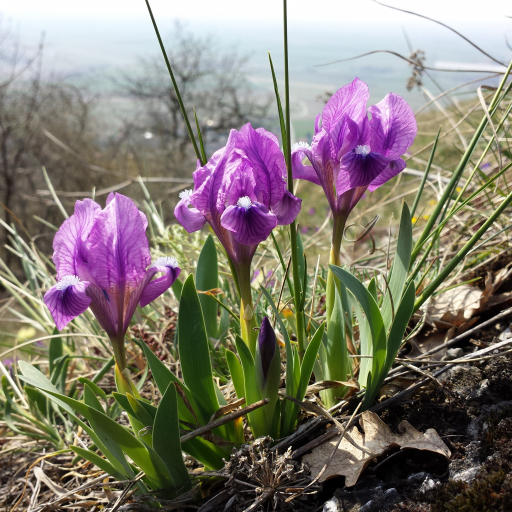
Often called the "Pygmy Iris," this tiny titan of the spring garden packs all the elegance of a standard Iris into a miniature frame. Originating from the rocky grasslands of Central and Eastern Europe, it is one of the first heralds of spring, often blooming while other plants are still dormant. In ancient myths, the Iris was named after the Greek goddess of the rainbow, and this dwarf variety acts as a concentrated drop of that celestial color right at ground level.
🔍 How to Identify
- 🌸 Petite Stature: This plant is a true miniature, rarely exceeding 4 to 8 inches in height, making it look like a dollhouse version of its larger cousins.
- ⚔️ Sword-like Foliage: It features stiff, upright, grayish-green leaves that grow in a fan-like shape, remaining attractive even after the flowers fade.
- 🧔 The "Beard": Look closely at the downward-curving petals (falls); you’ll find a fuzzy, caterpillar-like tuft of hairs—the "beard"—which helps guide pollinators into the heart of the flower.
🏡 In Your Garden
- ☀️ Sun Seeker: These little plants are sun-worshippers. They require at least six hours of direct light to produce their vibrant blooms; in the shade, they often refuse to flower and may succumb to rot.
- 🏜️ The "Sun-Baked" Rhizome: Unlike many plants, Iris pumila hates being buried deep. For success, ensure the top of the thick, potato-like root (rhizome) is slightly exposed to the air and sun.
- 🪨 Gritty Requirements: They are perfect for rock gardens or the front of a border because they demand excellent drainage. They are remarkably drought-tolerant once established but will perish quickly in "wet feet" or heavy clay.
⚠️ Safety & Toxicity
- 🐾 Toxic to Pets: All parts of the plant—but especially the rhizomes—contain the toxin iridin. If ingested by dogs or cats, it can cause salivation, vomiting, and lethargy.
- 🧤 Skin Sensitivity: The sap can be a skin irritant for some people. It is a good idea to wear gloves when dividing the clumps or trimming the foliage to avoid "Iris dermatitis."
✨ Fun Fact
- 🧪 A Genetic Pioneer: Iris pumila is the "secret ingredient" in modern horticulture. Almost every "Standard Dwarf Bearded" iris found in nurseries today is a hybrid descendant of this specific wild species, which breeders used to introduce hardiness and miniature sizing!

Detailed Care Instructions
To grow an Iris Pumila plant, also known as dwarf iris, you can follow these steps:
- Choose a well-draining location: Dwarf iris prefers a location with well-draining soil that is not consistently wet. They also prefer a spot that receives at least six hours of direct sunlight per day.
- Prepare the soil: Before planting, prepare the soil by removing any weeds or grass and loosening it up. You can add compost or organic matter to enrich the soil.
- Planting depth: Dig a hole that is wide and deep enough to accommodate the plant's rhizome (thickened stem).
- Planting the rhizome: Place the iris rhizome horizontally in the hole with the roots spread out and the top of the rhizome just above the soil surface. Fill the hole with soil, gently firming it around the roots.
- Watering: Water the newly planted iris thoroughly to settle the soil. Afterward, water regularly but avoid overwatering, as this can cause the rhizome to rot. Allow the soil to dry slightly between waterings.
- Mulching: Apply a layer of organic mulch around the plants to help retain moisture, suppress weeds, and regulate soil temperature. Keep the mulch a few inches away from the base of the iris to prevent rotting.
- Fertilizing: Feed the plant with a balanced slow-release fertilizer once a year in spring. Follow the package instructions for the proper application rate.
- Pruning: Remove spent flower stalks after blooming to promote neater appearance and redirect energy to the rhizome.
- Pest and disease control: Regularly inspect the plant for pests such as aphids or iris borers. Use appropriate measures, such as insecticidal soaps or organic pest control methods, to manage infestations. Additionally, ensure good air circulation around the plant to prevent fungal diseases.
- Division: Iris Pumila plants can be divided every few years in late summer or early fall. Lift the rhizomes, separate them into individual segments, ensuring each section has healthy roots, and replant them in a suitable location.
By following these steps, you can successfully grow and care for Iris Pumila plants in your garden.

Place in a bright room that is sun drenched almost all day. Or directly in a south-facing window.

To water this type of plant, it is important to take note of its specific watering needs. The soil surrounding the roots should be kept consistently moist but not overly saturated. Overwatering can cause root rot and other issues, while allowing the soil to dry out too much can lead to wilting and other signs of stress in the plant.
One way to ensure proper watering is to water deeply and infrequently rather than lightly and frequently. This allows the water to penetrate deep into the soil and reach the roots, rather than just moistening the surface. As a general rule, it is best to water the plant when the top inch of soil feels dry to the touch.
Additionally, it may be helpful to water the plant early in the morning or late in the evening to avoid excessive evaporation and heat stress. It is also important to avoid getting water on the leaves or flowers, as this can encourage fungal growth and other issues.
To fertilize this plant, first choose a balanced fertilizer with equal ratios of nitrogen, phosphorus, and potassium. Apply the fertilizer in early spring before new growth appears and again in late summer after the plant finishes blooming. Use a granular fertilizer and sprinkle it around the base of the plant, being careful not to let it touch the foliage or flowers. Water the plant thoroughly after fertilizing to help the nutrients reach the roots. Do not over-fertilize, as this can lead to excessive growth and a weak plant.
Iris Pumila requires soil that is well-drained but also retains moisture. It should be slightly acidic to neutral, with a pH between 6.0 and 7.0. The soil should be rich in nutrients and organic matter, with a good balance of minerals. Sandy or loamy soil is ideal, but heavy clay soils can be amended with organic matter to improve drainage and fertility. It is important to avoid soil that is compacted or poorly aerated, as this can lead to root rot and other problems. In general, the soil should be loose and friable, allowing roots to penetrate easily and absorb nutrients. A layer of mulch can also help to retain moisture and regulate soil temperature.
To propagate this plant you will need to take a rhizome cutting. You can do this by digging up the plant and finding a rhizome that has at least one healthy shoot attached to it. Use a clean, sharp knife to cut the rhizome into sections that each have at least one shoot and a portion of the rhizome attached.
Before planting the cuttings, prepare a pot or a planting area with well-draining soil that is mixed with sand or perlite to improve drainage. Make sure the soil is moist but not soggy.
Plant the cuttings with the shoots facing up and the cut end of the rhizome buried about an inch below the soil surface. Firmly press the soil around the cutting to remove any air pockets.
Water the cuttings well and place them in a bright, filtered light location. Don't place them in direct sunlight or they may dry out. Keep the soil moist but not soggy.
In a few weeks, the cuttings should start to grow new shoots. In about a year, the new iris plants should be large enough to plant outside in your garden.








