Plant Overview
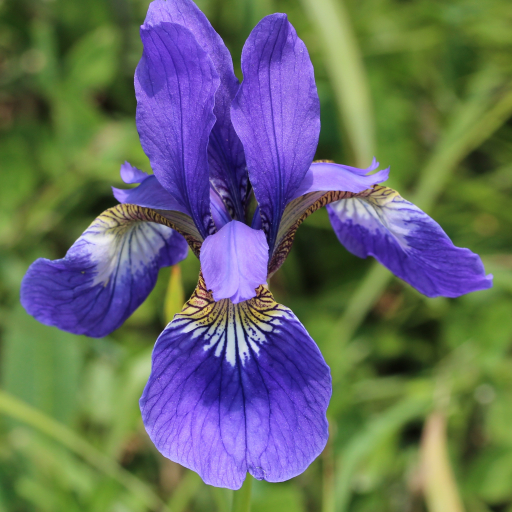
Often called the Blood-red Iris, this elegant perennial is a crown jewel of East Asian wetlands and meadows. Despite its dramatic name, the flowers themselves are typically a deep, velvety royal purple; the "blood" refers to the striking reddish-purple tint found on the spathes—the small leaf-like sheaths that protect the flower buds. It is a symbol of early summer in Japan, where it has been celebrated in art and poetry for centuries.
🔍 How to Identify
- 🎨 The Bloom: Large, beardless flowers in shades of deep violet-blue, featuring intricate white and yellow "signal" patterns at the base of the falls (lower petals).
- 🩸 The Spathes: Look closely at the base of the flower bud; the bracts are distinctly flushed with a dark, reddish-purple pigment, distinguishing it from the similar Iris sibirica.
- 🌿 The Foliage: Dense clumps of upright, sword-shaped leaves that remain a crisp, grassy green throughout the growing season.
- 📏 The Stems: Unbranched flower stalks that typically rise just slightly above the height of the leaves.
🏡 In Your Garden
- 💧 Moisture Lover: This iris is a "thirsty" plant that thrives in boggy conditions or near the edges of ponds. While it can tolerate normal garden soil, it will never reach its full, lush potential if allowed to dry out completely.
- 🌱 Root Stability: It spreads via thick rhizomes that prefer to be left undisturbed. Unlike some perennials that need frequent dividing, the Blood-red Iris blooms most prolifically when it is allowed to form a large, established colony over several years.
⚠️ Safety & Toxicity
- 🚫 Status: Toxic if ingested.
- 🐾 Details: Like most members of the Iris family, the plant contains irisin. The rhizomes (underground stems) are the most concentrated source of toxins; if eaten by pets or curious children, it can cause vomiting, salivation, and lethargy. The sap may also cause mild skin irritation in sensitive individuals.
✨ Fun Fact
In Japan, this plant is known as Ayame. Legend says that the Iris was used to protect homes from evil spirits, and even today, iris leaves are sometimes placed in traditional "Shobu-yu" (Iris baths) in May to promote health and ward off misfortune.

Detailed Care Instructions
To grow Iris Sanguinea plants, follow these steps:
- Choose a suitable location: Iris Sanguinea plants prefer to be grown in full sun or partial shade, in well-drained soil. Select a spot in your garden that receives at least six hours of direct sunlight daily.
- Prepare the soil: Amend the soil with organic matter like compost or well-rotted manure to improve drainage and fertility. Iris Sanguinea plants require soil that is slightly acidic to neutral (pH 6.0-7.0).
- Planting: Dig a hole that is wide and deep enough to accommodate the plant's roots. Place the Iris Sanguinea plant in the hole, ensuring that the rhizome is at or slightly above the soil level. Backfill the hole with soil and gently pat it down to remove air pockets. Leave sufficient space between plants, as they will multiply over time.
- Watering: Water the plant thoroughly after planting and continue to water regularly, keeping the soil consistently moist. Irrigate deeply to encourage root growth, but avoid overwatering, as excessive moisture can lead to root rot.
- Mulching: Apply a layer of organic mulch around the base of the plant to help retain moisture, suppress weeds, and regulate soil temperature. Avoid mulching directly against the rhizome to prevent rot.
- Fertilization: Iris Sanguinea plants generally do not require frequent fertilization. However, you can apply a balanced, slow-release fertilizer in early spring or a light application of compost each year to provide nutrients.
- Pruning: Remove any dead or yellowing leaves from the plant regularly to maintain its appearance and prevent the spread of disease.
- Division: After a few years, Iris Sanguinea plants may become overcrowded, leading to reduced blooming. Divide the rhizomes every three to four years in late summer or early fall to maintain plant health and promote more vigorous growth.
- Protection: Monitor the plant for pests like aphids or slugs, and take appropriate measures to control them. Provide support to the tall flower stalks if needed.
- Enjoy the blooms: With proper care, Iris Sanguinea plants will produce stunning crimson or purple flowers in late spring or early summer. Enjoy their beauty and the hummingbirds they attract to your garden.

Place in a bright room that is sun drenched almost all day. Or directly in a south-facing window.

When watering this particular plant species, it is important to be mindful of its specific moisture requirements. As a general rule, it is best to only water it when the top layer of soil feels dry to the touch. This can be easily determined by inserting your finger into the soil up to your second knuckle and feeling the moisture level.
When watering, it is important to thoroughly saturate the soil, being sure to water deeply enough so that the water reaches the roots. However, it is also important not to let the soil become waterlogged. This can lead to root rot and other issues. Be sure to provide adequate drainage to prevent this from happening.
It is also important to consider the environmental conditions surrounding the plant, such as temperature and humidity. In general, this species prefers moderate temperatures and humidity levels, so adjusting these factors can help to ensure its overall health and vitality.
Finally, it is important to monitor the plant closely for any signs of distress or illness, such as yellowing leaves or wilting. If such issues do arise, it may be necessary to alter watering practices or take other corrective measures in order to remedy the situation.
To fertilize this plant, you should start by selecting a high-quality, balanced fertilizer specifically formulated for flowering plants. The fertilizer should be rich in phosphorus and potassium to support healthy blooms and root growth. It is important to avoid fertilizers that are too high in nitrogen, as this can encourage excessive foliage growth at the expense of flowers.
Apply the fertilizer at the base of the plant, taking care not to get any on the leaves or flowers. Water the plant thoroughly after fertilizing to help distribute the nutrients. During the growing season, you should fertilize this plant every two to four weeks to ensure consistent, healthy growth and abundant blooms.
In addition to regular fertilization, it is important to provide this plant with adequate water, sunlight, and soil nutrients. Keep the soil moist but not waterlogged, and ensure that the plant receives plenty of bright, indirect sunlight. Pay attention to any signs of nutrient deficiency or plant stress, such as yellowing leaves or stunted growth, and adjust your fertilization and care techniques accordingly.
Iris Sanguinea plant prefers well-draining soil with a neutral pH. The soil should be rich in organic matter and should not be too compacted or heavy. Sandy loam or loamy soil with good drainage will be ideal for this plant. Adding compost or manure to the soil can also provide the necessary nutrients for healthy growth. It is important to ensure that the soil is not waterlogged or too moist, as this can lead to root rot and other diseases. Regularly amending the soil with organic matter and ensuring good drainage will help to keep the Iris Sanguinea plant healthy and thriving.
To propagate this plant, you can start by dividing a mature rhizome during the early spring. Select a healthy and vigorous rhizome and, using a sharp and sterilized knife, carefully cut it into sections each of which should have several leaves and a few roots attached. Be sure to keep each section hydrated by placing it in a container of water with its roots submerged.
Then, prepare a suitable planting bed by loosening the soil and adding organic matter to it. Plant the sections with their roots buried below the surface of the soil, and ensure that the soil is firm around them. Water the newly planted sections thoroughly, and maintain a consistently moist soil until they establish themselves.
It is also recommended to keep the plants in a shaded area until they have recovered and begun to grow new leaves. After a few weeks, you can gradually expose the plants to more sunlight and, once they have reached maturity, they will produce beautiful blooms in the late spring.








