Plant Overview
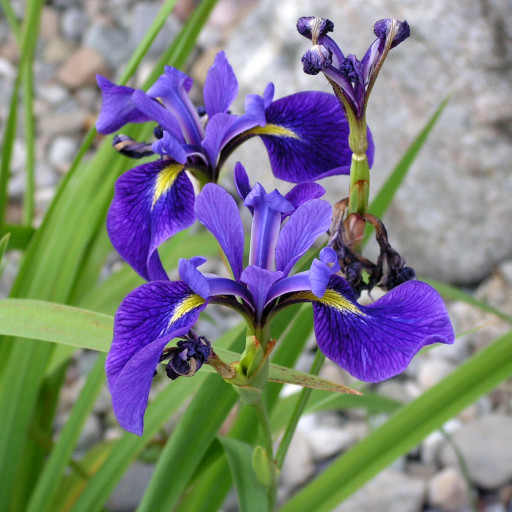
The "Northern Blue Flag" is the regal royalty of North American wetlands. Often found gracing the edges of marshes and streams, its elegant, multi-hued petals look like delicate origami scattered across the water. In folklore, the Iris is named after the Greek goddess of the rainbow, serving as a metaphorical bridge between the heavens and the earth.
🔍 How to Identify
- 🌿 Sword-like Leaves: The foliage consists of long, narrow, bluish-green blades that grow in flat, fan-shaped clusters, reaching up to 3 feet tall.
- 🌸 Complex Blooms: Each flower features three drooping "falls" (outer petals) decorated with intricate white and yellow "signal" patches, and three smaller, upright "standards" (inner petals).
- 🎨 Gradient Colors: While primarily a deep violet-blue, the petals often display a mesmerizing transition of colors, staying true to its name versicolor, which means "variably colored."
🏡 In Your Garden
- 💧 The "Wet Feet" Rule: Unlike many garden perennials that rot in soggy soil, this Iris thrives in standing water or mud. It is the ultimate choice for rain gardens, pond edges, or low spots in the yard that stay damp.
- 🌱 Rhizome Expansion: It spreads through thick underground stems called rhizomes. These roots are incredibly sturdy, making the plant an excellent natural anchor for preventing soil erosion along embankments.
⚠️ Safety & Toxicity
- 🚫 Toxic Status: Harmful if ingested. The plant contains a glycoside called irisin. If eaten by curious pets or children, it can cause significant gastrointestinal distress, including vomiting and drooling.
- 🧤 Skin Sensitivity: Handling the sap or the rhizomes can cause "Iris dermatitis," a localized skin irritation or rash. It is always wise to wear gardening gloves when dividing or pruning these beauties.
✨ Fun Fact
The Northern Blue Flag is the official provincial flower of Quebec! Beyond its beauty, the yellow patches on its petals aren't just for show; they act as "nectar guides," essentially serving as a neon landing strip that tells bumblebees exactly where to go for a snack.

Detailed Care Instructions
| Color | Violet-Blue |
| Soil Ph | Less Than 6.8 (Acidic) |
| Lighting | Full Sun |
| Soil Type | Rich And Moist |
| Bloom Time | May To July |
| Plant Type | Herbaceous Perennial |
| Mature Size | 2 To 3 Feet In Height And Spread |
| Native Area | Eastern North America |
| Sun Exposure | Full Sun To Part Shade |
| Hardiness Zones | 3 To 9, Usa |
To grow Iris Versicolor plants, you can follow these steps:
- Choose a suitable location: Iris Versicolor plants prefer full sun to partial shade, so select a spot that receives at least 6 hours of sunlight a day. The soil should be moist but well-drained.
- Prepare the soil: Dig up the soil and remove any weeds or debris. Add organic matter, such as compost or well-rotted manure, to enhance the soil fertility and drainage.
- Plant the rhizomes: Iris Versicolor plants are grown from rhizomes, which are horizontal underground stems. Dig a shallow trench and place the rhizomes with the pointed end facing upwards. Space them about 12-18 inches apart to allow room for growth.
- Cover and water: Gently cover the rhizomes with soil, leaving the top part exposed. Water the area thoroughly after planting to settle the soil and provide moisture.
- Watering and maintenance: Water the plants regularly, particularly during dry periods, to keep the soil evenly moist. However, avoid overwatering as overly wet conditions may cause root rot. Mulching around the plants can help retain moisture and suppress weeds.
- Fertilization: Apply a balanced, slow-release fertilizer once a year in early spring to promote healthy growth and blooming. Follow the manufacturer's instructions for application rates.
- Pruning and dividing: After the plants have finished flowering, remove any faded or dead flowers to maintain a tidy appearance. Every 3-4 years, divide and replant the rhizomes to prevent overcrowding and rejuvenate the plants.
- Winter protection: Iris Versicolor plants are hardy in USDA zones 3-9, but for colder regions, providing winter protection is beneficial. Apply a layer of mulch around the plants in late autumn to insulate the soil and protect the rhizomes from freezing temperatures.
By following these steps, you can successfully grow Iris Versicolor plants and enjoy their beautiful blooms.

Place in a window with dappled sun or a spot in the middle of a room. Or directly in a window facing west or east.

To water this particular plant, it is important to ensure that the soil is consistently moist but not waterlogged. This can be achieved by watering deeply once a week or more frequently if the weather is particularly hot and dry. However, it is important to avoid watering the leaves as this can increase the risk of disease. Additionally, providing a layer of mulch around the base of the plant can help to retain moisture in the soil and protect the roots. It is also important to monitor the plant for any signs of overwatering or underwatering, such as yellowing or drooping leaves.
To fertilize this plant, use a slow-release granular fertilizer specifically formulated for acid-loving plants. Apply the fertilizer in early spring, when the new growth appears. Make sure to spread the fertilizer evenly around the plant, keeping it away from the stem and avoiding piling it up around the base. Water the plant after fertilizing to ensure that the nutrients reach the roots. Repeat the fertilization process every six to eight weeks during the growing season, but do not fertilize after August to allow the plant to prepare for winter.
For optimal growth of this plant species, it is recommended to use a well-draining soil medium that is high in organic matter. The ideal soil pH range is between 5.5 to 7.0. It is important to avoid heavy, compacted soils or soils with poor drainage, as these conditions can harm the plant's root system. Additionally, it is recommended to amend the soil with organic fertilizer and/or compost to provide the necessary nutrients for healthy growth.
To propagate this species of plant, one can divide the rhizomes (underground stems) of mature plants in the fall or early spring. First, dig up the entire plant and gently remove the soil from its roots. Carefully separate the rhizomes with a sharp, sterile knife, making sure each piece has a portion of the crown and healthy roots attached. Any damaged or diseased pieces should be discarded. Plant the divided rhizomes in a new location, making sure to keep the crown at or slightly above soil level. Water thoroughly after planting and continue to water regularly until new growth appears in the following season.
Common pests of the blue flag include Spider mites, aphids, whiteflies. Make a habit of checking your blue flag frequently for pests so that any infestations can be caught and managed early.








