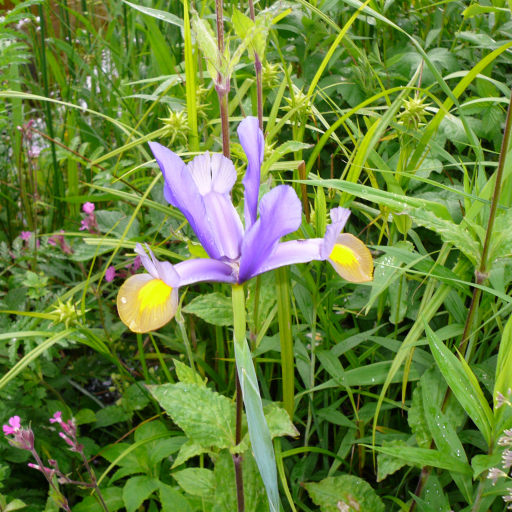
Plant Overview
Often referred to as the Spanish Iris, Iris xiphium is a Mediterranean native that has graced royal gardens and florist bouquets for centuries. Unlike the more common bearded irises that grow from thick rhizomes, this elegant species rises from a delicate bulb, producing slender, architectural blooms that seem to float on wiry stems. It is a symbol of refinement and is the primary ancestor of the world-famous "Dutch Iris" found in flower shops globally.
🔍 How to Identify
- 🌸 The Bloom Structure: Each flower features three upright "standards" and three drooping "falls." The falls typically boast a vibrant, central yellow or orange "signal" patch that acts as a landing pad for pollinators.
- 🍃 Grass-like Foliage: The leaves are narrow, channeled, and glaucous (blue-green), looking more like thick blades of grass than the wide, sword-shaped leaves of other iris varieties.
- 🎨 Color Palette: While most commonly found in shades of deep violet and sky blue, you may also encounter rare wild variants in white, yellow, or bronze.
🏡 In Your Garden
- ☀️ The Sun-Seeker: This plant thrives in "baking" conditions. It requires a spot that gets full summer sun to properly ripen the bulb after the foliage dies back, ensuring a spectacular show the following spring.
- 💧 Drainage is Key: Because it grows from a bulb rather than a rhizome, it is particularly sensitive to "wet feet." Plant it in gritty, well-draining soil to prevent the bulb from rotting during its dormant winter period.
- ⏳ Dormancy Nuance: Don't be alarmed when the plant disappears entirely in mid-summer. It is simply retreating underground to escape the heat; avoid overwatering the area during this "sleep" phase.
⚠️ Safety & Toxicity
- 🚫 Toxic Status: High. All parts of the Iris xiphium are considered toxic if ingested, with the highest concentration of toxins found in the bulb.
- 🐾 Pets & Kids: Contains the glycoside iridin, which can cause salivation, vomiting, and lethargy in cats and dogs. The sap may also cause mild skin irritation or "iris dermatitis" in sensitive gardeners, so wearing gloves during division is recommended.
✨ Fun Fact
The Iris xiphium is a "parent" to the florist’s Dutch Iris. In the late 19th century, breeders crossed this Spanish species with Iris tingitana to create the sturdy, long-lasting cut flowers we see today in nearly every Valentine's Day bouquet!

Detailed Care Instructions
| Humidity | Normal |
| Lighting | Full Sun |
| Toxicity | Poisonous |
| Difficulty | Medium |
| Hibernation | Cold Period |
| Hardiness Zones | 6 - 9 |
To grow Iris Xiphium plants, you can follow these steps:
- Climate and Soil: Iris Xiphium plants prefer a sunny location with well-draining soil. They thrive best in USDA hardiness zones 6-9. The soil should be rich in organic matter and have a pH level between 6 and 7.
- Planting Time: Plant Iris Xiphium bulbs in the late summer or early fall, around 4-6 weeks before the first frost. This allows the bulbs to establish roots before winter.
- Bulb Planting: Dig a hole about 4-6 inches deep and space the bulbs 4-6 inches apart. Place the bulbs with the pointed side facing up and cover them with soil. Water thoroughly after planting.
- Watering: Iris Xiphium plants require regular watering, especially during the growing season. Keep the soil moist but not waterlogged. Water deeply once or twice a week, depending on the weather.
- Mulching and Fertilizing: Apply a layer of organic mulch around the plants to help retain moisture, suppress weeds, and provide nutrients to the soil. Fertilize the plants in the spring with a balanced, slow-release fertilizer to promote healthy growth and flowering.
- Maintenance: Remove any weeds that may compete with the plants for nutrients and water. Deadhead the flowers after they fade to encourage more blooms. Cut back the foliage in late fall or early spring, leaving about 4-6 inches above the ground.
- Division: Iris Xiphium plants tend to form clumps over time. Every few years, in late summer or early fall, you can dig up the clumps and divide them. Separate the bulbs and replant them following the same planting instructions as mentioned earlier.
By following these guidelines, you can successfully grow Iris Xiphium plants and enjoy their beautiful blooms.

Place in a bright room that is sun drenched almost all day. Or directly in a south-facing window.

1. Determine the watering needs of the plant: Before watering the plant, it is important to know how much water the plant requires. This will vary depending on the soil type, humidity, and climate conditions. It is important not to over-water or under-water the plant.
2. Watering Frequency: Iris Xiphium plant requires regular watering at least once a week. During hot and dry days, the plant may require more frequent watering.
3. Watering Method: The best way to water an Iris Xiphium plant is to water it at the base of the plant. This ensures that the water reaches the roots which absorb the nutrients. Do not water the foliage as this can lead to fungal growth and disease.
4. Watering Quantity: Give the plant a good soak with plenty of water, allowing excess water to drain away from the roots. It is important to ensure that the soil is moist but not water-logged.
5. Time of Day: The best time to water an Iris Xiphium plant is early in the morning or late in the evening when the temperature is cooler. Watering during hotter parts of the day can lead to excess evaporation.
6. Rainwater: Rainwater is a good option for watering plants as it is free from chemicals found in tap water. Collecting rainwater in a barrel allows for an eco-friendly method of watering plants.
7. Signs of Overwatering or Under-watering: Over-watering can lead to root rot and fungal growth, while under-watering can lead to the plant becoming dehydrated and wilted. To avoid these issues, observe the plant and ensure that it receives the appropriate amount of water.
To fertilize this plant, you will need to use a balanced, water-soluble fertilizer during the growing season, which typically begins in the spring. The fertilizer should contain equal amounts of nitrogen, phosphorus, and potassium. Apply the fertilizer every 4-6 weeks, following the manufacturer's recommended dosage. Be sure to water the plant thoroughly before and after applying the fertilizer. Avoid fertilizing the plant during the dormant season in the fall and winter.
The ideal soil for Iris Xiphium plants is well-draining and rich in organic matter. A pH range of 6.0 to 7.5 is preferred. It should be kept moderately moist, but not waterlogged. The soil should also have good structure and not compact easily, as this can lead to poor root growth. The addition of perlite or sand can help improve drainage, and compost or well-rotted manure can add fertility to the soil. Avoid using soils that are heavy in clay or are too sandy, as this can affect the plant's growth and nutrient uptake.
The method by which iris xiphium plant can be propagated involves the use of its rhizomes. First of all, select a healthy mother plant from which rhizomes are to be taken. Carefully dig out the plant and separate the rhizomes that have new shoots growing on them. Each of these rhizomes should have at least three leaves and one root system. Then, the rhizomes should be cleaned and allowed to dry for a day or two. After this, plant the rhizomes in well-draining soil with good organic matter. Water it well, but do not over-water. Finally, place the plant in a shaded area or filtered light for the next few months until it has established roots.








