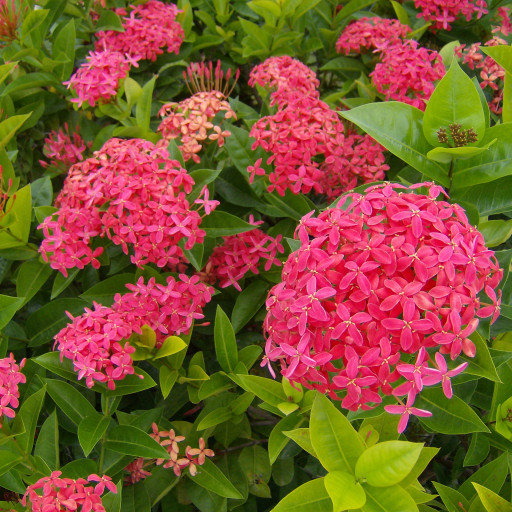
Plant Overview
Often called the "Jungle Flame" or "Flame of the Woods," Ixora is the crown jewel of tropical landscapes. Native to Southward Asia, this evergreen shrub is beloved for its massive, rounded flower clusters that look like exploding fireworks. It is a staple in warm-climate gardens, often used to create vibrant, living privacy fences that bloom almost year-round.
🔍 How to Identify
- 🌸 Floral Clusters: The standout feature is the "corymb"—a large, ball-shaped cluster consisting of dozens of small, four-petaled, star-shaped flowers in shades of scarlet, orange, yellow, or pink.
- 🍃 Leathery Foliage: Its leaves are dark green, glossy, and grow in opposing pairs. They have a thick, leathery texture that helps the plant retain moisture in the heat.
- 🌿 Growth Habit: It typically grows as a dense, multi-stemmed shrub. While it can reach up to 12 feet in the wild, garden varieties are often kept as compact, 3-to-4-foot mounds.
🏡 In Your Garden
- 🧪 The Acid Test: Ixora is an "acid-loving" plant. If your soil's pH is too high (alkaline), the plant will struggle to take up iron, leading to "chlorosis"—where the leaves turn yellow while the veins remain green.
- ☀️ Sun & Humidity: To get those iconic "flame" blooms, it needs at least 6 to 8 hours of direct sunlight. It is also a humidity seeker; if you grow it indoors or in dry climates, regular misting or a pebble tray is essential to prevent leaf drop.
⚠️ Safety & Toxicity
- 🐾 Pet Friendly: Ixora is generally considered non-toxic to dogs, cats, and horses, making it a safe choice for pet-filled backyards.
- 👶 General Caution: While not known to be poisonous to humans, the small berries that occasionally follow the flowers should not be eaten. Ingesting any non-food plant can cause mild stomach upset in small children.
✨ Fun Fact
In many Southeast Asian cultures, Ixora is more than just a pretty face; it is used in traditional medicine to treat everything from skin sores to digestive issues. Additionally, red Ixora flowers are frequently used as sacred offerings in Hindu temples and religious ceremonies.

Detailed Care Instructions
To grow an ixora plant, follow these steps:
- Plant selection: Choose a healthy ixora plant from a nursery or garden center. Look for plants with green, glossy leaves and no signs of disease or pest damage.
- Sunlight: Ixora plants thrive in full sun to partial shade. Choose a location that receives at least 6-8 hours of direct sunlight daily.
- Soil: Ixora prefers well-draining, slightly acidic soil with good organic content. Amend the soil with compost or organic matter before planting if necessary.
- Planting: Dig a hole slightly larger than the root ball of the ixora plant. Place the plant in the hole, making sure the top of the root ball is level with the surrounding ground. Backfill the hole with soil, gently firming it around the roots.
- Watering: Water the newly planted ixora thoroughly, ensuring the soil is moist but not waterlogged. Keep the soil consistently moist during the first few months until the plant gets established. After that, moderate watering when the soil feels dry is sufficient.
- Fertilization: Ixoras benefit from regular feeding during the growing season (spring to fall) with a balanced, slow-release fertilizer. Follow the instructions on the fertilizer packaging for the appropriate application rate. Avoid over-fertilizing as it can lead to excessive leaf growth at the expense of flowers.
- Pruning: Prune your ixora plant after the blooming period to maintain shape and size. Remove any dead, damaged, or diseased branches. Regular pruning helps promote bushier growth and encourages more flowering.
- Mulching: Apply a layer of organic mulch around the base of the plant, but keep it a few inches away from the stem to prevent rot. Mulching helps retain moisture, suppresses weed growth, and improves soil fertility.
- Pest and disease control: Monitor your ixora plant for pests such as aphids, scales, or mealybugs. Use organic insecticides or gentle insecticidal soaps to control infestations. Keep an eye out for common diseases like sooty mold or root rot, and treat them promptly.
- Propagation: Ixora plants can be propagated through stem cuttings. Take 4-6 inch long cuttings from healthy plants, remove the lower leaves, and dip the cut end in rooting hormone. Plant the cuttings in a well-draining potting mix and keep them in a warm, humid environment until roots develop.
Following these steps should help you grow a healthy ixora plant. Remember to provide good care, proper sunlight, and timely watering to ensure its successful growth.

Place in a bright room that is sun drenched almost all day. Or directly in a south-facing window.

To water this plant, you should first check the soil for moisture. Stick your finger about an inch into the soil to see if it feels dry. If it does, then it’s time to give the plant a drink. Use a watering can or hose to give the plant a deep watering, allowing the water to soak into the soil without saturating it. Avoid getting water on the leaves or blooms, as this can lead to fungus and disease. Water the plant only when the soil feels dry to the touch, but be careful not to let it completely dry out between waterings. In the winter months, the plant will need less water.
To fertilize this plant, use a fertilizer high in nitrogen, phosphorus, and potassium. Apply the fertilizer every 2-3 months during the growing season. Avoid over-fertilizing as it can damage the plant. Water the plant thoroughly before and after fertilizing.
Ixora plants require well-draining soil that is rich in organic matter. The soil pH should be slightly acidic to neutral, ranging from 5.5 to 7.0. A mix of loam, peat moss, and sand is recommended for optimal growth. The soil should be moist but not waterlogged, and it is important to avoid overwatering as this can lead to root rot. Adding a slow-release fertilizer to the soil can also help provide nutrients for the plant. Overall, a high-quality soil that is well-aerated and free from pests and diseases is essential for healthy Ixora growth.
To propagate this type of plant, one can take stem cuttings from a parent plant. Select a healthy, non-flowering stem and cut it at a 45-degree angle using a sharp, sterile knife. Remove any leaves from the lower two-thirds of the stem. You can then dip the cut end into rooting hormone and plant it in a well-draining potting mix. Keep the soil moist and provide bright indirect sunlight. After a few weeks, roots should begin to grow and you can transplant the cutting into its permanent location.







