Plant Overview
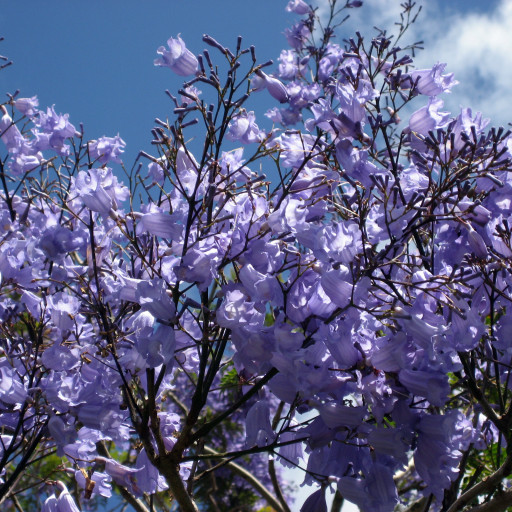
Known as the "Blue Jacaranda" or "Fern Tree," this stunning ornamental transforms entire landscapes into a dreamy purple haze every spring. Native to the high-altitude valleys of South America, it has become a global icon of beauty, often signaling the arrival of warmer weather. Its ethereal appearance has earned it a place in urban legends and poetry across the world.
🔍 How to Identify
- 🌿 The Foliage: The leaves are "bipinnate," meaning they are divided twice to create a feathery, fern-like appearance that provides dappled, elegant shade.
- 💜 The Flowers: Spectacular clusters (panicles) of bell-shaped, lavender-blue blossoms that often emerge on bare branches before the new leaves fully develop.
- 🫘 The Seed Pods: Unlike the delicate flowers, the fruit is a tough, flat, woody pod shaped like a circular shell or a guitar pick, which turns brown and snaps open when ripe.
🏡 In Your Garden
- ☀️ Sun and Space: To witness that iconic purple explosion, this tree requires "full-sun" therapy. Shaded Jacarandas tend to grow lanky and produce significantly fewer blooms.
- 🧹 The "Purple Carpet": While the falling flowers create a magical aesthetic, they can become quite slippery on sidewalks and sticky if left to decompose on parked cars or patio furniture.
- 🌱 Root Manners: Be mindful of placement; as the tree matures, its surface roots can become quite adventurous, occasionally lifting nearby pavers or thin garden walls if planted too close.
⚠️ Safety & Toxicity
- ✅ General Status: The Jacaranda is considered non-toxic to humans and common household pets like dogs and cats.
- 🖐️ Minor Irritation: While not poisonous, the sap can occasionally cause mild skin irritation in sensitive individuals, and the fallen, fermenting flowers may cause a minor stomach upset if a curious pet eats them in large quantities.
✨ Fun Fact
🎓 In Australia and South Africa, the blooming of the Jacaranda is famously known as the "Purple Panic." Because the flowers peak during end-of-year finals, students believe that if a purple blossom falls on your head, you are guaranteed to pass all your exams!

Detailed Care Instructions
| Color | Purple, White |
| Soil Ph | 6.0 To 6.8 |
| Humidity | Normal |
| Lighting | Part Sun |
| Soil Type | Well-Drained, Sandy |
| Bloom Time | Spring, Summer |
| Difficulty | Medium |
| Plant Type | Deciduous Flowering Tree |
| Mature Size | 25 To 50 Feet Tall And 15 To 30 Feet Wide |
| Native Area | Argentina, Bolivia |
| Temperature | 18°C - 24°C |
| Sun Exposure | Full Sun |
| Hardiness Zones | 10, 11 |
To grow a Jacaranda Mimosifolia plant, you can follow these steps:
- Choose a suitable location: Jacaranda trees thrive in full sun, so select a spot in your garden that receives at least six hours of direct sunlight per day. Additionally, ensure the soil is well-draining.
- Prepare the soil: Before planting, loosen the soil and remove any weeds or grass from the area. You can also add organic matter or compost to improve the soil's fertility and drainage.
- Planting: Dig a hole that is twice as wide and as deep as the root ball of the Jacaranda sapling. Gently place the sapling in the hole, making sure that the top of the root ball is level with or slightly above the ground. Backfill the hole with soil, firmly pressing it around the sapling to eliminate any air pockets.
- Watering: After planting, thoroughly water the sapling to settle the soil around the roots. Jacaranda trees require regular watering, especially during the first few weeks, to establish a strong root system. Once established, they are drought-tolerant and require less water.
- Mulching: Apply a layer of organic mulch, such as wood chips or bark, around the base of the tree. This helps conserve moisture, suppress weeds, and protect the roots from temperature extremes.
- Pruning: As the Jacaranda tree grows, you can prune it to shape it or remove any dead or damaged branches. Pruning is typically done during the dormant season in late winter or early spring.
- Fertilizing: Jacaranda trees don't require excessive fertilization. However, you can apply a balanced slow-release fertilizer in early spring to provide some nutrients.
- Protection from frost or cold: If you live in an area with frost or cold temperatures, especially during winter, you may need to protect your Jacaranda tree. Covering it with a frost blanket or moving container-grown plants indoors can help prevent damage.
Remember, Jacaranda trees are native to tropical and subtropical regions, so it may be challenging to grow them in colder climates. Ensure you're in a suitable hardiness zone (typically zones 9-11) for successful growth.

Place in a window with dappled sun or a spot in the middle of a room. Or directly in a window facing west or east.

The best way to water this plant is to make sure the soil is evenly moist, but not waterlogged. It is important to avoid letting the soil dry out completely as this can cause stress and damage to the plant. Watering should be done slowly and deeply to ensure that the roots are adequately hydrated. It is recommended to water in the morning or late afternoon to avoid evaporation during the hottest part of the day. Overwatering can lead to root rot, so it is important to let the top layer of soil dry out slightly before watering again.
For best results, fertilize this plant during the growing season using a balanced fertilizer. Apply the fertilizer according to the manufacturer's instructions, taking care not to over-fertilize as this can cause damage to the plant's roots. Avoid fertilizing during the plant's dormant period, as this can stimulate growth at a time when the plant should be resting. Water the plant thoroughly after fertilizing to help the nutrients reach the roots.
For planting and growing Jacaranda Mimosifolia, it is recommended to use a well-draining soil that is rich in nutrients. The soil should have a pH level between 6.0 to 7.5. A mixture of sand, peat moss, and loam can be used to create the optimal soil conditions. It is important to ensure that the soil is not too compacted, as this can hinder root growth and drainage. Additionally, adding fertilizer to the soil can help promote growth and development of the plant. As with any plant, it is important to monitor the soil moisture levels and water accordingly, taking care not to overwater or underwater the Jacaranda Mimosifolia.
To propagate a certain plant species that has delicate feathery leaves and vibrant purple flowers, you can collect its woody stem cuttings during the dormant season, which is usually in late fall or early winter. Using sharp and sterile pruning shears or a knife, take several cuttings that are about 6 to 8 inches in length with a diameter that is similar to that of a pencil. Make sure to choose cuttings that come from healthy and disease-free plants, and avoid those that have any visible damage or signs of pests.
Next, remove all leaves from the bottom two-thirds of the stem, leaving only a few leaves on the upper end. Dip the cut end of each stem into rooting hormone powder or liquid, which will stimulate root development. Then, insert each cutting into a container filled with a well-draining potting mix that is moist but not waterlogged. You can cover the container with a plastic bag or dome to create a humid environment that will prevent water loss.
Place the container in a bright but indirect light location, such as by a north-facing window or under a fluorescent light. Keep the soil moist but not waterlogged and check for any signs of growth after about four weeks. Once new shoots and roots have formed, which can take up to several months, you can transplant the new plants into individual pots or outdoors in a sunny and sheltered spot with well-draining soil. With proper care and maintenance, your propagated plant can grow into a stunning and ornamental tree that will attract bees and hummingbirds with its colorful flowers.
Common pests of the jacaranda include Scale insect, aphids, larvae. Make a habit of checking your jacaranda frequently for pests so that any infestations can be caught and managed early.








