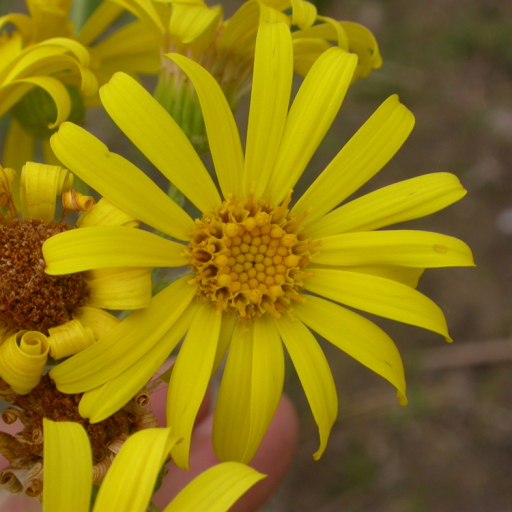
Plant Overview
The Fen Ragwort (Jacobaea paludosa) is a towering, golden-yellow rarity that stands as a symbol of wetland conservation. Often called the "Marsh Ragwort," this plant was once thought to be extinct in Britain before being rediscovered in a single drainage ditch in 1972. It is a dramatic, stately perennial that thrives where most plants would drown, bringing a splash of sunshine to the gloomiest marshes.
🔍 How to Identify
- 📏 Stately Height: This is no garden-variety weed; it can grow incredibly tall, often reaching between 1 to 2 meters (3–6 feet) in height.
- 🗡️ Saw-Toothed Leaves: The leaves are long, narrow, and lance-shaped with distinct, sharply pointed teeth along the edges, resembling a jagged saw blade.
- 🌼 Golden Clusters: The flowers appear in dense, flat-topped clusters. Each individual flower head is a bright yellow "daisy" with narrow, widely spaced petals (ray florets).
🏡 In Your Garden & Ecology
- 💧 The "Wet Feet" Specialist: Unlike its common cousins, the Fen Ragwort demands constant moisture. It is perfectly adapted to fens, ditches, and riverbanks where the soil is permanently damp and rich in nutrients.
- 🐝 Pollinator Magnet: Because it blooms in mid-to-late summer, it serves as a vital filling station for bees, hoverflies, and butterflies searching for nectar when other spring flowers have faded.
- 🌱 Conservation Icon: If you find this in the wild, you are looking at a botanical treasure. It is often part of reintroduction programs designed to restore biodiversity to lost swampland.
⚠️ Safety & Toxicity
- 🚫 Toxic if Ingested: Like most members of the Ragwort family, it contains pyrrolizidine alkaloids. These are poisonous to horses, cattle, and domestic pets if eaten in large quantities, as they can cause cumulative liver damage.
- 🧤 Skin Sensitivity: The sap can cause mild skin irritation or photosensitivity in some individuals. It is always best to wear gloves if you need to handle or prune the plant.
✨ Fun Fact
The Fen Ragwort is a true "Lazarus species." After being declared extinct in the UK in 1857, it remained a ghost for over a century until a tiny population was spotted by a botanist in 1972, leading to one of the most successful plant rescue missions in history!

Detailed Care Instructions
To grow Jacobaea Paludosa, also known as marsh ragwort or marsh fleabane, you can follow these steps:
- Location: Choose a suitable location for planting the Jacobaea Paludosa plant. It prefers wet or moist soil conditions, so make sure the planting site has good drainage but retains moisture.
- Soil: Jacobaea Paludosa grows best in acidic to neutral soil. Prepare the soil by removing weeds, rocks, and other debris. Amend the soil with well-rotted organic matter or compost to improve its fertility and moisture-retaining capacity.
- Planting: Plant the Jacobaea Paludosa seeds or young plants in late spring or early summer when the soil has warmed up. Space the plants 12-18 inches apart to allow for proper growth and airflow.
- Watering: Keep the soil consistently moist, especially during the growing season. Water the plants deeply, but avoid overwatering as it can cause root rot. Mulching around the plants can help retain moisture and prevent weed growth.
- Sunlight: Jacobaea Paludosa prefers full sun to partial shade. Ensure that the plants receive at least six hours of direct sunlight each day to promote healthy growth.
- Fertilizing: Apply a balanced, slow-release fertilizer once or twice a year to provide essential nutrients. Follow the package instructions for application rates.
- Pruning: Remove spent flowers regularly to encourage new blooms and prevent the plant from self-seeding excessively. Pruning also helps maintain a tidy appearance and prevent overcrowding.
- Pests and Diseases: Jacobaea Paludosa is generally resistant to pests and diseases. However, keep an eye out for aphids and caterpillars, which may occasionally infest the plants. If necessary, control them using organic or chemical insecticides.
- Winter Care: In colder regions, provide winter protection by mulching around the plants in late fall. This helps insulate the roots and prevent frost damage.
By following these steps, you can successfully grow Jacobaea Paludosa plant and enjoy its delightful flowers throughout the growing season.

Place in a bright room that is sun drenched almost all day. Or directly in a south-facing window.

To water this plant, make sure to check the soil moisture level first. Insert your finger about one inch into the soil to feel for moisture. If the soil feels dry, it's time to water.
Water the plant slowly and evenly to ensure that the water is absorbed by the soil instead of running off. Water the soil directly rather than the leaves to avoid any potential damage to the plant.
Make sure not to overwater the plant, as this can lead to root rot and other issues. It's best to water thoroughly but infrequently, rather than giving the plant a little bit of water every day.
In general, these plants prefer moist soil but not waterlogged conditions. Adjust your watering schedule accordingly based on the specific needs of your plant and its growing conditions.
To fertilize this plant, use a balanced fertilizer with equal amounts of nitrogen, phosphorus, and potassium. Apply the fertilizer once a month during the growing season (spring and summer). Mix the fertilizer with water according to package instructions and apply it to the soil around the base of the plant. Do not apply fertilizer when the soil is dry. Water the plant thoroughly after fertilizing.
Jacobaea paludosa is a plant that prefers moist, well-draining soil. A good soil mix for this plant would consist of a combination of peat moss, perlite, and sand to ensure proper moisture levels while preventing waterlogging. A slightly acidic pH level of around 6.0 to 6.5 is ideal for this plant species.
It is important to use a soil mix that is rich in organic matter to provide essential nutrients for the growth and development of the plant. Regularly fertilizing the soil with a balanced fertilizer during the growing season can also help promote healthy growth.
Additionally, it is recommended to repot the plant every 1-2 years to refresh the soil and provide new nutrients for the plant. Proper soil mixture and maintenance are crucial for the overall health and vitality of Jacobaea paludosa.
To propagate this plant, start by collecting seeds from a mature plant. Sow the seeds in a well-draining potting mix and keep them consistently moist in a warm, bright location.
Alternatively, you can take stem cuttings from a healthy plant. Choose a stem that is at least 4-6 inches long and has several leaves. Remove the bottom set of leaves and dip the cut end in rooting hormone powder. Plant the cutting in a potting mix that is moist but not waterlogged. Keep the cutting in a bright, warm location and mist it regularly to keep it hydrated.
Both methods can take several weeks to root and start developing new growth. Once the seedlings or cuttings have established roots and new growth, they can be transplanted into larger pots or the garden.








