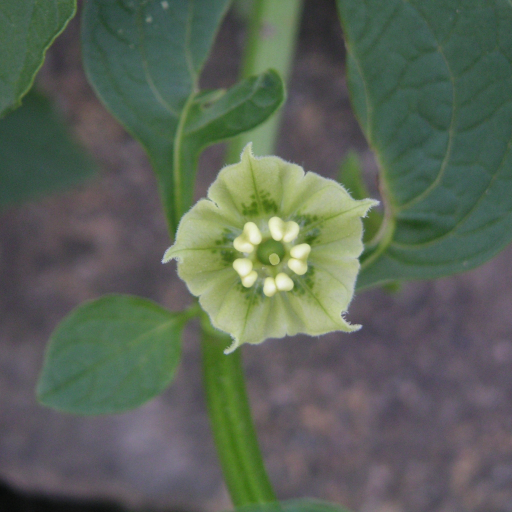
Plant Overview
Often called the Creeping False Holly or simply Jaltomate, this resilient plant is a fascinating relative of the tomato and potato. Native to the highlands of Mexico and Central America, it grows with a wild, rambling grace that often sees it tucked away in the corners of traditional cornfields. While it produces small, sweet-tasting dark berries, its appearance is a masterclass in nature’s "copycat" design, as it closely resembles its more dangerous nightshade cousins.
🔍 How to Identify
- 🌼 The Flowers: Look for small, wheel-shaped blossoms that are greenish-white or pale yellow. They usually feature five distinct lobes and striking purple nectar-guides at the very center.
- 🍇 The Berries: When mature, the fruit is a glossy, deep purple or near-black berry. Crucially, the berry sits atop a persistent green "cape" or calyx that spreads out like a star.
- 🌿 Growth Habit: This is a sprawling, herbaceous plant. It doesn't climb; instead, it tends to "procumbens" (lie along the ground) or lean on neighboring plants for support, reaching about 2–3 feet in spread.
🏡 In Your Garden
- 🌱 The Opportunist: In its native range, it is considered an "arvense"—a plant that isn't exactly a crop but is welcome in the garden. It loves disturbed, nitrogen-rich soil and will often pop up unexpectedly in compost piles or vegetable beds.
- ☀️ Sun & Space: Because of its sprawling nature, it needs room to breathe. While it thrives in full sun, it is remarkably shade-tolerant, making it a hardy choice for "wild" garden aesthetic where more delicate peppers or tomatoes might struggle.
⚠️ Safety & Toxicity
- 🟢 Cautionary Edible: The fully ripe, black berries are historically eaten in Mexican cuisine and have a sweet, earthy flavor. However, unripe green berries and all green parts of the plant are toxic.
- 🐾 Pets & Kids: Like many members of the Nightshade family, the plant contains solanine. It is best kept away from curious pets and children who might be tempted by the berry's resemblance to a small grape or blueberry.
✨ Fun Fact
In many parts of Mexico, Jaltomata procumbens is a "semi-domesticated" plant. Farmers often leave it alone when weeding their fields because they value the berries as a "snack from the earth" while they work, effectively turning a weed into a seasonal treat!

Detailed Care Instructions
To grow Jaltomata procumbens, also known as the "creeping bluebell," follow these steps:
- Select a suitable location: Jaltomata procumbens prefers a sunny to partially shaded location with well-draining soil. Ensure that the area provides enough space for the plant to spread as it grows.
- Prepare the soil: Prior to planting, prepare the soil by loosening it and removing any weeds or debris. Incorporate some organic matter, such as compost or aged manure, to improve soil fertility and drainage.
- Planting from seeds or cuttings: You can start Jaltomata procumbens from seeds or cuttings. If using seeds, sow them in a seed tray or pots filled with potting mix. Lightly cover the seeds with a thin layer of soil. Keep the soil consistently moist but not waterlogged. The seeds typically germinate within 2-4 weeks.
If using cuttings, take stem cuttings from a healthy Jaltomata procumbens plant, remove the lower leaves, and dip the cut ends in a rooting hormone. Then, insert the cuttings into a pot filled with a mixture of potting soil and perlite. Keep the soil moist and place the cuttings in a warm, bright location.
- Transplanting: Once the seedlings or cuttings have grown and developed a few sets of leaves, they are ready to be transplanted into their final location. Ensure that the soil is prepared as mentioned earlier and plant the seedlings or cuttings at the same depth they were growing.
- Watering: Jaltomata procumbens requires regular watering, especially during dry periods. Keep the soil moist but avoid overwatering, as this can lead to root rot. Allow the top inch of soil to dry out before watering again.
- Mulching: Apply a layer of organic mulch around the base of the plant to help retain moisture, suppress weed growth, and regulate soil temperature.
- Fertilizing: Feed the Jaltomata procumbens plant every 2-4 weeks during the growing season with a balanced fertilizer. Follow the manufacturer's instructions for proper dosage.
- Pruning: Prune the plant as needed to maintain its shape and improve airflow. Remove any dead or diseased branches and trim back overgrown areas.
- Pests and diseases: Jaltomata procumbens is generally pest and disease resistant. However, keep an eye out for common garden pests such as aphids, mealybugs, or spider mites. If infestations occur, treat them with organic insecticides or insecticidal soap.
- Winter care: In colder regions, Jaltomata procumbens may be treated as an annual or potted plant and brought indoors before the first frost. Place it in a sunny window or under artificial grow lights to provide sufficient light.
By following these steps and providing proper care, you can successfully grow Jaltomata procumbens plants.

Jaltomata Procumbens is a plant that requires regular watering, especially during the growing season. Watering should be done slowly and deeply, ensuring that the soil is saturated with water without being waterlogged. Overwatering can cause root rot and fungal diseases.
To water the Jaltomata Procumbens plant, it is recommended to use a watering can or hose with a gentle shower nozzle. Water should be applied directly to the soil around the base of the plant, avoiding getting water on the leaves or flowers. It is important to water the plant thoroughly, but allow the soil to dry out slightly before watering again.
The frequency of watering will depend on the climate and growing conditions. In hotter and drier climates, the plant may need to be watered more frequently, whereas in cooler and more humid conditions, less frequent watering may be necessary. It is important to monitor the soil moisture level and adjust watering accordingly.
During the winter months, when the plant is dormant, watering should be reduced to prevent waterlogging and rot. However, the soil should not be allowed to dry out completely.
Overall, proper watering is essential for the health and growth of the Jaltomata Procumbens plant. It is important to provide consistent and appropriate levels of moisture to ensure that the plant thrives.
To Fertilize Jaltomata Procumbens, use a balanced fertilizer with equal parts nitrogen, phosphorus, and potassium. Apply the fertilizer once every 2 weeks during the growing season. Mix the fertilizer according to the instructions on the package and apply it to the soil around the plant's base. Be careful not to get the fertilizer on the plant's foliage as it can cause damage. Water the plant after fertilizing to help distribute the nutrients into the soil.
Jaltomata procumbens is a plant species that requires a well-draining, nutrient-rich soil that is slightly acidic in nature. The soil should be composed of a mix of organic matter such as compost, peat moss or leaf mould, and a coarse material like perlite or sand to ensure good drainage. This plant prefers a soil pH range of 6.0 to 6.5. The soil should be kept moist but not waterlogged, so it is important to avoid soils that are heavy and retain water for too long. Garden soil can also be used if it is mixed with amendments such as perlite or sand to improve the drainage. However, it is important to ensure that the soil is free of pests and diseases before planting. Overall, a well-draining, nutrient-rich, slightly acidic soil is the best for Jaltomata Procumbens plant growth.
Jaltomata Procumbens plant can be propagated by taking stem cuttings. Select a healthy stem of the plant, cut it with a clean and sharp blade at a 45-degree angle. Remove the lower leaves from the cutting and dip the cut end into rooting hormones. Place the cutting in a well-draining soil mix and cover it with a plastic bag to create a greenhouse-like environment. Water the cutting regularly to keep the soil moist but not waterlogged. After around 4-6 weeks, the cutting should have rooted and can be transplanted into a larger container or into the outdoor garden.








