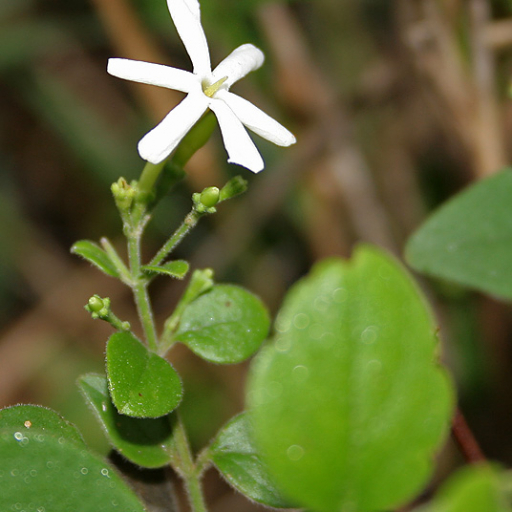
Plant Overview
Known lovingly as Juhi across the Indian subcontinent, Jasminum auriculatum is the understated darling of the fragrant garden. While its flowers are smaller and more delicate than the common jasmine, their scent is arguably more refined and potent, capable of perfuming an entire courtyard once the sun begins to set. It is a versatile beauty that can be trained to climb a trellis or pruned into a compact, bushy shrub.
🔍 How to Identify
- 🌸 The Pinwheel Bloom: The flowers are snowy white and star-shaped, typically featuring 5 to 7 slender petals that look like tiny spinning pinwheels.
- 🍃 The "Little Ears": Its species name, auriculatum, refers to the unique leaves. Each main leaf is flanked by two tiny, ear-like leaflets at the base, making it easy to distinguish from other jasmine varieties.
- 🌿 Growth Habit: It has slender, woody stems that are semi-scandent, meaning they naturally want to scramble over neighboring plants or fences if not given a dedicated support.
🏡 In Your Garden
- ☀️ Chasing the Sun: To get that signature heavy bloom, this plant demands plenty of bright, direct sunlight. If kept in too much shade, it will produce lush green foliage but very few of those prized fragrant flowers.
- ✂️ The Pruning Secret: Juhi responds incredibly well to "heading back." Pruning it right after the flowering season encourages new, vigorous growth and prevents the plant from becoming "leggy" or sparse at the bottom.
- 💧 Thirsty but Picky: While it loves regular moisture, it is prone to root rot if the soil stays swampy. Use a well-draining potting mix rich in organic matter to keep its roots cool but dry.
⚠️ Safety & Toxicity
- ✅ Status: Generally Non-Toxic.
- 🐾 Details: Unlike "Carolina Jasmine" (which is not a true jasmine and is highly toxic), Jasminum auriculatum is considered safe for households with pets and children. However, ingesting any plant material can cause mild stomach upset in curious cats or dogs, so it’s best kept out of reach of heavy chewers.
✨ Fun Fact
The specific epithet auriculatum comes from the Latin word auricula, meaning "earlobe." If you look closely at the base of the leaf stalk, those two tiny secondary leaves look exactly like a pair of miniature ears!

Detailed Care Instructions
To grow Jasminum Auriculatum plant, also known as the Indian Jasmine or Kundumalligai, you can follow these steps:
- Choose the right location: Find a spot in your garden or balcony that receives plenty of sunlight (at least 6-8 hours a day) but also has some shade in the afternoon. The plant can also tolerate partial shade.
- Soil preparation: The Indian Jasmine plant prefers well-drained and fertile soil. Mix some organic compost or well-rotted manure into the soil to enhance its fertility and drainage.
- Planting: Dig a hole in the prepared soil that is slightly wider and deeper than the plant's nursery pot. Gently remove the plant from its pot, loosen the roots, and place it in the hole. Backfill with soil and press it down firmly.
- Watering: Water the plant thoroughly after planting to settle the soil and remove any air pockets around the roots. Afterward, water the plant regularly, keeping the soil slightly damp but not waterlogged. Reduce watering during the winter months.
- Mulching: Apply a layer of organic mulch around the plant to help retain moisture, regulate the temperature, and suppress weed growth. Avoid mulching directly against the plant's stem to prevent rotting.
- Fertilization: Feed the plant with a balanced fertilizer every two to three months during the growing season (spring to autumn). Follow the instructions on the fertilizer package for the correct dosage.
- Pruning: Prune the Indian Jasmine plant after the blooming season to remove any dead or damaged branches and to maintain a desired shape. This will also encourage new growth and better flowering.
- Support: As Indian Jasmine is a climbing plant, provide it with a trellis, arbor, or similar support structure to help it climb and develop its beautiful foliage and flowers.
- Protect from extreme temperatures: If you live in an area with extreme heat or cold, consider providing some protection to the plant during these periods. Move potted plants indoors or provide shade or insulation to the plant as required.
- Monitor pests and diseases: Regularly check the plant for common pests like aphids, mealybugs, or spider mites. If you notice any signs of infestation or disease, promptly treat them with appropriate organic or chemical pest control methods.
By following these steps and providing proper care, you can successfully grow Jasminum Auriculatum plant and enjoy its fragrant flowers and lush green foliage.
To water this plant, it is important to first check the soil moisture level by inserting your finger into the soil. If the top few inches of soil feel dry, it is time to water. When watering, pour water directly onto the soil around the plant's base, being careful not to get water on the leaves or flowers. It is important to avoid overwatering, as this can lead to root rot. Wait until the soil has dried out slightly before watering again. This plant prefers slightly moist soil, but it is important to allow for good drainage. In general, this plant should be watered once a week or when the soil has dried out. During hot weather, the plant may require more frequent watering.
To fertilize this plant, you should use a balanced fertilizer with a ratio of 10-10-10. Apply the fertilizer once a month during the growing season, which is typically from spring to early fall. Be sure to dilute the fertilizer to half strength before applying to avoid burning the plant roots. Water the plant before and after fertilization to help distribute the nutrients evenly. Avoid fertilizing during the dormant season in winter.
Jasminum Auriculatum is a plant that is best grown in well-drained soil. It requires a soil that is rich in nutrients and organic matter to promote healthy growth. The soil should also be slightly acidic with a pH range between 5.5 and 6.5. It is important to ensure that the soil is properly aerated to prevent waterlogging and root rot. A mixture of loamy soil, peat moss, and perlite or vermiculite can be used to create a suitable soil mix for the plant. It is also recommended to add some compost or well-rotted manure to the soil to improve its fertility. The plant prefers a sunny location with partial shade during the hottest part of the day. Regular watering is necessary to keep the soil moist but not waterlogged.
Jasminum auriculatum can be propagated through stem cuttings. First, select a healthy stem that is about 6-8 inches long and contains several nodes. Remove the bottom leaves from the stem, leaving 2-3 leaves at the top. Dip the cut end of the stem in rooting hormone powder and plant it in a pot filled with well-draining soil. Water the soil and cover the pot with a plastic bag to create a greenhouse effect. Place the pot in a warm, bright place but out of direct sunlight. Keep the soil moist but not waterlogged. After a few weeks, the plant should start to produce new roots. Once the roots have formed, the plant can be transplanted into a larger pot or planted directly into the ground.








