Plant Overview
Often called Brazilian Jasmine or River Jasmine, this vigorous climber is famous for its intoxicating, sweet perfume that fills the air on warm evenings. Despite its name, it is actually native to Africa and earned its "Brazilian" title after becoming widely naturalized in South America. It is a romantic addition to any trellis, but be warned—this beauty is a fast-moving traveler that loves to claim new territory.
🔍 How to Identify
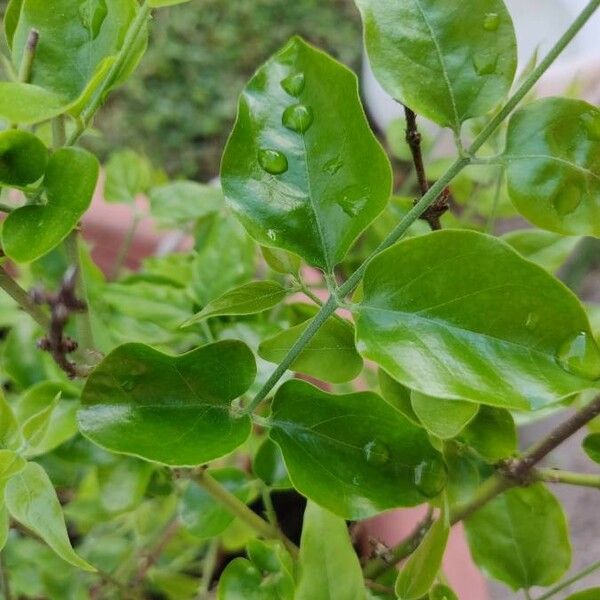
- 🍃 The "Rule of Three": Unlike many other jasmines, this species features "trifoliate" leaves, meaning each leaf is divided into three distinct, teardrop-shaped leaflets.
- 🌸 Starry Blooms: It produces clusters of small, snowy-white flowers that look like tiny stars with five to eight delicate petals.
- 🌿 Velvety Texture: If you touch the young stems and the undersides of the leaves, you’ll notice a soft, fine fuzz (pubescence) that distinguishes it from the smoother Jasminum officinale.
🏡 In Your Garden
- 🏃 A Spirited Climber: This plant grows with incredible speed. In a garden setting, it requires a sturdy support like a fence or pergola, or it will quickly turn into a dense, sprawling mound that can smother smaller neighbors.
- ☀️ Sun for Scents: While it can tolerate partial shade, it needs plenty of bright sunlight to produce its maximum volume of fragrant oils. If your jasmine isn't blooming, it’s likely "asking" for a move to a sunnier spot.
- ✂️ Containment is Key: In regions like Florida, it is considered an invasive species because it escapes gardens so easily. If you live in a warm climate, it is best grown in large containers to keep its aggressive root system in check.
⚠️ Safety & Toxicity
- 🐾 Pet Friendly-ish: Jasminum fluminense is generally considered non-toxic to dogs, cats, and horses. However, it is not an edible plant.
- 👶 Keep Away from Curious Toddlers: While not deadly, ingesting any garden plant can cause mild stomach upset or nausea in small children. Always monitor little ones around climbing vines.
✨ Fun Fact
The specific epithet fluminense is Latin for "from the river," specifically referring to Rio de Janeiro. It was mistakenly named this by botanists who first found it growing wild there, unaware that it had actually "hitched a ride" across the Atlantic from Africa centuries earlier!

Detailed Care Instructions
To grow Jasminum fluminense, also known as the Brazilian jasmine, you can follow these steps:
- Choose an appropriate location: Select a spot that receives full sun to partial shade. The plant can tolerate a range of soil types but prefers well-draining soil.
- Prepare the soil: Ensure the soil is loose, fertile, and well-draining. Consider adding organic matter such as compost to enrich the soil.
- Planting: Dig a hole that is slightly larger than the root ball of the plant. Place the plant in the hole, making sure the top of the root ball is level with or slightly above the soil surface. Fill the hole with soil, gently firming it around the plant.
- Watering: Provide regular watering, especially during the establishment period. Keep the soil consistently moist but not waterlogged. Once the plant is established, it can tolerate some drought conditions.
- Mulching: Apply a layer of organic mulch around the plant to help retain moisture, suppress weed growth, and regulate soil temperature.
- Pruning: Prune the plant in early spring to remove any dead or damaged branches. You can also trim the plant to shape it or control its size.
- Fertilization: Feed the plant with a balanced and slow-release fertilizer in early spring and again in mid-summer. Follow the instructions on the fertilizer package for appropriate dosage.
- Training: If desired, you can train the vine to climb on a trellis, fence, or other support structure. It can also be grown as a sprawling ground cover.
- Pests and diseases: Monitor the plant for common pests such as aphids or mealybugs. Treat as needed with insecticidal soap or a suitable insecticide. Watch for signs of diseases such as powdery mildew or root rot and address them promptly.
- Winter care: In areas with frost or freezing temperatures, provide winter protection by covering the plant with a frost cloth or moving container-grown plants indoors.
By following these steps, you can successfully grow Jasminum fluminense and enjoy its fragrant blooms.
To water this plant properly, you should first inspect the soil to make sure it is dry to the touch. Then, slowly pour water onto the soil, making sure not to splash the leaves or flowers. Water until the soil is saturated, but be careful not to overwater as this can lead to root rot. It is best to water this plant less frequently but deeply, rather than giving it frequent shallow waterings. Additionally, this plant prefers well-draining soil, so make sure the pot has drainage holes to prevent water from pooling at the bottom.
To fertilize this plant, use a balanced fertilizer with equal parts nitrogen, phosphorus, and potassium. Apply the fertilizer every two weeks during the growing season, which is typically from spring to early fall. Dilute the fertilizer at half the recommended strength and water the plant thoroughly after applying. Avoid over-fertilizing as it can lead to root burn and damage.
The recommended soil type for Jasminum Fluminense plants is a well-draining, sandy soil with a slightly acidic pH level. The soil should be rich in organic matter, as this will help to retain moisture and provide essential nutrients for the plant's growth. It is also important to avoid using heavy clay soils, as these can retain too much water and lead to root rot. To improve soil drainage, a layer of gravel or pebbles can be added to the bottom of the pot or planting hole. Additionally, regular watering and fertilization can help to maintain healthy soil conditions for the plant.
To propagate this plant, you will need to take stem cuttings from a healthy and mature plant. Choose a stem that is about 6 inches long and has at least 2-3 pairs of leaves. Using a sharp and clean pair of scissors or pruning shears, make a clean cut on the stem just below a leaf node. Remove the bottom pair of leaves, leaving only the top 2 leaves.
Prepare a small pot or container with a well-draining soil mix, such as a blend of perlite, peat moss, and sand. Insert the stem cutting into the soil, making sure that at least one leaf node is buried beneath the soil. Water the cutting lightly until the soil is moist but not saturated.
Cover the pot with a clear plastic bag or plastic wrap to create a humid environment. Place the pot in a bright but indirect light location, such as near a bright window. Keep the soil moist but not soggy and remove any dead leaves or stems as they appear.
After a few weeks, check the cutting for signs of roots. Gently tug on the stem to see if there is any resistance, indicating that roots have formed. Once roots have developed, remove the plastic covering and move the plant to a larger container or outdoor garden bed. With proper care, the propagated plant will develop into a healthy and mature Jasmine Fluminense plant.








