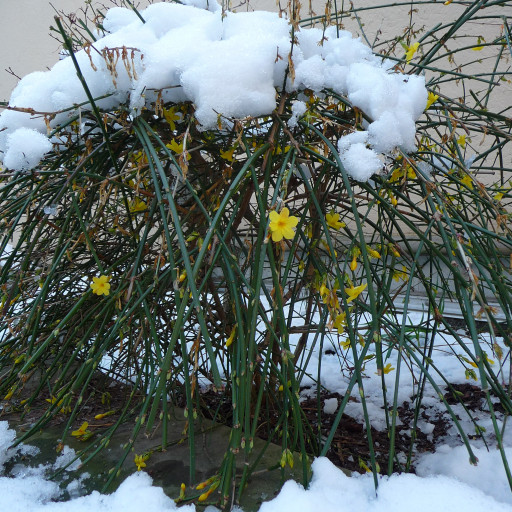
Plant Overview
Often called the "Winter Jasmine," this resilient shrub is one of the first signs of life in a sleeping garden. Native to China, it is celebrated for its cheerful yellow blooms that defy the frost, often appearing as early as January. Unlike its famous cousins, this jasmine doesn't rely on scent to attract attention; its vibrant "naked" flowers do all the talking.
🔍 How to Identify
- 🌼 The Flowers: Small, bright buttery-yellow blossoms with six petals. They appear solitary along the stems rather than in clusters.
- 🌿 The Stems: Slender, arching, and distinctly square-shaped. Remarkably, the stems remain a deep emerald green even in the dead of winter, providing color when other plants look skeletal.
- 🍃 The Foliage: Small, dark green leaves arranged in groups of three (trifoliate). These usually emerge only after the plant has finished flowering for the season.
🏡 In Your Garden
- 🧱 The Scrambler: Unlike many vines, Winter Jasmine doesn't have tendrils to climb on its own. It is a "scrambler" that looks best cascading over stone walls or tied carefully to a trellis to create a "yellow waterfall" effect.
- ✂️ Pruning Nuance: Because it blooms on the previous year's growth, you should only prune it immediately after it finishes flowering. If you wait until summer or fall, you’ll accidentally cut off all of next year’s flowers!
- 🌱 Soil & Sun: It is incredibly hardy and tolerates poor soil, though it prefers a sunny spot to maximize its flower production.
⚠️ Safety & Toxicity
- ✅ Status: Generally considered non-toxic.
- 🐾 Details: This plant is safe for households with curious cats, dogs, or toddlers. While it isn't meant for consumption, it doesn't contain the harmful alkaloids found in "False Jasmines" (like Carolina Jasmine), which can be quite dangerous.
✨ Fun Fact
The botanical name nudiflorum literally translates to "naked flower." It earned this name because its blossoms burst forth from the bare, leafless green stems, making it look like the plant forgot to put on its "clothes" before heading out into the winter cold!

Detailed Care Instructions
| Humidity | Normal |
| Lighting | Full Sun |
| Soil Type | Well-Drained |
| Bloom Time | Late Winter Or Early Spring |
| Difficulty | Medium |
| Plant Type | Deciduous Perennial |
| Hibernation | Cold Period |
| Mature Size | 4 Feet In Height With A Width Of 7 Feet |
| Native Area | China |
| Temperature | 10°C - 30°C |
| Sun Exposure | Full Sun To Partial Sun |
| Hardiness Zones | 6-10 |
To grow Jasminum nudiflorum (winter jasmine), follow these steps:
- Selecting the right location: Choose a spot with full sun to partial shade, preferably against a wall or trellis for support and protection from cold winds. The soil should be well-draining and fertile.
- Planting: Dig a hole that is larger and deeper than the plant's root ball. Place the plant in the hole, making sure the top of the root ball is level with the soil surface. Backfill the hole with soil, gently firming it around the plant.
- Watering: Water thoroughly after planting to settle the soil. Keep the soil consistently moist but not waterlogged, especially during the first year of growth. Jasminum nudiflorum is quite drought-tolerant once established, but regular watering helps promote healthy growth.
- Mulching: Apply a layer of organic mulch around the base of the plant to help retain soil moisture, suppress weed growth, and insulate the roots during extreme temperatures. Be careful not to pile the mulch against the stem.
- Pruning: Prune your Jasminum nudiflorum after it finishes flowering, which typically occurs in late winter to early spring. Remove dead or damaged branches and shape the plant as desired. This will help maintain its form and encourage new growth.
- Fertilizing: Apply a balanced fertilizer in early spring to provide essential nutrients for healthy growth. Follow the manufacturer's instructions for application rates and timing.
- Winter care: Despite its name, winter jasmine is quite hardy. However, in harsh winters, protect the plant by covering it with burlap or a frost cloth. Additionally, avoid pruning in late fall as this can stimulate new growth that may be damaged by cold temperatures.
With proper care, your Jasminum nudiflorum plant should grow well and provide beautiful yellow flowers during the winter months.

Place in a bright room that is sun drenched almost all day. Or directly in a south-facing window.

To water this plant, you should first check the soil moisture level by inserting your finger a few inches into the soil. If it feels dry to the touch, it's time to water. Use room temperature water and pour slowly onto the soil until it starts to drain out the bottom of the pot or container. Do not let the plant sit in standing water as this can cause root rot. Water as needed, usually every 7-10 days depending on the humidity and temperature of your home. Additionally, it's important to avoid getting water on the leaves or flowers as this can cause damage or disease.
To fertilize this plant, use a balanced, slow-release fertilizer in the spring when new growth begins. Apply the fertilizer according to the directions on the package, taking care not to over-fertilize as this can cause damage to the plant. Water the plant well after applying the fertilizer. Repeat the fertilizer application once or twice during the growing season as needed, but avoid fertilizing in the fall and winter when the plant is dormant.
The ideal soil for Jasminum Nudiflorum plant should have a neutral to slightly alkaline pH level, typically between 6.0 and 7.5. It should be well-draining, but also retain some moisture to ensure the plant's hydration needs are met. A mixture of sand, perlite, and peat moss can be added to the soil to improve its drainage and water retention qualities. The soil should also contain nutrients such as nitrogen, phosphorus, and potassium, which can be provided by using a slow-release fertilizer or compost. However, care should be taken not to over-fertilize the plant, as this can lead to nutrient burn and damage to the roots. Overall, the soil should be of good quality, with a light and loose texture that allows for root growth and promotes healthy development of the plant.
To propagate this plant, you need to take softwood cuttings in the spring or semi-hardwood cuttings in the late summer. Choose a healthy stem and cut it with a sharp and clean pruner around 4-6 inches long. Remove the leaves from the lower part of the stem and dip the cutting into a rooting hormone powder. Insert the cutting into a well-draining potting soil, water it well, and cover it with a plastic bag or a clear plastic container to create humidity. Place the container in a bright but indirect light and make sure to keep the soil moist until you see roots appear in about 4-6 weeks. Once the roots are established, you can transfer the cutting to a bigger pot or directly into the ground.
Common pests of the winter jasmine include Scale insect, mealybugs, spider mites, aphids, thrips. Make a habit of checking your winter jasmine frequently for pests so that any infestations can be caught and managed early.








