Plant Overview
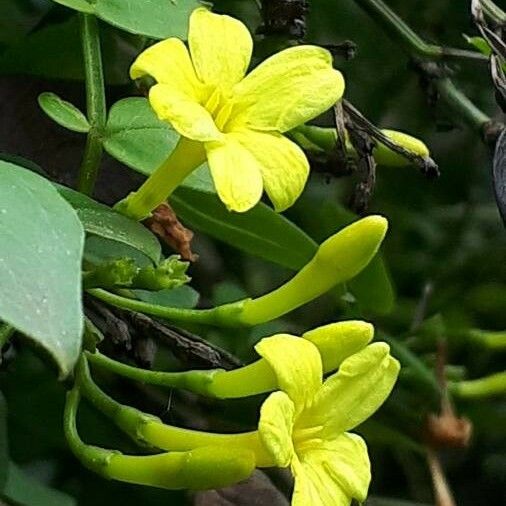
Often called the Yellow Jasmine or Madeira Jasmine, Jasminum odoratissimum lives up to its Latin name, which translates literally to "the most fragrant." Unlike many jasmines that wait for the moon to release their scent, this sunny shrub from the Canary Islands fills the air with a sweet, almost fruity perfume all day long.
🔍 How to Identify
- 🌼 Vibrant Blooms: Small, trumpet-shaped yellow flowers that open into five-pointed stars. They usually appear in clusters at the ends of the branches.
- 🌿 Glossy Foliage: The leaves are deep green, leathery, and "trifoliate," meaning they almost always grow in sets of three leaflets.
- 🌱 Growth Habit: It naturally grows as a multi-stemmed, mounding shrub rather than a vigorous vine, though it can be trained to lean against a trellis.
🏡 In Your Garden
- ☀️ Sun Seeker: Hailing from Mediterranean climates, this plant craves brightness. If it becomes "leggy" with long gaps between leaves, it is likely searching for more direct sunlight to fuel its blooms.
- 💧 Drainage is Key: It hates "wet feet." To mimic the rocky hillsides of its homeland, use a potting mix that drains quickly. Root rot is its biggest enemy in indoor or humid environments.
- ✂️ Post-Bloom Pruning: To keep the plant bushy and prevent it from becoming a tangled mess, prune it back lightly right after the summer flowering season ends.
⚠️ Safety & Toxicity
- ✅ Non-Toxic: True Jasmines in the Jasminum genus are generally considered safe and non-toxic for cats, dogs, and horses.
- ⚠️ The "False" Lookalike: Be careful not to confuse this with "Carolina Jasmine" (Gelsemium sempervirens). While both have yellow flowers, Carolina Jasmine is highly toxic if ingested. Always double-check the botanical name!
✨ Fun Fact
The scent of Jasminum odoratissimum is unique among jasmines; it lacks the heavy "indolic" musk of white jasmine and instead smells like a delicate blend of honey, orange blossom, and ripe apricots. It remains a prized ingredient in boutique perfumery today.

Detailed Care Instructions
To grow Jasminum Odoratissimum, follow these steps:
- Choose a suitable location: Select a spot in your garden or outdoor space that receives full sunlight to partial shade. Ensure it has well-draining soil.
- Prepare the soil: Loosen the soil and remove any weeds or stones. You can add organic compost or well-rotted manure to improve soil fertility and drainage.
- Planting: Dig a hole slightly larger than the root ball of the Jasminum Odoratissimum plant. Place the plant in the hole, ensuring the top of the root ball is level with the soil surface. Gently backfill the hole with soil, firming it around the plant to eliminate air pockets.
- Watering: After planting, thoroughly water the plant to help settle the soil around the roots. Water regularly, especially during dry periods or while the plant is still establishing itself.
- Fertilizing: Apply a slow-release fertilizer formulated for flowering plants in early spring and early autumn. Follow package instructions for the correct application rate.
- Pruning: Prune the plant in spring to remove dead or damaged branches and encourage bushier growth. You can also prune to maintain the desired shape or size.
- Mulching: Apply a layer of organic mulch, such as bark chips or straw, around the base of the plant to help retain moisture, suppress weeds, and regulate soil temperature.
- Support: If you want the plant to climb a trellis or support structure, provide a sturdy framework for it to cling to. You may need to tie the stems to the support using soft plant ties until they can attach themselves.
- Pests and diseases: Monitor the plant for pests like aphids or whiteflies. If infested, you can use organic insecticidal soap or neem oil to control them. Also, ensure good air circulation around the plant to prevent diseases like powdery mildew.
- Care and maintenance: Regularly check the soil moisture level and water the plant accordingly. Remove any weeds growing near the plant. Provide occasional doses of liquid seaweed or compost tea to promote healthy growth.
By following these steps and providing proper care, you can successfully grow Jasminum Odoratissimum and enjoy its fragrant blooms.
To water this plant, it is important to consider the soil's moisture level. Before watering, check if the soil is dry to the touch. If the soil is moist, it is not necessary to water.
When watering, pour water directly onto the soil and avoid getting the leaves wet. Ensure that the pot has proper drainage so that excess water can drain out.
During the plant's growing season, water it once or twice a week. During the dormant season, reduce watering to once every two weeks.
Keep in mind that overwatering can cause root rot, so it is important to not water too frequently. It is also important to consider the plant's placement. If it is placed in a hot, sunny area, it may require more frequent watering.
To fertilize the Jasminum Odoratissimum plant, start by selecting a balanced fertilizer with equal proportions of nitrogen (N), phosphorus (P), and potassium (K). Dilute the fertilizer by mixing it with water according to the instructions on the label.
Apply the diluted fertilizer to the soil around the base of the plant, making sure to distribute it evenly. Be careful not to get any fertilizer on the leaves or flowers, as it may cause burning.
For best results, fertilize the Jasminum Odoratissimum plant every 4-6 weeks during the growing season, which usually begins in spring and continues through summer. However, avoid fertilizing during winter, as the plant is generally dormant during that time.
Always follow the dosage recommendations provided by the fertilizer manufacturer, as excessive fertilization can harm the plant. Regularly monitor the plant's growth and adjust the fertilization frequency accordingly to promote healthy development.
The best type of soil to use for the Jasminum Odoratissimum plant is a well-draining soil rich in organic matter. It should have a pH range of 6.0 to 7.5 and should be fertile enough to support healthy growth. The soil should be loosened before planting to allow good nutrient and water absorption by the roots. It is important to avoid using heavy clay soils as they may cause waterlogging and root rot, leading to unhealthy growth and even death. On the other hand, sandy soils should be amended with organic matter to increase water retention capacity. Regular fertilization and watering will also help the plant thrive.
Jasminum Odoratissimum, a member of the Oleaceae family, is a climbing or trailing evergreen plant native to tropical and subtropical regions. It is highly valued for its fragrant flowers and lush green foliage. If you want to propagate this plant, follow these steps:
- Selecting the Propagation Method: There are several methods available to propagate Jasminum Odoratissimum, including cuttings, layering, and seeds. The most commonly preferred method is through cuttings.
- Preparing the Cuttings: To propagate through cuttings, select healthy stems that are about 4-6 inches long. Ensure that the stem has a node, which is the point from which leaves and roots emerge. Remove any flowers or buds from the cuttings.
- Cutting Technique: Use a sharp and sterilized knife or pruning shears to take the cuttings. Make a diagonal cut just below a node, ensuring the cutting is clean and smooth. Remove any leaves from the lower half of the cutting, keeping only a few leaves near the top.
- Rooting Hormone (optional): To enhance the success rate of rooting, you can dip the cut end of the stem in a rooting hormone powder or gel. This step is optional but can significantly increase the chances of successful propagation.
- Planting the Cuttings: Fill a small pot or container with well-draining soil mix. Make a small hole in the soil using a pencil or your finger and gently place the cutting into it. Ensure that at least one node is buried in the soil. Firmly press the soil around the cutting, providing stability.
- Providing Optimal Growing Conditions: Place the potted cuttings in a warm and bright location with indirect sunlight. Avoid exposing them to direct sunlight initially, as it may cause scorching. Maintain a humid environment by covering the pot with a plastic bag or using a propagator. Regularly check the moisture level in the soil and water as needed to keep it evenly moist.
- Rooting and Growth: Over the course of several weeks, the cutting will develop roots. Monitor the progress by gently tugging on the cutting. Once you feel resistance, it indicates successful root development. At this stage, you can gradually acclimate the plant to direct sunlight.
- Transplanting: Once the roots have established, usually after 8-12 weeks, you can transplant the newly rooted plants into larger pots or directly into the desired garden location. Remember to choose a well-draining soil mix and provide proper support for the climbing variety.
By following these steps, you can successfully propagate Jasminum Odoratissimum and enjoy its beautiful fragrant flowers and lush foliage in your garden.








