Plant Overview
Often called "Pink Jasmine" for its delicate rosy buds, Jasminum polyanthum is the ultimate sensory powerhouse for a patio or trellis. This vigorous climber can transform a bare fence into a cascading waterfall of white stars in just a few seasons. Native to China and Burma, it is beloved worldwide for its intoxicating, sweet perfume that dominates the air during the spring.
🔍 How to Identify
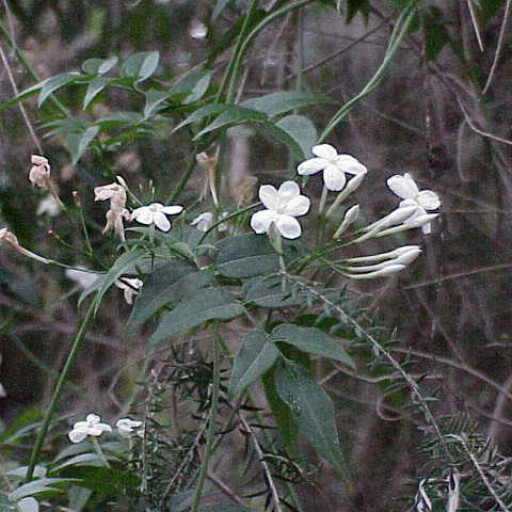
- 🌸 Buds & Blooms: It is easily recognized by its clusters of slender, reddish-pink buds that burst open into brilliant white, five-petaled star shapes.
- 🌿 The Foliage: The leaves are "pinnate," meaning they look like small green feathers, typically composed of five to seven lance-shaped, glossy leaflets.
- 🎋 Growth Habit: This is a twining vine that doesn't use tendrils; instead, the entire stem wraps itself tightly around any support it can find, from wires to neighboring trees.
🏡 In Your Garden
- ☀️ Light & Bloom Secret: While it can survive in partial shade, it requires bright light to produce its signature heavy bloom. It also benefits from a "cool spell" in autumn (lower temperatures) to help trigger the formation of flower buds for the following year.
- ✂️ Pruning Nuance: This plant is an Olympic-level grower and can quickly become a tangled "bird’s nest" if left alone. It is best to prune it aggressively immediately after the flowering season ends to keep it tidy and promote new growth.
- 🏺 Root Preference: Surprisingly, Pink Jasmine often flowers better when it is slightly root-bound. If you are growing it in a container, don't be in a rush to move it to a larger pot.
⚠️ Safety & Toxicity
- ✅ Safe Status: Jasminum polyanthum is non-toxic to humans, cats, and dogs. It is a "worry-free" addition to households with curious pets.
- 👃 Scent Sensitivity: While not chemically toxic, its fragrance is exceptionally potent. In small, unventilated indoor spaces, the intense aroma can occasionally cause headaches for people sensitive to strong perfumes.
✨ Fun Fact
Because of its incredible speed and ability to cover large areas, this plant is sometimes nicknamed the "Mile-a-Minute" vine. In the right climate, it can grow up to 20 feet in a single year!

Detailed Care Instructions
| Color | White And Pink |
| Invasive | Weed |
| Lighting | Full Sun |
| Soil Type | Any Well-Drained Soil |
| Bloom Time | Late Winter |
| Plant Type | Broadleaf Evergreen Climber |
| Mature Size | 20 Feet Long |
| Native Area | Western China |
| Sun Exposure | Full Sun To Part Shade |
| Hardiness Zones | 8-12 |
Growing Jasminum polyanthum, also known as pink jasmine or winter jasmine, requires specific care. Here is how you can grow it successfully:
- Choose the right location: Place Jasminum polyanthum in a location that receives bright, indirect sunlight for at least 4-6 hours a day. It can also tolerate some shade.
- Soil requirements: Plant it in well-draining soil with organic matter. The soil should be slightly acidic to neutral pH (around 6.0-7.0).
- Planting: Dig a hole twice as wide and deep as the plant's container. Gently loosen the root ball and place it in the hole, ensuring the soil level matches the top of the root ball. Backfill the hole with soil and water thoroughly.
- Watering: Keep the soil consistently moist but not waterlogged. During the growing season, water Jasminum polyanthum whenever the top inch of soil feels dry. Reduce watering in winter.
- Fertilizer: Feed the plant monthly during the growing season with a balanced liquid fertilizer or slow-release granular fertilizer. Follow the instructions on the fertilizer packaging for dosage.
- Provide support: Jasminum polyanthum is a climbing vine, so it needs support to grow. Install a trellis or place it near a fence or wall for the plant to climb on.
- Pruning: Prune the plant after it finishes flowering to maintain its shape and control its growth. Remove any dead or overgrown branches.
- Temperature and humidity: Pink jasmine prefers a warm climate with temperatures between 60-75°F (15-24°C). It also appreciates high humidity levels, so misting the foliage occasionally can be beneficial.
- Pests and diseases: Watch out for common pests like aphids, scales, and whiteflies. Treat infestations with insecticidal soap or horticultural oil. Check the plant regularly for signs of diseases such as powdery mildew or fungal infections and take appropriate measures if necessary.
By following these guidelines, you can grow a healthy and beautiful Jasminum polyanthum plant.

Place in a window with dappled sun or a spot in the middle of a room. Or directly in a window facing west or east.

To properly water this plant, it is essential to follow a few simple guidelines. It is crucial to ensure that the plant receives enough water, but not too much, as this can lead to root rot.
First, always use room temperature water to avoid shocking the plant. Second, water the plant when the soil feels slightly dry to the touch, but not completely dry. Be sure to provide enough water to the plant until excess water begins to drain out of the bottom of the pot.
Alternatively, water the plant from the bottom by placing the pot in a tray of water, allowing the plant to soak up water until the soil is evenly moist. Finally, avoid splashing water on the leaves or flowers, as this can lead to fungal diseases.
To fertilize this plant, begin by selecting a fertilizer that is high in phosphorous, as this will help to encourage blooming. Dissolve the fertilizer in water, using the recommended amount based on the size of the container or planting area. Water the plant thoroughly with the fertilizer solution, taking care to avoid getting it on the leaves or flowers. Repeat this process every 2 to 3 weeks during the growing season, which typically spans from early spring through the end of the summer. Be sure to follow the manufacturer's instructions for the specific fertilizer you are using, as different products may have slightly different application recommendations. Additionally, it is important to monitor your plant for signs of stress or over-fertilization, such as yellowing leaves or stunted growth, and adjust your fertilization routine accordingly.
To properly cultivate Jasminum Polyanthum, it is recommended to use a well-draining soil mixture that consists of a blend of organic matter and inorganic material. The soil should be slightly acidic, with a pH range of around 5.5-6.5. A good soil mix can be created by combining equal parts of peat moss, perlite, and pine bark. It is also important to ensure that the soil is rich in nutrients, so regularly adding a balanced fertilizer can help to promote healthy growth. Additionally, it is recommended to re-pot the plant every 2-3 years to ensure that it has enough growing space and fresh soil.
To propagate this plant, take a stem cutting from a healthy and mature plant. The cutting should be about 4-6 inches long and have at least three nodes. Remove the leaves from the lower half of the stem and dip the cut end in rooting hormone powder. Plant the cutting in a well-draining potting mix and keep it moist but not overly wet. Place the pot in a bright, but not direct, sunlight and protect it from extreme temperatures. The cutting should root in about 4-6 weeks and can then be transplanted into a larger pot or outdoor garden.
Common pests of the pink jasmine include Scale insect, mealybugs, spider mites, aphids, thrips. Make a habit of checking your pink jasmine frequently for pests so that any infestations can be caught and managed early.








