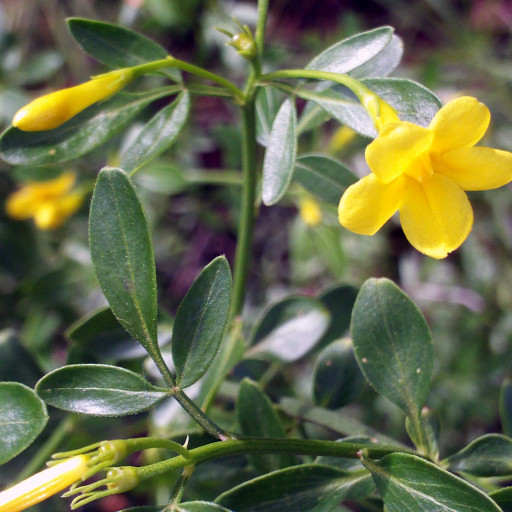
Plant Overview
Known as the "Queen of the Night" or "Poet’s Jasmine," this legendary climber has been a staple of romantic gardens and perfumes for centuries. Native to the tropical and subtropical regions of Eurasia and Oceania, Jasmine is prized more for its intoxicating, sweet fragrance than its delicate appearance. It is a plant that truly comes alive at dusk, releasing its scent to attract nocturnal pollinators and enchant anyone nearby.
🔍 How to Identify
- 🌸 Star-Shaped Blooms: Small, waxy flowers that typically feature five to nine delicate petals arranged like a star, usually found in clusters.
- 🌿 Glossy Foliage: Deep green, shiny leaves that can be simple or "pinnate" (resembling a feather), providing a lush backdrop for the pale flowers.
- 🧗 Twining Stems: A vigorous growth habit where the thin, green stems wrap themselves around trellises, fences, or neighboring plants to climb toward the light.
🏡 In Your Garden
- ☀️ Light & Bloom Power: While Jasmine is resilient, it needs plenty of bright, indirect light to produce its famous flowers. If kept in too much shade, it will grow plenty of green leaves but few fragrant blossoms.
- 💧 Drainage is Key: Jasmine loves "cool feet" and consistent moisture, but it hates sitting in stagnant water. Using a well-draining potting mix is essential to prevent root rot, especially for indoor specimens.
- ✂️ Post-Bloom Pruning: Because it is a fast grower, it can quickly become a tangled thicket. Pruning immediately after the flowering cycle helps maintain its shape and encourages more vigorous blooming for the next season.
⚠️ Safety & Toxicity
- ✅ Safe Status: True members of the Jasminum genus are generally non-toxic to humans, dogs, and cats.
- ⚠️ The "False" Jasmine Warning: Always confirm your plant is a "True Jasmine." Common lookalikes like Carolina Jasmine (Gelsemium sempervirens) or Star Jasmine (Trachelospermum jasminoides) are from different families and can be toxic or cause skin irritation.
✨ Fun Fact
In many cultures, Jasmine is a symbol of love and purity. In China, the flowers are used to "scent" tea by layering green tea leaves with fresh Jasmine blossoms for several weeks until the leaves absorb the floral essence—a process that has remained unchanged for over a thousand years!

Detailed Care Instructions
To grow a Jasminum plant, also known as Jasmine, you can follow these steps:
- Choose the right variety: There are different types of Jasminum plants, such as Jasminum officinale (common jasmine) or Jasminum sambac (Arabian jasmine). Determine which variety is suitable for your climate and personal preferences.
- Find the ideal location: Jasminum plants generally prefer bright, indirect sunlight. Select a location that receives several hours of sunlight each day. If you live in a colder climate, consider growing the plant indoors or in a greenhouse.
- Prepare the soil: Jasminum plants thrive in well-draining soil with a slightly acidic to neutral pH level. Add compost or well-rotted organic matter to the soil to improve its fertility and drainage.
- Plant the Jasmine: Dig a hole twice the size of the root ball of your Jasmine plant. Place the plant in the hole and backfill it with soil, ensuring that it is firmly packed around the roots. Water the plant immediately after planting to settle the soil.
- Watering and fertilizing: Water the Jasmine plant regularly, keeping the soil slightly moist but not waterlogged. During the growing season, apply a balanced fertilizer every few weeks to promote healthy growth and flowering.
- Provide support: Some Jasmine varieties are climbing plants and require support to grow. Install a trellis, stakes, or a fence to give the plant something to climb on.
- Pruning: Jasminum plants benefit from regular pruning to maintain their shape and encourage new growth. Prune after flowering or in early spring to remove any dead or damaged branches.
- Pest and disease control: Monitor your plant regularly for common pests like aphids or mealybugs. Use organic or chemical insecticides as necessary to control infestations. Ensure good air circulation around the plant to prevent diseases.
- Propagation: You can propagate Jasminum plants through stem cuttings. Take a 4-6 inch (10-15 cm) cutting from a healthy, mature plant. Remove the lower leaves, dip the cutting in rooting hormone, and plant it in potting soil. Keep the soil slightly moist and place the cutting in a warm, bright location until roots develop.
Remember that each Jasminum variety may have specific care requirements, so it's beneficial to research the specific needs of your chosen variety. With proper care and attention, your Jasminum plant can thrive and produce beautiful fragrant flowers.

Place in a bright room that is sun drenched almost all day. Or directly in a south-facing window.

To water this plant, use a watering can with a narrow spout or a hose with a gentle shower setting. Check the soil before watering by sticking your finger about an inch into the soil. If the soil feels dry, it is time to water. Water the plant until the soil is moist but not soggy. Avoid watering the leaves or flowers, as this can lead to fungal diseases. Allow excess water to drain out of the pot or soil to prevent waterlogged soil. Water more frequently during hot, dry weather, and less during cool, wet weather.
For best results, fertilize this plant with a balanced fertilizer once a month during the growing season. Be sure to dilute the fertilizer according to the package instructions and apply it to the soil around the plant, taking care to keep it away from the leaves and stems. In the winter, reduce fertilization to every other month or stop fertilizing altogether. Water the plant after fertilizing to help it absorb the nutrients. Avoid over-fertilizing, as this can lead to salt buildup in the soil, which can harm the plant.
The ideal soil for Jasminum plants should be well-draining and rich in organic matter. A loamy soil blend that is slightly acidic with a pH range of 5.5 to 7.5 is perfect for this plant. It is important to ensure that the soil is well-draining, as Jasminum plants do not tolerate waterlogged soil. A good mixture of sand, perlite, and peat moss would also be suitable to make the soil more porous. The plant prefers a soil that is consistently moist but not waterlogged. Adding mulch to the top of the soil will help to retain moisture and keep the plant's roots cool. In general, the soil should be well-aerated, nutrient-rich, and provide good drainage to allow for healthy growth and prevent root rot.
Propagation of the plant can be done through several methods, including stem cuttings and layering. For stem cuttings, select a healthy stem and cut it with a sharp knife or pruning shears. Remove the leaves from the lower half of the stem and dip it in rooting hormone. Plant the cutting in a pot with well-draining soil and water it thoroughly. Keep the soil moist and place the pot in a warm, bright area, but out of direct sunlight.
To propagate through layering, select a healthy stem and bend it down to the ground. Make a small incision in the stem where it touches the soil. Cover the incision with soil and keep the area moist. Roots will form from the incision and the new plant can be separated from the parent plant once it has established itself.
Propagation through division is also possible for mature plants that are growing from multiple stems. Simply dig up the plant and divide the stems into smaller sections, each with its own root system. Plant each division into its own pot with well-draining soil and water it thoroughly.
Regardless of the method used, it is important to keep the new plant in a warm, bright area with moist soil until it has established itself and is able to withstand dryer conditions.







