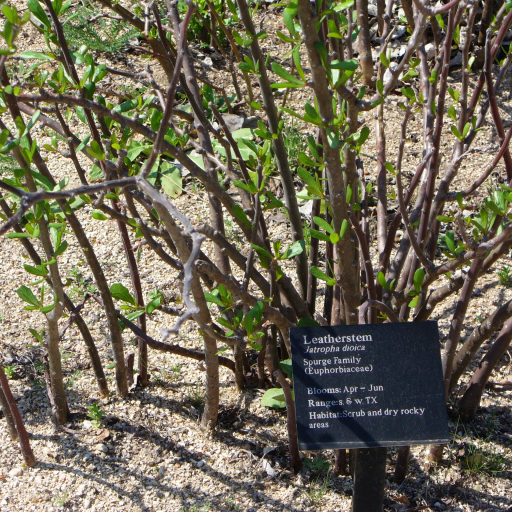
Plant Overview
Known as "Leatherstem" or "Sangre de Drago," this resilient desert dweller is famous for its rubbery, flexible stems that can be bent into a loop without snapping. Native to the arid landscapes of Texas and Mexico, it has long been a staple of folk medicine, earning its "Dragon's Blood" nickname from the way its clear sap oxidizes into a deep reddish-brown. It is a master of survival, thriving where other plants wither.
🔍 How to Identify
- 🌿 The Stems: Smooth, reddish-brown, and incredibly flexible; they look almost like polished leather or thick wires rising from the ground in clusters.
- 🍃 The Leaves: Small, narrow, and spatulate (spoon-shaped) leaves appear in small bundles along the stem, though they typically drop off during long dry periods to conserve water.
- 🩸 The Sap: When a stem is punctured, it leaks a clear liquid that rapidly turns a rust-red or orange color upon contact with the air, a striking visual defense.
🏡 In Your Garden
- 🏜️ Drought Strategy: This plant is a survival specialist. It is drought-deciduous, meaning it will drop its leaves at the first sign of water stress. Don't be fooled into thinking it’s dead; it is simply entering a tactical dormancy to wait for rain.
- 🪨 Soil & Stability: It thrives in rocky, well-draining limestone soils and hates "wet feet." Because it develops a sturdy, woody root system over time, it prefers to stay in one spot; frequent transplanting can shock the plant and stunt its growth.
⚠️ Safety & Toxicity
- 🚫 Status: Toxic if ingested. The plant contains various tannins and compounds that are meant to deter desert herbivores.
- 🐾 Pets & Skin: The "blood-red" sap can be a significant skin irritant for some people and can cause severe stomach upset if chewed by pets. It is also known to stain clothing permanently, much like actual blood.
✨ Fun Fact
In traditional Mexican folklore and historical medicine, the roots and sap were used to strengthen gums and treat toothaches, earning it the nickname "the toothbrush plant." Despite its medicinal history, its most famous party trick is being so flexible that you can literally tie a knot in a living stem without it breaking!

Detailed Care Instructions
To grow Jatropha dioica, also known as the desert bloodwood or buckthorn, you can follow these steps:
- Climate and location: Jatropha dioica is native to the southwestern United States and northern Mexico, and it thrives in arid or semi-arid regions. Ensure that your climate and location are suitable for this plant.
- Soil preparation: Jatropha dioica prefers well-draining soil with a neutral or slightly alkaline pH level. Prepare the soil by removing any weeds or debris and loosening it using a garden fork. Add organic matter such as compost or aged manure to improve soil fertility and drainage.
- Seed selection and preparation: Obtain Jatropha dioica seeds from a reputable nursery or source. Soak the seeds in water for 24 hours before planting to enhance germination.
- Planting: Dig holes in the prepared soil that are slightly larger and deeper than the size of the seeds. Space the holes around 6 to 8 feet apart to allow enough room for the plant to grow. Plant the seeds in the holes, making sure to cover them with soil and pack it lightly to secure the seeds.
- Watering: Water the newly planted seeds thoroughly but avoid overwatering, as Jatropha dioica is drought-tolerant. Water the plant deeply once a week or whenever the top few inches of soil feel dry. Adjust the frequency of watering based on weather conditions and the plant's water requirements.
- Maintenance: Remove any weeds or competing vegetation around the plant, as Jatropha dioica does not tolerate competition well. Apply a layer of mulch around the base of the plant to conserve moisture and minimize weed growth.
- Pruning: Prune Jatropha dioica during the dormant season to remove any dead, damaged, or crossing branches. This will promote better growth and shape the plant.
- Fertilization: Jatropha dioica is adapted to nutrient-poor soils and generally does not require regular fertilization. However, you can apply a balanced slow-release fertilizer sparingly in early spring to provide some extra nutrients.
- Pest and disease control: Jatropha dioica is relatively resistant to pests and diseases. However, keep an eye out for common issues such as aphids or whiteflies. If necessary, treat the plant with an appropriate organic or chemical insecticide.
- Propagation: Jatropha dioica can also be propagated through stem cuttings or by collecting and planting seeds from mature plants.
Remember to check with local authorities or gardening experts for any specific guidelines or regulations regarding growing Jatropha dioica in your area.

Place in a bright room that is sun drenched almost all day. Or directly in a south-facing window.

To water this plant correctly, you should consider the following factors:
1. Soil Moisture: Before watering your plant, you should check the soil moisture level. The soil should be slightly dry before you choose to water it again.
2. Watering Frequency: Depending on various factors, such as your climate, humidity levels, and location, you should water your plant in a specific frequency. Typically, it is recommended to water this plant once a week, but you should modify it based on the climate conditions.
3. Water Volume: The volume of water required would depend on the size of the pot and soil quality. When watering, it is essential not to overwater your plant, as it can cause root rot. A general rule of thumb is to water the plant until the water drains out of the holes in the pot, then wait until the soil is dry before watering it again.
4. Water Quality: The quality of water is important while watering any plant. Ideally, use filtered or distilled water as tap water contains chlorine or excess minerals, which can damage the plant.
5. Watering Time: The best time to water your plant is early morning or late evening when the temperature is cooler and the sun isn't too bright. Avoid watering in the middle of the day when the sun is hottest as it can evaporate the water before the roots can absorb it.
By following these watering instructions, you can keep your Jatropha Dioica plant healthy, well-nourished, and thriving.
To fertilize the Jatropha Dioica plant, apply a balanced fertilizer with equal amounts of nitrogen, phosphorus, and potassium. Use a slow-release fertilizer or apply liquid fertilizer every two weeks during the growing season. Be careful not to over-fertilize, as this can cause leaf burn or other damage to the plant. Always follow the instructions on the fertilizer label and avoid applying fertilizer to dry soil or during hot weather.
The best soil for growing Jatropha Dioica plants is well-draining, sandy soil that is rich in organic matter and nutrients. The soil pH should be neutral to slightly acidic, around 6.0-7.5. The plant prefers soil that is slightly moist but not waterlogged, and it does not tolerate soil that stays wet for long periods of time.
To improve soil quality, organic matter such as compost or well-rotted manure can be added to the soil before planting. Fertilizers high in phosphorus and potassium should also be applied during planting to encourage deep root growth and healthy foliage development.
It is important to avoid using heavy, clay soils or soils that are prone to waterlogging, as this can lead to root rot and other diseases. Additionally, using soil that has been contaminated with herbicides or pesticides can be harmful to the plant and affect its growth and health.
Overall, it is recommended to use a light, well-draining soil with ample organic matter and nutrients when growing Jatropha Dioica plants.
Propagation of this plant can be done through various means such as seeds, stem cuttings, and root cuttings.
Seed propagation is the most common method and involves collecting mature seeds from the plant and sowing them in well-drained soil. The seeds should be placed at a depth of 1-2 cm and watered regularly until they germinate.
Stem cuttings can also be used to propagate the plant. They should be taken from healthy shoots and planted in a rooting hormone and then put in well-drained soil. The cuttings should be kept moist until roots develop.
Root cuttings can also be used for propagation. The root cuttings should be taken from the plant's root system and planted in well-drained soil. The cuttings should be kept moist until new shoots emerge.
Propagation of this plant should be done in well-draining soil and in a warm and humid environment. Regular watering and fertilization will help the plant grow faster and stronger.








