Plant Overview
Known as the Butternut or White Walnut, Juglans cinerea is the cold-hardy, North American cousin of the Black Walnut. Prized for centuries for its rich, oily, and "buttery" flavored nuts, it has earned a reputation as one of the most delicious wild harvests in the forest. Sadly, this tree is currently considered a "ghost of the woods" in many areas due to a devastating fungal blight, making it a rare and treasured find for any nature lover.
🔍 How to Identify
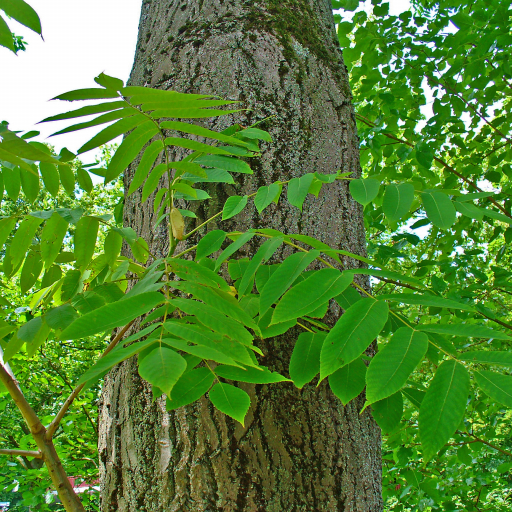
- 🍃 Compound Leaves: Each leaf is quite long and consists of 11 to 17 leaflets arranged in pairs, finishing with a single "terminal" leaflet at the very tip.
- 🪵 Silver-Gray Bark: Unlike the dark, craggy bark of other walnuts, the Butternut has light gray, smooth bark that develops flat-topped, diamond-shaped ridges as it matures.
- 🐒 The "Monkey Face": A quirky giveaway is the leaf scar left on the twig after a leaf falls; it looks exactly like a tiny, fuzzy monkey's face, complete with a hairy "brow" above the eyes.
🏡 In Your Garden
- 🌳 The Taproot Rule: This tree develops a deep, stubborn taproot almost immediately. It strongly dislikes being transplanted, so you must choose its "forever home" carefully—somewhere with deep, rich, and well-draining soil.
- 🧪 Allelopathic Nature: The Butternut practices "chemical warfare" by releasing juglone from its roots. This substance can wilt or kill sensitive neighbors like tomatoes, potatoes, and azaleas, so give it plenty of personal space.
- ☀️ Sun Seeker: This is not a shade-tolerant tree. It requires full, direct sunlight to thrive and will naturally prune its own lower branches if they don't get enough light.
⚠️ Safety & Toxicity
- 🟢 Safe for Humans: The nuts are edible and highly nutritious. However, the green husks can cause temporary brown staining on the skin (similar to a henna tattoo).
- 🐕 Pet Caution: While the nuts themselves aren't toxic to dogs, fallen nuts that have become moldy contain tremorgenic mycotoxins which can cause serious tremors or seizures if scavenged.
- 🌱 Garden Safety: Its primary "toxicity" is toward other plants. If you notice nearby shrubs mysteriously wilting, the Butternut's root system is the likely culprit.
✨ Fun Fact
During the American Civil War, the husks of the Butternut were used to create a cheap, brownish-yellow fabric dye. Because it was used so frequently for the uniforms of soldiers from rural areas, the troops themselves were often nicknamed "Butternuts."

Detailed Care Instructions
| Soil Type | Rich Soil With Good Drainage |
| Plant Type | Deciduous Tree |
| Mature Size | About 60 Feet Tall |
| Native Area | Upper East U.s. And Southern Canada |
| Sun Exposure | Full Sun |
| Hardiness Zones | 3-7 |
Here are some steps you can follow to grow the Juglans cinerea plant:
- Choose the right location: Juglans cinerea, also known as the butternut tree, prefers well-drained soil. It grows best in full sun but can tolerate partial shade.
- Obtain seeds: You can collect seeds from mature butternut trees or purchase them from a reputable nursery or online seed supplier.
- Germination: Soak the seeds in water for 24 hours before planting. This helps to break dormancy and increase the chances of successful germination.
- Prepare the soil: Dig a hole that is slightly larger than the root ball of the plant. Mix organic matter, such as compost or well-rotted manure, into the soil to improve its fertility and drainage.
- Plant the seed: Place the seed in the prepared hole, covering it with soil so that it is approximately 1 inch deep. Water the plant thoroughly after planting.
- Watering: Keep the soil consistently moist but not waterlogged. Water the plant regularly, especially during dry periods or when the top inch of soil feels dry to the touch. Be careful not to overwater, as excessively wet soil can lead to root rot.
- Mulching: Apply a layer of organic mulch, such as wood chips or straw, around the base of the plant. This helps to retain moisture, suppress weeds, and regulate soil temperature.
- Pruning: Prune the plant annually to remove dead, damaged, or diseased branches. This will promote healthy growth and maintain the desired shape.
- Fertilizing: Fertilize the plant with a balanced, slow-release fertilizer in early spring or during the growing season as recommended by the packaging instructions. Avoid excessive fertilization, as it can lead to weak growth or burning of the roots.
- Protect from pests and diseases: Regularly inspect the plant for signs of pests (like aphids or caterpillars) or diseases (such as butternut canker). Take appropriate measures, such as using organic pesticides or disease-resistant cultivars, to control any problems.
- Provide support if necessary: If your butternut tree grows into a larger tree, it may require staking or support to ensure its straight growth and stability in windy conditions.
Remember that growing Juglans cinerea requires patience, as it can take several years for the tree to reach maturity and produce harvestable nuts.

Place in a bright room that is sun drenched almost all day. Or directly in a south-facing window.

To water this plant, it is important to first ensure that the soil is slightly moist before watering. It is recommended to water deeply, allowing the water to penetrate the soil to a depth of at least six inches. This can be done by slowly pouring water at the base of the plant until the soil around it is visibly saturated. It is important not to overwater, as this can lead to root rot and other problems. It is also beneficial to add a layer of mulch around the base of the plant to help retain moisture in the soil. Watering frequency will depend on a number of factors, including the climate, soil type, and age of the plant, but it is generally recommended to water once a week, or more frequently during periods of drought or hot weather.
To fertilize this tree, use a balanced fertilizer with equal amounts of nitrogen, phosphorus, and potassium. Apply the fertilizer in early spring before the leaves emerge. Spread the fertilizer evenly around the drip line of the tree, keeping it at least 6 inches away from the trunk. Water the tree thoroughly after applying the fertilizer. Avoid fertilizing again during the growing season, as over-fertilization can damage the tree.
Juglans Cinerea is a plant that prefers a well-draining soil with a pH range of 6 to 7.5. The soil should contain a good mixture of organic matter such as compost or aged manure to improve fertility and moisture retention. It is important to avoid heavy clay or compacted soils as they may lead to poor drainage and root rot. The ideal soil should also be free of salts and heavy metals, which can accumulate over time and harm the plant. Additionally, it is recommended to amend the soil with a balanced fertilizer before planting to ensure healthy growth and development.
To propagate this plant, first, select a healthy cutting from an established plant. The cutting should be about 6 inches long and have several nodes along the stem. Remove any leaves from the lower half of the cutting.
Next, prepare a pot with a well-draining soil mix. Make a hole in the soil using a pencil or your finger and insert the cutting. Firmly press the soil around the cutting so it stays in place.
Water the cutting thoroughly and cover it with a plastic bag or a clear plastic container to create a humid environment. Place the pot in a bright, indirect light spot but avoid direct sunlight.
Check the soil moisture regularly and water as needed to keep it slightly moist but not waterlogged. After a few weeks, the cutting should start to form new roots. You can gently tug on the stem to test if it has rooted.
Once the cutting has established roots, remove the plastic covering and gradually expose it to more light. Transplant the new plant into a larger container or in its permanent outdoor location when it has outgrown its pot.








