Plant Overview
Known as the "Dark King" of the North American forest, the Eastern Black Walnut is a tree of contradictions. It is prized by craftsmen for its chocolate-colored wood and by foragers for its rich, earthy nuts, yet it is famously known as a "lonely" tree. This is because it practices chemical warfare, releasing a substance called juglone that prevents many other plants from growing nearby.
🔍 How to Identify
- 🌳 The Bark: As the tree matures, the bark becomes deeply furrowed and dark—almost black—forming a distinct diamond-shaped pattern.
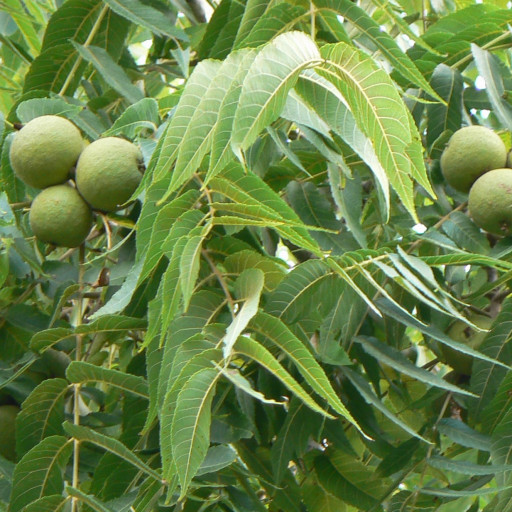
- 🍃 The Leaves: Look for large, fern-like compound leaves. Each "leaf" is actually a stem holding 15 to 23 smaller, pointed leaflets that turn a bright, clear yellow in the autumn.
- 🟢 The Fruit: Unlike English walnuts, these are encased in a smooth, lime-green, ball-shaped husk that does not split open. If you crush the husk, it leaves a persistent, dark brown stain on your hands.
🏡 In Your Garden
- 🧪 Chemical Warfare: The most critical thing to know is that Black Walnuts are "allelopathic." They release juglone from their roots and fallen leaves, which can wilt or kill tomatoes, azaleas, and lilies. Only plant "walnut-tolerant" species nearby.
- ⚓ The Deep Taproot: This tree is a long-term commitment. It develops a massive, deep taproot very early in its life, making it nearly impossible to transplant once it has been in the ground for more than a year or two.
- ☀️ Sun Seeker: It is a "pioneer species," meaning it hates shade. If it doesn't get full, direct sunlight, it will grow spindly and may eventually succumb to stress.
⚠️ Safety & Toxicity
- 🐎 Status: Toxic to certain animals, especially horses.
- 🐕 Details: While the nut meat is delicious for humans, the moldy husks of fallen walnuts can contain tremors-inducing toxins if ingested by dogs. Additionally, wood shavings from this tree are highly toxic to horses, causing a painful hoof condition known as laminitis.
✨ Fun Fact
The husks of the Black Walnut were so famous for their staining power that they were used by American pioneers to make hair dye and ink. In fact, if you find a green walnut on the ground and step on it, the stain on your shoe may last longer than the shoe itself!

Detailed Care Instructions
| Color | Green Leaves, Green Or Yellow To Gold Blooms, And Green To Black Fruits |
| Soil Ph | 5.0-8.0 |
| Lighting | Full Sun |
| Soil Type | Well-Draining, Clay, Loamy, Sandy |
| Bloom Time | Spring |
| Plant Type | Deciduous Tree |
| Mature Size | Up To 130 Feet Tall And Up To 70 Feet Wide |
| Native Area | Eastern America |
| Sun Exposure | Full Sun To Partial Shade |
| Hardiness Zones | 4-9 |
To grow a Juglans nigra plant, also known as black walnut, follow these steps:
- Choose a suitable location: Black walnut trees prefer full sun or partial shade and well-draining soil. Make sure the area you select provides enough space for the tree to grow and mature.
- Prepare the soil: Black walnuts prefer deep, fertile soil. Amend the soil by adding organic matter like compost or well-rotted manure to improve drainage and fertility.
- Collect seeds: Gather fresh black walnut seeds in the fall when they fall from the tree. Remove any husks surrounding the seeds and allow them to air dry for several days.
- Cold stratification: Black walnut seeds require a period of cold stratification before they can germinate. Place the seeds in a plastic bag with moist peat moss or sand and store them in the refrigerator at around 40°F (4°C) for about 3 to 4 months.
- Planting seeds: After the cold stratification period, plant the seeds about 2 inches deep in containers or directly in the ground. Water thoroughly after planting.
- Care and maintenance: Water the seedlings regularly, but avoid overwatering. Keep the area surrounding the young plants clear of weeds and grass. Mulching with wood chips or straw can help retain moisture and suppress weed growth.
- Pruning: Once the tree begins to grow, you may need to prune it to encourage a strong structure and remove any damaged or diseased branches. Pruning should be done during the dormant season.
- Pest and disease control: Monitor your black walnut tree for any signs of pests or diseases such as walnut caterpillars, walnut husk flies, or thousand cankers disease. Consult with local experts or extension services for appropriate pest and disease management techniques.
- Patience: Growing a black walnut tree from seed can take several years for it to establish and begin producing nuts. Be patient and provide adequate care to help the tree thrive.
Remember that black walnut trees produce a chemical called juglone, which can be toxic to some plants. When choosing companion plants, consider their tolerance to juglone if you plan to grow other vegetation nearby.

Place in a bright room that is sun drenched almost all day. Or directly in a south-facing window.

1. Determine the soil type and drainage of the area surrounding the plant by observing the texture and frequency of standing water.
2. Calculate the annual average rainfall for the region in which the plant is growing to estimate the amount of supplemental watering required.
3. Install a slow-drip irrigation system, using a timer to regulate the flow of water based on the plant's needs.
4. Water deeply, saturating the soil around the roots of the plant to ensure moisture reaches deeper layers of soil during periods of drought.
5. Apply a layer of mulch to the base of the plant to retain moisture and protect the roots from evaporation and overheating.
6. Check the soil moisture level regularly by digging a small hole in the soil near the base of the plant and feeling for dampness with your fingers. Adjust watering frequency and amount as needed to maintain appropriate moisture levels.
7. Avoid overwatering the plant, which can lead to root rot and other fungal diseases.
To encourage healthy growth and a bountiful harvest, fertilize this plant with a balanced fertilizer high in nitrogen, phosphorus, and potassium. Apply the fertilizer in early spring before new growth appears and again in mid-summer. Use approximately 1 pound of fertilizer per inch of trunk diameter and spread it evenly around the base of the tree. Be careful not to apply the fertilizer too close to the trunk as it can burn the roots. Water the plant thoroughly after fertilizing.
Juglans Nigra typically prefers fertile, well-draining soil with a pH range of 5.5 to 6.5. It can tolerate a variety of soil textures, from sandy loam to heavy clay, but performs best in a loamy soil that retains moisture without becoming waterlogged. The soil should also have good aeration to allow for root growth and prevent root rot. Organic matter can be added to the soil to improve its fertility and texture. It is important to note that Juglans Nigra has a deep taproot and may struggle in compacted or shallow soils.
Juglans nigra is a deciduous tree species that belongs to the family Juglandaceae. The plant is propagated by using seeds and cuttings.
Propagation by Seeds:
- Collect the ripe nuts from the tree.
- Remove the outer hull to reveal the hard shell.
- Store the seeds in a cool, dry place over winter.
- Start the germination process by soaking the seeds in warm water for 24 hours.
- Plant the seeds in a well-draining potting mix, about 2cm deep.
- Cover the pot with a clear plastic bag to maintain moisture.
- Keep the pot in warm, bright indirect light and water regularly.
- Seeds will germinate within 3-4 weeks and once established, young plants can be transferred into larger pots or planted in the ground.
Propagation by Cuttings: - Collect a section of woody stem from a mature parent plant, preferably in late summer.
- Cut the stem with a sharp, sterile knife, about 15-20cm long.
- Remove any leaves or buds from the bottom half of the stem.
- Dip the cut end of the stem into rooting hormone powder.
- Prepare a potting mix of peat moss and perlite in equal parts.
- Plant the cutting in the potting mix up to the leaf nodes and water thoroughly.
- Cover the pot with a clear plastic bag.
- Place the pot in bright, indirect light and keep it consistently moist.
- After 4-6 weeks, check for roots by gently tugging on the cutting. If there is resistance, it means roots have developed.
- After roots have developed, young plants can be transferred into a larger pot or planted in the ground.
Common pests of the black walnut include Spider mites, thrips, larvae. Make a habit of checking your black walnut frequently for pests so that any infestations can be caught and managed early.








