Plant Overview
Often called the Hard Rush, this striking architectural plant is a favorite for water-gardeners looking to add a touch of steel-blue elegance to their ponds. Native to Eurasia and North Africa, it forms dense, upright clumps that look like botanical sculptures rising from the mud. It is the rugged survivor of the wetland world, standing tall and rigid where more delicate plants might wilt.
🔍 How to Identify
- 🌿 The Stems: Look for rigid, blue-gray stems that are deeply ribbed along their length. Unlike many grasses, these are cylindrical, leafless, and feel quite stiff to the touch.
- 💡 The Pith: If you were to carefully split a stem lengthwise, you would see "interrupted pith." This is a white, spongy material inside the stem that has regular air gaps, looking almost like a tiny botanical ladder.
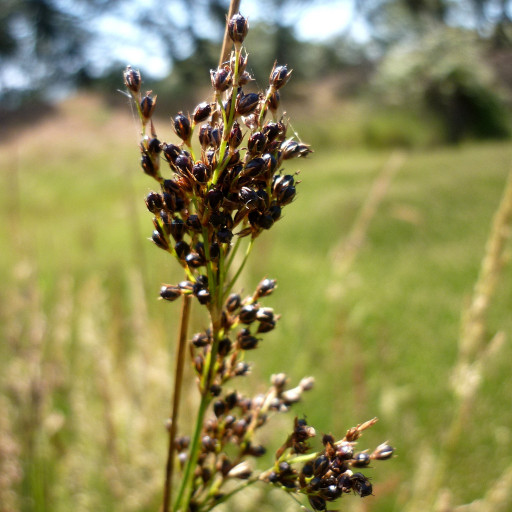
- 🟤 The Flowers: Clusters of small, straw-colored to chocolate-brown flowers emerge in summer. They appear to sprout awkwardly from the side of the stem, though this is actually because a leaf-like bract extends straight up past the flower.
🏡 In Your Garden
- 💧 Wet Feet Welcome: This plant thrives in "saturated" conditions. It is the perfect choice for the margins of a pond, a rain garden, or any boggy area where drainage is poor. It can even grow in a few inches of standing water.
- 🏗️ Vertical Interest: Because it maintains its rigid, upright habit even in the face of wind and rain, it provides excellent structural contrast against softer, flowering perennials. It also provides a sturdy perching spot for dragonflies and damselflies.
⚠️ Safety & Toxicity
- ✅ Non-Toxic: Juncus inflexus is generally considered safe and is not known to be toxic to humans, dogs, or cats.
- 📍 Physical Texture: While not poisonous, the stems are very "hard" (as the name suggests). The tips can be somewhat sharp, so use caution when weeding around the base to avoid poking your eyes or skin.
✨ Fun Fact
🕯️ The Poor Man’s Candle: In medieval times, the pith (the spongy center) of various rushes was extracted, dried, and dipped in melted animal fat to create "rushlights." These were a cheap, DIY alternative to expensive beeswax candles for rural households!

Detailed Care Instructions
To grow Juncus inflexus, commonly known as blue rush or path rush, follow these steps:
- Choose a suitable location: Blue rush plants prefer full sunlight to partial shade, so select an area that receives at least 6 hours of direct sunlight per day. The soil should be moist and well-draining.
- Prepare the soil: Blue rush plants can tolerate a wide range of soil types, but they prefer moist or wet soil. However, they can also tolerate drier conditions. Amend the soil with organic matter like compost or well-rotted manure to improve fertility and drainage.
- Sow seeds or plant divisions: Blue rush plants can be propagated from seeds or divisions. Sow the seeds on the soil surface and lightly cover them with a thin layer of soil. If using divisions, separate clumps from an established plant and plant them directly into the prepared soil.
- Water regularly: Keep the soil consistently moist until the plants become established. Water deeply and regularly, especially during dry periods or if the plants are growing in drier conditions. Do not allow the soil to dry out completely.
- Mulch around the plants: Apply a layer of organic mulch, such as bark chips or straw, around the base of the plants. This will help retain soil moisture, suppress weeds, and provide insulation to the roots.
- Fertilize sparingly: Blue rush plants do not require much fertilization. However, you can apply a slow-release, balanced fertilizer in early spring to provide nutrients for healthy growth. Avoid excessive fertilization, as it may lead to weak or floppy growth.
- Control weeds: Regularly remove weeds from around the blue rush plants to reduce competition for nutrients and water.
- Prune as needed: Blue rush plants have a clumping growth habit and do not require extensive pruning. However, you can trim back any dead or damaged foliage to maintain a tidy appearance.
- Monitor for pests and diseases: Blue rush plants are generally resistant to pests and diseases. However, keep an eye out for common garden pests like aphids or slugs. If necessary, use organic pest control methods to manage them.
- Divide and transplant: Blue rush plants can become overcrowded over time. To prevent this, divide the clumps every 2-3 years in early spring or fall. Transplant the divisions to new locations or share them with other gardeners.
Remember to check local regulations regarding the cultivation of Juncus inflexus, as it may be considered invasive in some regions.

Place in a window with dappled sun or a spot in the middle of a room. Or directly in a window facing west or east.

To water this plant, first assess the soil moisture level by digging a finger into the soil. If it feels dry to the touch, it is time to water. Use a watering can or a hose with a gentle spray nozzle to water the soil around the base of the plant. Avoid getting water on the leaves or stems, as this can lead to fungal diseases. Water thoroughly until the soil is evenly moist but not waterlogged. Allow the soil to dry out slightly between waterings, as this plant prefers to grow in well-drained soil. In hot, dry weather, be sure to water more frequently to prevent the plant from drying out.
To fertilize this plant, use a balanced all-purpose fertilizer following the manufacturer's recommended dosage and application method. Apply the fertilizer to the soil around the base of the plant, taking care not to get any on the foliage. Water the plant thoroughly after fertilizing. It's best to fertilize this plant in the early spring when growth is just starting, and again in mid-summer to promote healthy plant growth. Avoid over-fertilizing, as it can damage the plant and lead to the buildup of excess nutrients in the soil.
The ideal soil for this plant should be well-draining and able to retain moisture for extended periods. It should also have good aeration and be rich in nutrients, including nitrogen, phosphorus, and potassium. The pH level of the soil should be slightly acidic to neutral, preferably between 6.0 and 7.0. The texture of the soil should be heavy enough to support the plant, but it should also be light enough to prevent waterlogging. Organic matter such as peat moss or compost can be added to the soil to improve its structure and nutrient content. Avoid using soils that are too sandy or too compacted, as these can adversely affect the growth and development of the plant.
Juncus inflexus plant can be propagated by using its rhizomes. Here are the steps to propagate the plant:
- Locate the parent plant: Find a mature Juncus inflexus plant from which you want to propagate.
- Dig out the rhizomes: Carefully dig out the rhizomes from the parent plant.
- Cut the rhizomes: Cut the rhizomes into small sections, making sure to have at least one node per section.
- Plant the sections: Plant the cut rhizome sections in a well-draining soil medium.
- Water the sections: Water the newly planted sections thoroughly until the soil is moist.
- Provide proper care: Place the propagated plant in a sunny location and water it regularly. Avoid overwatering, as excessive moisture can lead to rotting of the plant.
- Monitor growth: Keep an eye on the growth of the new plant. Once it has established a healthy root system, you can transplant it to its desired location in your garden or landscape.
Common pests of the hard rush include Scale insect, mealybugs, aphids. Make a habit of checking your hard rush frequently for pests so that any infestations can be caught and managed early.








