Plant Overview
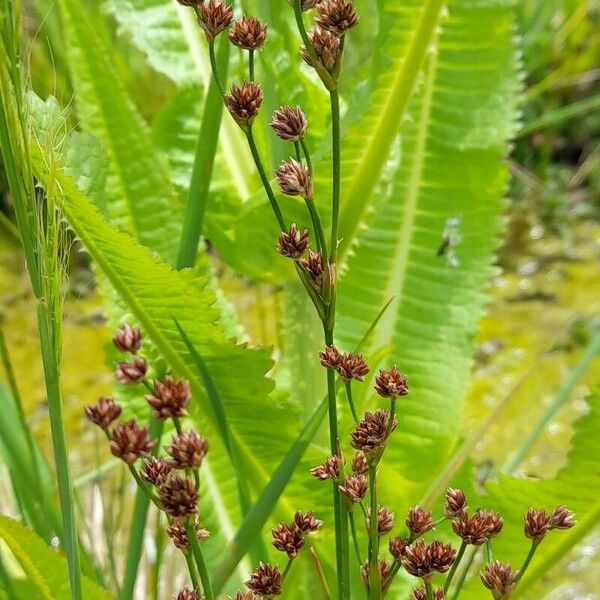
Often called the Smallhead Rush, this plant looks like a collection of tiny, exploding brown stars suspended over a sea of bright green needles. Originally hailing from South America, it has traveled the globe as a hardy "architectural" plant for wetlands and boggy gardens. It is a master of the shoreline, turning soggy, difficult patches of mud into a textured, wild landscape.
🔍 How to Identify
- 🌿 The Stems: Long, slender, and cylindrical (terete) stems that are hollow and vibrant green, growing in dense, upright tufts.
- 🎇 The Flower Heads: Distinctive spherical clusters of tiny, chestnut-brown flowers that appear at the tips, giving the plant its "small-headed" name.
- 🌱 Growth Habit: It spreads via underground rhizomes, forming thick mats that can look like a cross between a grass and a pincushion.
🏡 In Your Garden
- 💧 Wetland Specialist: This plant doesn't just tolerate "wet feet"—it demands them. It is the perfect choice for the edge of a garden pond, a rain garden, or that one low spot in the yard that never seems to dry out.
- 🎍 Containment Strategy: Because it spreads through rhizomes, it can be quite assertive. If you are planting it in a small water feature, consider keeping it in a submerged pot to prevent it from "colonizing" the entire shoreline.
⚠️ Safety & Toxicity
- ✅ Status: Generally non-toxic and safe for residential use.
- 🐕 Details: There are no known toxic effects for dogs, cats, or horses. However, because the stems are stiff and the flower heads are slightly prickly, they aren't the most comfortable snack for curious pets.
✨ Fun Fact
The genus name Juncus comes from the Latin word jungere, which means "to bind" or "to join." Historically, rushes were so tough and flexible that they were woven together to create primitive ropes, floor mats, and even chair seats!

Detailed Care Instructions








