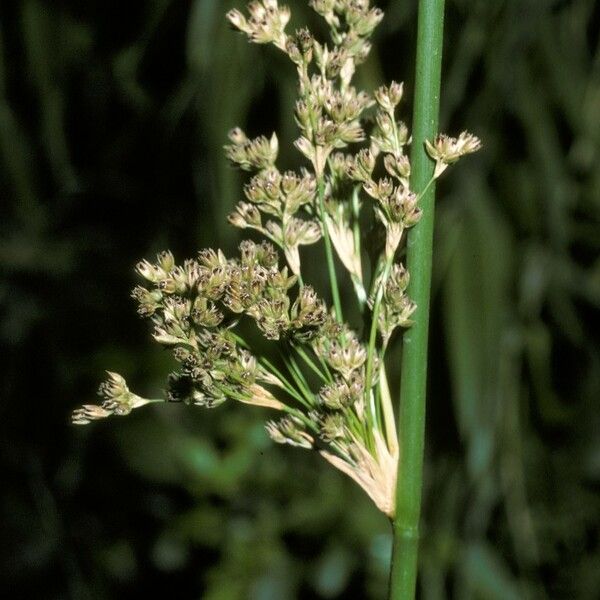
Plant Overview
Often called the Giant Rush, Juncus procerus is the architectural titan of the wetland world. Originating from the damp landscapes of South America, this stately perennial is a master of the "wet feet" lifestyle, turning soggy, difficult patches of ground into lush, vertical displays. It is a favorite for water gardeners who want to add a sense of prehistoric scale to their ponds or rain gardens.
🔍 How to Identify
- 📏 Stately Stems: Unlike many grasses, this rush features thick, cylindrical, blue-green stems that can reach heights of up to 2 meters (6.5 feet).
- 🌾 Lateral Blooms: The flowers don't sit at the very tip; instead, they burst out from the side of the stem in branched, straw-colored clusters that look like tiny explosions of grain.
- 🕯️ Pithy Interior: If you were to cut a stem, you’d find a soft, white, spongy "pith" inside, which gives the plant its structural strength while remaining lightweight.
🏡 In Your Garden
- 💧 The Bog Specialist: This isn't a plant for a dry rockery. It thrives in standing water or heavy, clay-rich mud. If you have a spot in your yard where water always pools after rain, the Giant Rush will treat it like a luxury spa.
- 🧱 Living Bio-Filter: It is frequently used in ecological restoration because its roots are incredible at "cleaning" water, filtering out excess nutrients and pollutants before they can reach deeper aquifers.
- 🛡️ Erosion Control: Because it grows in dense, rhizomatous clumps, it acts as a natural anchor for soil, preventing pond banks from washing away during heavy storms.
⚠️ Safety & Toxicity
- 🟢 Non-Toxic: Juncus procerus is generally considered safe and non-toxic for humans, cats, and dogs.
- 📍 Physical Sharpness: While not chemically toxic, the dried stems can become quite stiff and pointy. Wear gloves when pruning back old growth to avoid "pokes" to the hands or eyes.
✨ Fun Fact
In ancient times, relatives of the Giant Rush were used to make "rushlights." People would peel away the outer skin of the stem to reveal the fatty pith inside, soak it in leftover kitchen grease, and light it like a primitive, slow-burning candle!

Detailed Care Instructions
To grow Juncus Procerus (Calamagrostis Brachytricha), also known as tall rush or tufted hairgrass, you can follow these steps:
- Choose a suitable location: Juncus Procerus prefers full sun to partial shade and moist soil. It can tolerate a variety of soil types but prefers well-drained soil.
- Prepare the soil: Remove any weeds or grass from the planting area and loosen the soil with a garden fork or tiller. You can also amend the soil with organic matter, such as compost, to improve moisture retention and fertility.
- Planting: Dig a hole that is slightly larger than the root ball of the plant. Place the Juncus Procerus in the hole, making sure the top of the root ball is level with or slightly above the soil surface. Backfill the hole with soil, firming it gently around the plant.
- Watering: Water the plant immediately after planting to settle the soil around the roots. Juncus Procerus requires consistently moist soil, so water it regularly to keep the soil evenly moist, especially during dry periods. However, avoid overwatering, as waterlogged soil can cause root rot.
- Mulching: Apply a layer of organic mulch, such as wood chips or bark, around the base of the plant to help retain moisture, suppress weeds, and regulate soil temperature.
- Fertilizing: Juncus Procerus generally does not require frequent fertilization if planted in nutrient-rich soil. However, you can apply a balanced slow-release fertilizer in spring to promote healthy growth.
- Maintenance: Regularly remove any dead or yellowing leaves to maintain the plant's appearance. Divide the plant every few years to prevent overcrowding and rejuvenate its growth.
Remember to check specific care requirements for Juncus Procerus in your region, as they may vary slightly depending on your climate zone.
To water this plant, one should first examine the soil to determine if it is dry. If the soil is dry, the plant should be watered thoroughly until the excess water drains out of the bottom of the pot or container. It is important to not overwater the plant, as this can lead to root rot. Watering should be done on a regular basis, as Juncus Procerus requires consistently moist soil to thrive. It is also important to avoid getting water on the foliage, as this can lead to fungal diseases.
To fertilize your Juncus Procerus plant, apply a slow-release, balanced fertilizer with an N-P-K ratio of 10-10-10 or 20-20-20 in early spring. Follow the instructions on the fertilizer package for application rates and frequencies. Avoid applying too much fertilizer, as it can burn the roots and damage the plant. Additionally, water the plant deeply after fertilizing to help distribute the nutrients throughout the soil.
Juncus Procerus plant requires a well-draining loamy soil that is slightly acidic with a pH range of 5.5-6.5. The soil should be rich in organic matter, such as compost or peat moss, which can help maintain moisture levels in the soil. Adding perlite or sand can improve drainage and prevent waterlogging. The plant prefers a soil that is moist but not waterlogged, so it's important not to overwater. The soil should also be free of pollutants, heavy metals, and toxins.
To propagate this plant, select a healthy stem with roots attached and gently separate it from the mother plant. Plant the stem in well-draining soil in a pot or directly in the ground. Water the soil thoroughly and place the plant in a sunny location. Keep the soil consistently moist until new growth appears, then gradually reduce watering to maintain slightly moist soil. Fertilize sparingly with a balanced fertilizer. Once the plant has established itself, it can be divided into smaller clumps for additional propagation.








