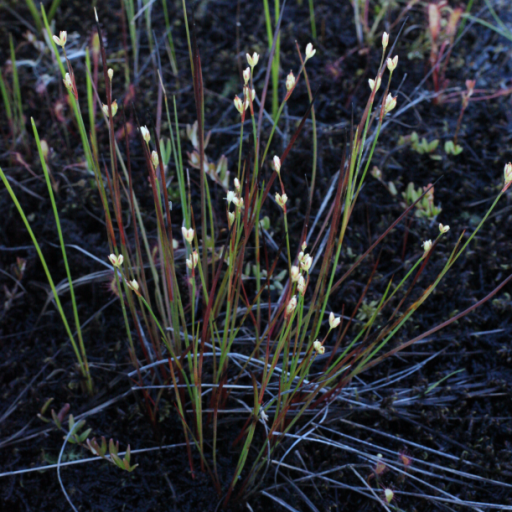
Plant Overview
Often called the Moor Rush, Juncus stygius is a botanical ghost of the northern peatlands. Its species name, stygius, stems from the River Styx of Greek mythology—a nod to the dark, watery, and mucky bogs it calls home. This rare rush is a specialist of the cold, thriving in acidic mires and fens where most plants would struggle to breathe.
🔍 How to Identify
- 🌿 The Stems: Slender, upright, and wiry, usually reaching about 4 to 12 inches in height. They are smooth and cylindrical, giving the plant a delicate, minimalist silhouette.
- 🟤 The Flowers: Look for small, chestnut-brown to nearly black clusters at the very tip of the stem. These tiny, star-shaped structures house the seeds and appear from mid to late summer.
- 🌾 The Leaves: The leaves are narrow and few, often appearing almost like the stem itself. They are "channeled" or slightly hollowed, a common trait for rushes navigating water-heavy environments.
🏡 Habitat & Ecology
- 💧 The "Wet Feet" Rule: This plant is an obligate wetland species, meaning it is almost never found in dry ground. It thrives in the "soup" of northern bogs, often growing directly out of thick carpets of Sphagnum moss.
- ❄️ Boreal Resident: It is a true survivor of the North, found across the circumboreal regions of North America, Europe, and Asia. It relies on the specific, low-nutrient chemistry of peatlands, making it a bio-indicator of a healthy, undisturbed wetland.
⚠️ Safety & Toxicity
- ✅ Status: Generally non-toxic. There are no documented reports of Juncus stygius causing harm to humans, dogs, or cats.
- 🛡️ Environmental Safety: The real "danger" is to the plant itself. Because it grows in incredibly fragile ecosystems (bogs), trampling the ground around it can destroy the delicate moss layers it needs to survive. If you spot one, it’s best to admire it from a boardwalk or a distance.
✨ Fun Fact
The seeds of the Moor Rush are "appendaged," meaning they have tiny, tail-like structures on both ends. These aren't just for decoration; they act like miniature life jackets, helping the seeds float across bog pools to find a perfect new patch of moss to call home!

Detailed Care Instructions

Place in a bright room that is sun drenched almost all day. Or directly in a south-facing window.

Some plants require more regular watering than others, which should be done every few days. It's critical to maintain the soil moist all of the time. The water requirements of the same plant placed in pots with varying sizes will differ. Because the water in the smaller pot evaporates faster than the water in the larger pot, it will require more watering. Regardless of pot size, the surface should constantly be maintained moist.








