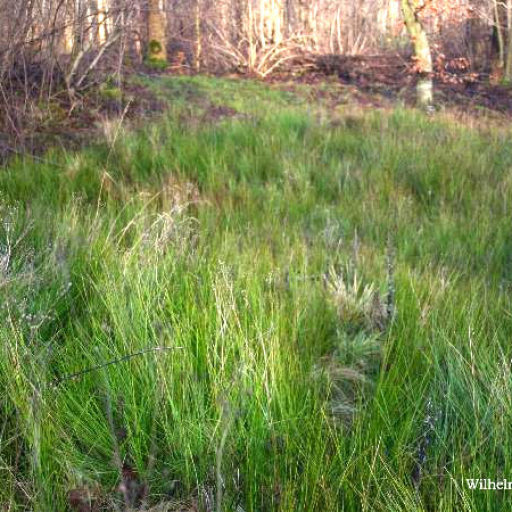
Plant Overview
Often found swaying in the mist of a lime-rich marsh, the Blunt-flowered Rush is a staple of European and North African wetlands. Unlike its more aggressive cousins, this rush adds a delicate, airy texture to water margins with its intricate, wide-spreading flower heads. It is a vital structural plant that provides essential nesting material for waterfowl and secret hiding spots for dragonflies.
🔍 How to Identify
- 🌾 The "Jointed" Stem: If you run your fingers along the leaves and stems, you will feel distinct internal cross-partitions or "nodes" that give the plant its scientific name.
- 🟤 Blunt Tepals: Unlike many rushes that have sharp, needle-like flower parts, the individual flowers of this species are rounded or "blunt" at the tips.
- 🎋 Right-Angle Branching: The flower head (inflorescence) is highly branched, with many of the small stalks spreading out at wide, almost 90-degree angles, creating a zigzag appearance.
🏡 In Your Garden
- 💧 Constant Moisture: This isn't a plant for a standard flower bed; it thrives in "wet feet." It is perfect for the margins of a wildlife pond or a dedicated bog garden where the soil never dries out.
- ⛰️ Alkaline Preference: This rush is a "calcicole," meaning it specifically seeks out lime-rich or alkaline conditions. If your garden soil is naturally acidic (like a peat bog), this plant may struggle to establish itself.
- 🦢 Natural Filtration: Because it grows via creeping rhizomes, it is excellent at stabilizing muddy banks and filtering excess nutrients from pond water, helping to keep your aquatic ecosystem clear.
⚠️ Safety & Toxicity
- 🟢 Non-Toxic: The Blunt-flowered Rush is generally considered safe and non-toxic for humans and pets.
- 🌾 Mechanical Irritation: While not poisonous, the dried stems can become quite stiff and sharp. Use caution when clearing old growth to avoid "grass cuts" or poking your eyes.
✨ Fun Fact
The specific epithet subnodulosus translates to "somewhat knotty." This refers to the internal "septa" (walls) inside the leaves. If you hold a leaf up to the light or gently squeeze it, you can see or feel these little compartments that help the plant stay upright in windy, exposed wetlands!

Detailed Care Instructions
Juncus subnodulosus, also known as the blunt-flowered rush, is a perennial rush commonly found in wetland habitats. Here are some tips on how to grow this plant:
- Site selection: Juncus subnodulosus thrives in damp, boggy conditions with full to partial sun. Choose a location in your garden or landscape that receives consistent moisture, such as near a pond or stream, or in a low-lying area that tends to stay wet.
- Soil preparation: This plant prefers moist, nutrient-rich soil with good drainage. Add organic matter such as compost or peat moss to improve soil structure and fertility.
- Propagation: Juncus subnodulosus can be propagated from seeds or by division of established clumps. Sow seeds in the fall or early spring, or divide established plants in the spring.
- Care and maintenance: Keep the soil consistently moist but not waterlogged, as this plant does not tolerate drought well. Mulch around the base of the plant to help retain moisture and suppress weeds. Cut back dead or damaged foliage in the fall to encourage new growth in the spring.
- Pests and diseases: Juncus subnodulosus is relatively resistant to pests and diseases, but keep an eye out for signs of stress or damage, such as yellowing foliage or decreased vigor. Treat any issues promptly to prevent further damage.
By following these tips, you can successfully grow Juncus subnodulosus in your garden or landscape and enjoy its unique foliage and ecological benefits.

Place in a bright room that is sun drenched almost all day. Or directly in a south-facing window.

Juncus subnodulosus is a plant that prefers moist soils and habitats such as boggy areas or damp meadows. As a result, it requires consistent watering to thrive. When providing water, it is important to ensure that the soil is consistently moist, but not waterlogged. Watering from above can be effective, but it is important to avoid overwatering, which can cause root rot. Alternatively, watering from below can be a good option, such as through sub-irrigation or through a tray or saucer filled with water. The plant should be checked regularly to ensure that the soil remains sufficiently moist, especially during dry spells or hot weather. It is important to note that the water requirements may vary depending on the specific growing environment and climate.
To fertilize the Juncus Subnodulosus plant, use a balanced liquid fertilizer diluted to half strength. Apply the fertilizer to the soil around the base of the plant during the growing season, from spring to early fall. Avoid applying fertilizer during the dormant winter months. Water the plant after fertilizing to help the nutrients penetrate the soil. Repeat the fertilizing process every 4-6 weeks to promote healthy growth and vibrant foliage.
The ideal soil for the plant in question should be well-draining and rich in organic matter. It should be slightly moist but not waterlogged, with a pH range between 5.5 and 7.5. The plant prefers sandy or loamy soils that are slightly acidic to neutral. It is important that the soil is not too compacted or heavy, as it can inhibit root growth and cause drainage problems. Adding a layer of mulch or compost to the soil can help to improve its structure and nutrient content. The plant can tolerate occasional flooding, so the soil should have good water-holding capacity. Overall, the soil should provide a stable base for the plant's growth and support its ecological functions.
Juncus subnodulosus can be propagated through division or by collecting and planting seeds. To propagate through division, carefully separate clumps of the plant at the root system and replant them in a suitable location. Make sure the soil is moist and well-draining to encourage healthy growth.
To propagate through seeds, collect ripe seeds from the plant and sow them in a seed tray or directly into the soil. Keep the seeds moist and provide adequate light and warmth for germination. Transplant seedlings into individual pots once they have developed a strong root system.
Regular watering and monitoring of the plant's growth are essential during propagation to ensure the successful establishment of new plants.








