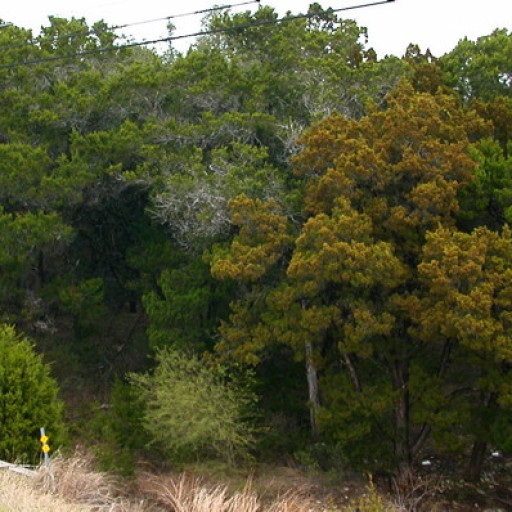
Plant Overview
Known widely—and sometimes notoriously—as the "Mountain Cedar," the Ashe Juniper is the rugged architect of the Texas Hill Country and northern Mexico. While many residents associate its winter pollen with the dreaded "cedar fever," this evergreen is a resilient survivor that anchors thin, rocky soils. It is often misunderstood as an invasive weed, but it is actually a native cornerstone of its ecosystem, providing essential shelter for rare wildlife.
🔍 How to Identify
- ✂️ The Bark: Its most distinctive feature is the bark, which turns grayish-brown and peels away in long, thin, shaggy strips as the tree matures.
- 🍃 The Foliage: Unlike pines, it has soft, scale-like leaves that are dark green and grow in tight, overlapping patterns. On very young saplings, you might see sharp, needle-like leaves.
- 🫐 The "Berries": Female trees produce small, round, dusty-blue cones that look exactly like berries. These are a vital food source for birds during the lean winter months.
🏡 In Your Garden
- 🌱 Soil Preference: This tree is a specialist in limestone. It thrives in alkaline, rocky, and thin soils where other plants struggle. If you are planting one, ensure the drainage is perfect; it hates "wet feet."
- 💧 Water & Resilience: Once established, it is incredibly drought-tolerant. It has a deep taproot combined with wide-reaching lateral roots, making it an excellent choice for erosion control on steep slopes.
- 🐦 Wildlife Magnet: If you want to attract birds like Cedar Waxwings or the rare Golden-cheeked Warbler, this is the tree to have. It provides both high-energy food and dense nesting cover.
⚠️ Safety & Toxicity
- 🤧 Allergy Status: High Allergen. While not "poisonous" in the traditional sense, the male trees release massive amounts of pollen in winter that can cause severe respiratory distress (Cedar Fever) in sensitive individuals.
- 🐾 Pet & Child Safety: The foliage and berries are generally considered non-toxic to dogs, cats, and humans. However, the oils in the wood (cedar oil) can occasionally cause mild skin irritation for those with sensitive skin.
✨ Fun Fact
The endangered Golden-cheeked Warbler is a total "specialist"—it refuses to nest anywhere else on Earth except in the Texas Hill Country, and it uses the shaggy bark of the Ashe Juniper to weave its nests. No Junipers, no Warblers!

Detailed Care Instructions
To grow Juniperus Ashei, also known as Ashe juniper or Texas cedar, you can follow these steps:
- Choose the right location: Ashe juniper thrives in well-drained soil and full sun to partial shade. The plant can tolerate a variety of soil types, including rocky or sandy soil.
- Dig a hole: Dig a hole that is slightly wider and deeper than the plant's root ball or container. This will allow the roots to spread out easily.
- Plant the juniper: Gently remove the plant from its container or loosen the root ball. Place the plant in the hole, making sure it is at the same level as the surrounding ground. Backfill the hole with soil, firming it gently around the roots.
- Water the plant: After planting, water the juniper thoroughly to settle the soil. Water deeply and regularly, especially during the first year of growth. Junipers have a deep root system, so it's important to water deeply to encourage root development.
- Mulch around the plant: Apply a layer of organic mulch, such as wood chips or straw, around the base of the juniper. This will help to conserve moisture, suppress weed growth, and regulate the soil temperature.
- Prune if necessary: Ashe juniper generally requires minimal pruning. However, you can shape and control its growth by selectively removing unwanted or damaged branches. Pruning is best done in late winter or early spring before new growth begins.
- Fertilize sparingly: Junipers are relatively low-maintenance plants and usually don't require much fertilizer. However, if the plant shows signs of nutrient deficiency, you can apply a slow-release, balanced fertilizer in early spring or fall.
- Monitor for pests and diseases: Ashe juniper is generally resistant to pests and diseases. However, it can occasionally be affected by spider mites, aphids, or juniper blight. Regularly inspect the plant for any signs of infestation or disease and take appropriate measures if needed.
- Monitor the water levels: Junipers are drought-tolerant once established, but they still require regular watering, especially during hot, dry periods. Monitor the water levels in the soil and adjust watering accordingly.
- Enjoy and maintain: With proper care, your Ashe juniper will grow into a beautiful and hardy plant. Enjoy its attractive foliage and unique shape, and continue to monitor its growth and health over time.
Remember to consult local gardening guides or nursery professionals for specific care instructions tailored to your region and climate.

Place in a bright room that is sun drenched almost all day. Or directly in a south-facing window.

The ideal way to water the Juniperus ashei plant is to wait for the soil to dry slightly before watering. This ensures that the plant does not become overwatered and the roots do not become waterlogged. When watering, it is important to water the soil thoroughly, making sure that the water penetrates deep into the soil. It is also important not to soak the foliage or trunk of the plant as this can promote disease and fungus growth. One can water the plant using a watering can, hose, or drip irrigation system. During the dry months, it is advisable to water the plant more frequently to keep the moisture level in the soil consistent.
To fertilize this plant, you should apply a balanced fertilizer in the early spring before new growth appears. Use a slow-release granular fertilizer with a ratio of approximately 10-10-10. Apply the fertilizer evenly over the soil surface, being careful not to get it on the foliage or stems. Water the plant thoroughly after application to ensure that the fertilizer is absorbed into the soil. Repeat this process every year for best results.
Juniperus Ashei is a type of evergreen plant that grows well in a variety of soil types. The ideal soil for this plant is well-draining and has a slightly acidic pH level, between 6 and 7.5. It also requires soil that is rich in nutrients, such as organic matter or compost. Avoid using soil that is too heavy or clayey, as this can cause the roots to become waterlogged and lead to root rot. Sandier soils are preferred, as they allow for better drainage and aeration. It is important to ensure that the soil stays consistently moist but not waterlogged, as too much water can cause the roots to rot. Adding mulch around the base of the plant can help to retain moisture and regulate soil temperature.
To propagate this plant, you will need to take cuttings from a healthy parent plant during the summer months when it is actively growing. Choose a stem that is at least six inches long and has several sets of leaves.
Using a sharp and sterilized knife, make a clean cut at a 45-degree angle just below a node. Strip the lower leaves from the cutting, leaving only two to three sets of leaves at the top.
Dip the cut end of the stem in rooting hormone to encourage root growth, and plant the cutting in a well-draining potting mix that is slightly moist. Cover the pot with a plastic bag to create a humid environment and place it in bright, indirect light.
Monitor the moisture level of the soil and mist the cutting daily to keep the humidity high. After a few weeks, the cutting should start to develop new growth, which is a sign that roots are forming.
After about two to three months, you can check for root development by gently tugging on the stem. If it resists, then roots have formed and the cutting can be gradually acclimated to brighter light and drier conditions.








