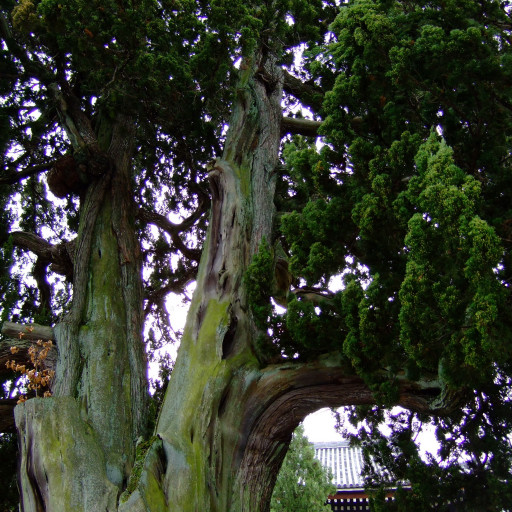
Plant Overview
The Chinese Juniper is a timeless icon of East Asian landscapes, often seen twisting gracefully in ancient temple courtyards or shaped into miniature masterpieces as "Shimpaku" Bonsai. Known for its rugged endurance and aromatic wood, this evergreen is a master of transformation, capable of growing as a low-hugging groundcover or a towering, stately tree. It is a favorite among gardeners who want a "plant it and forget it" species that brings year-round structure and a scent of the high mountains to the backyard.
🔍 How to Identify
- 🍃 Dual Foliage: This species is unique for having two types of leaves; "juvenile" foliage is prickly and needle-like, while "adult" foliage is soft, scale-like, and pressed tightly against the twigs.
- 🫐 Frosted Cones: It produces small, berry-like cones that are dark blue or purple, often covered in a "glaucous" waxy coating that makes them look like they are dusted with silver frost.
- 📜 Stringy Bark: The trunk and older branches feature thin, reddish-brown bark that peels away in long, vertical strips, giving the tree a weathered, ancient appearance even when young.
🏡 In Your Garden
- ☀️ Sun Seeker: To keep its foliage dense and vibrant, the Chinese Juniper needs full sun. If planted in the shade, the inner branches will thin out and turn brown, as the plant "sheds" parts that aren't catching enough light.
- 🚿 Drought Warrior: Once the root system is established, this plant is incredibly drought-tolerant. It actually prefers "lean" or rocky soil; rich, soggy soil is often its downfall, as it is highly susceptible to root rot if left in standing water.
- ✂️ Topiary Talent: Because it grows relatively slowly and holds its shape well, it is one of the best plants for "cloud pruning" or creating formal hedges. Just be careful not to cut back into the "dead zone"—the bare inner branches—as new green growth rarely emerges from old wood.
⚠️ Safety & Toxicity
- 🐕 Mildly Toxic: The berries and needles contain volatile oils (like thujone) that can cause digestive upset, vomiting, or diarrhea if eaten in large quantities by pets or children.
- 🧤 Contact Irritant: Many people experience "Juniper Dermatitis," a scratchy red rash caused by the sap or the prickly juvenile needles. Wearing long sleeves and gloves while pruning is highly recommended to avoid the "juniper itch."
✨ Fun Fact
The 'Shimpaku' variety of Chinese Juniper is considered the "holy grail" of the bonsai world. Some of these miniature trees in Japan have been meticulously cared for and passed down through families for over 800 years, making them older than many of the world's most famous cathedrals!

Detailed Care Instructions
| Color | Yellow To Bronze (No Ornamental Value) |
| Soil Ph | Neutral To Slightly Acidic |
| Humidity | High |
| Lighting | Part Sun |
| Toxicity | Poisonous |
| Soil Type | Moist, Well-Drained |
| Bloom Time | Spring |
| Difficulty | Medium |
| Plant Type | Shrub, Tree |
| Mature Size | 2–40+ Ft. Tall, 15–20+ Ft. Wide |
| Native Area | Asia |
| Temperature | 10°C - 24°C |
| Sun Exposure | Full Sun |
| Hardiness Zones | 4-9 |
To successfully grow a Juniperus Chinensis plant, follow these steps:
- Choose a suitable location: Juniperus Chinensis plants prefer full sun but can tolerate partial shade. Ensure the chosen location has well-draining soil to prevent waterlogging.
- Prepare the soil: Juniperus Chinensis plants thrive in slightly acidic to slightly alkaline soil with a pH range of 5.0-8.0. If the soil pH is not within this range, consider amending it with organic matter or sulfur to adjust accordingly.
- Planting: Dig a hole that is deep enough to accommodate the root ball of the Juniperus Chinensis plant. Place the plant in the hole and fill it with soil, gently firming it around the base of the plant. Avoid planting it too deep, as this can cause root rot. Leave enough space for the plant to spread as it grows.
- Watering: Water the plant immediately after planting to help settle the soil. Afterward, establish a regular watering routine. Juniperus Chinensis plants have moderate water needs, so water them deeply but infrequently to encourage deep root growth. Allow the soil to dry out slightly between watering to avoid overwatering.
- Mulching: Apply a layer of organic mulch around the base of the plant to help retain moisture, suppress weed growth, and regulate soil temperature. Keep the mulch from directly touching the stem to prevent rot.
- Pruning: Juniperus Chinensis plants benefit from regular pruning to maintain their shape and size. Remove any dead or diseased branches and trim stray or overgrown branches. Prune in late winter or early spring, before new growth starts.
- Fertilizing: Fertilize Juniperus Chinensis plants in spring and early summer with a slow-release, balanced fertilizer specifically formulated for evergreen trees and shrubs. Follow the package instructions for application rates.
- Pests and diseases: Juniperus Chinensis plants are generally considered resistant to pests and diseases. However, they can occasionally be affected by aphids, spider mites, or blight. Monitor your plant regularly for signs of infestation or disease and take appropriate measures, such as using insecticidal soap or pruning affected areas.
- Winter protection: In colder regions, provide winter protection for young Juniperus Chinensis plants by wrapping the foliage with burlap or covering them with a windscreen to prevent desiccation from cold winds.
By following these guidelines, you should be able to successfully grow a Juniperus Chinensis plant.

Place in a window with dappled sun or a spot in the middle of a room. Or directly in a window facing west or east.

Juniperus Chinensis is a type of plant that requires regular watering in order to thrive. When watering this plant, it is important to take care not to overwater it, as this can lead to root rot and other issues. The best way to water Juniperus Chinensis is to use a watering can or hose with a gentle spray attachment, and to water the soil around the base of the plant rather than the foliage. It is also a good idea to water early in the morning or late in the day, when the sun is not as strong and the water will have a chance to soak into the soil before evaporating. Additionally, Juniperus Chinensis prefers well-draining soil, so it is important to ensure that the soil is not waterlogged and that any excess water is able to drain away. Finally, it is a good idea to monitor the soil moisture levels regularly and adjust your watering schedule accordingly, based on the weather conditions and the needs of the plant.
Apply a balanced fertilizer with equal amounts of nitrogen, phosphorus, and potassium in the early spring before new growth begins. Use a slow-release fertilizer to avoid burning the roots and apply according to the manufacturer's instructions. Avoid fertilizing in the winter as it can promote new growth that may be damaged by frost. Water the plant thoroughly before and after fertilizing.
Juniperus Chinensis requires a well-draining soil mixture that is rich in nutrients. It is important to avoid using heavy or clay-based soils, as these can lead to waterlogging and root rot. A good soil mix for Juniperus Chinensis would consist of equal parts sand, peat moss, and perlite. This combination provides adequate aeration, drainage, and moisture retention to ensure healthy root growth. Additionally, it is essential to maintain proper soil pH levels, as Juniperus Chinensis prefers slightly acidic soils with a pH range of 5.5 to 7.0. Soil pH can be adjusted using specific soil amendments such as sulfur or lime. Overall, providing the right soil conditions will promote optimal growth and development of this plant species.
- Select a healthy parent plant: Choose a healthy parent plant with strong stems, green foliage, and no signs of disease or pests.
- Collect stem cuttings: Use a clean, sharp pair of pruning shears to cut 4-6 inch stem cuttings from the parent plant. Make sure to cut just below a leaf node.
- Remove lower leaves: Remove the lower leaves from the stem cuttings, leaving only a few near the top to support new growth.
- Dip in rooting hormone: Dip the bottom end of each cutting in a rooting hormone powder or gel to encourage root development.
- Plant in a well-draining soil mix: Fill a clean pot with a well-draining soil mix such as coarse sand or peat moss. Make a hole in the soil with a pencil or your finger, and gently insert the stem cutting.
- Water and cover: Water the cutting thoroughly, and cover the pot with a plastic bag or container to create a humid environment.
- Place in bright, indirect light: Place the pot in a bright, indirect light location and maintain a warm and humid environment by misting the cutting regularly.
- Monitor and transplant: Monitor the cutting regularly for new growth and roots. Once roots have developed, transplant the cutting into a larger pot or into the ground.
Common pests of the chinese juniper include Spider mites. Make a habit of checking your chinese juniper frequently for pests so that any infestations can be caught and managed early.








