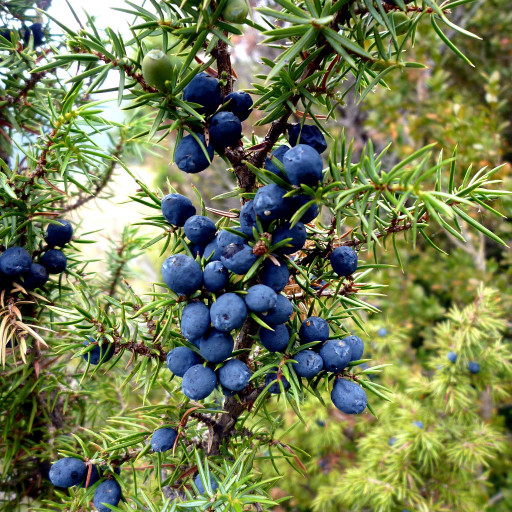
Plant Overview
Often called the "Ancient Protector" or the "Gin Bush," Juniperus communis holds the record for the largest geographical range of any woody plant on Earth. This rugged evergreen is as famous for flavoring spirits as it is for its ability to survive in harsh, rocky terrains where other plants simply give up. In ancient folklore, it was often burned to purify the air and was planted near doorways to ward off unwelcome spirits.
🔍 How to Identify
- 🌿 Needle Arrangement: The needles grow in distinct "whorls" of three. They are stiff, prickly, and feature a single prominent white or silvery stripe (stomata) on the upper surface, giving the plant a shimmering look.
- 🫐 The "Berries": Technically, these are fleshy cones, not berries. They start as small green spheres and take two to three years to ripen into a deep, waxy blue-black color.
- 🌲 Versatile Shape: This plant is a master of disguise; in windy coastal areas, it grows as a low-creeping carpet, while in sheltered spots, it can grow into a tall, narrow, columnar tree.
🏡 In Your Garden
- 🏜️ Drainage is King: This plant is an "extremophile" that thrives in poor, rocky, or sandy soils. Its biggest enemy is "wet feet"—soggy soil will lead to root rot almost instantly, so ensure your pot or garden bed drains rapidly.
- 🛡️ Tough as Nails: Once established, the Common Juniper is incredibly drought-tolerant and cold-hardy. It is a "set it and forget it" plant that actually prefers a bit of neglect over being pampered with too much fertilizer.
⚠️ Safety & Toxicity
- 🩹 Mechanical Irritation: The needles are very sharp and can cause itchy red welts or "juniper dermatitis" on bare skin. Always wear thick gloves and long sleeves when pruning or moving the plant.
- 🤰 Dietary Caution: While the berries are used as a spice, they should be avoided in large quantities by pregnant individuals or those with kidney ailments, as the concentrated oils can be overstimulating to the body.
- 🐾 Pet Safety: It is generally considered non-toxic to cats and dogs in small amounts, though the prickly texture usually keeps curious chewers at bay.
✨ Fun Fact
🍸 The Spirit of Gin: The word "Gin" is actually a shortened version of genièvre (French) or jenever (Dutch), both of which mean Juniper! Without the aromatic oils found in these tiny blue cones, the world’s most famous botanical spirit would just be plain vodka.

Detailed Care Instructions
| Color | Not Ornamentally Significant |
| Soil Ph | Not Particular |
| Humidity | Dry |
| Lighting | Part Sun |
| Toxicity | Poisonous |
| Soil Type | Well-Draining |
| Bloom Time | Winter |
| Difficulty | Medium |
| Plant Type | Evergreen Conifer |
| Mature Size | 2-50' Tall |
| Native Area | North America, Europe, Asia |
| Sun Exposure | Full Sun |
| Hardiness Zones | 2-7 |
To grow Juniperus Communis plants, you can follow these steps:
- Choose the right location: Juniperus Communis prefers full sun but can tolerate partial shade. Ensure that the location has well-draining soil to prevent waterlogging.
- Soil preparation: Juniperus Communis prefers slightly acidic to neutral soil. To ensure good drainage, mix organic matter like compost or peat moss into the soil before planting.
- Planting: Dig a hole slightly larger than the root ball of the Juniperus Communis plant. Place the plant into the hole and backfill with soil, gently firming it around the roots.
- Watering: Water the newly planted Juniperus Communis thoroughly. Ensure that the soil is moist but not waterlogged. Afterward, water the plant regularly but allow the soil to dry out between waterings.
- Mulching: Apply a layer of organic mulch around the base of the plant to help retain soil moisture, suppress weed growth, and regulate soil temperature.
- Pruning: Regular pruning is not necessary for Juniperus Communis plants. However, you can trim any dead or diseased branches as needed.
- Fertilization: Juniperus Communis typically does not require heavy fertilization. If necessary, apply a slow-release fertilizer in early spring according to the package instructions.
- Pests and diseases: Juniperus Communis is generally resistant to pests and diseases. However, monitor the plant for any signs of aphids, spider mites, or fungal diseases and take appropriate measures if needed.
- Winter care: Juniperus Communis is hardy and can withstand cold temperatures. However, younger plants may benefit from a layer of mulch around the base to protect against freezing.
- Propagation: If you wish to propagate Juniperus Communis, you can collect seeds from mature cones during fall and sow them in a seedbed. Keep the soil moist until the seeds germinate.
Remember to check with local gardening resources or nurseries for specific tips or considerations based on your region's climate and conditions when growing Juniperus Communis.

Place in a window with dappled sun or a spot in the middle of a room. Or directly in a window facing west or east.

To properly water this plant, it is important to check the soil moisture before watering. Insert your finger into the soil up to the second knuckle and feel for moisture. If the soil feels dry, it is time to water. Water at the base of the plant and avoid getting water on the foliage. Ensure proper drainage by allowing excess water to drain out of the pot or container. The frequency of watering may vary depending on factors such as temperature, humidity, and size of the plant. It is important to not overwater the plant as this can lead to root rot and other issues.
For best results, apply a balanced fertilizer in early spring. Use a slow-release fertilizer to ensure a steady supply of nutrients through the growing season. Follow the manufacturer's instructions for the amount and frequency of application. Avoid fertilizing during drought or in excessively dry conditions. Water the plant thoroughly after fertilizing.
The best type of soil for the Juniperus Communis plant is well-draining and slightly acidic with a pH between 5.5 and 7.5. A mixture of sand and loam or sandy loam is recommended, with added organic matter such as peat moss or compost to improve soil structure and water retention. It is also important to ensure that the soil is not too heavy or compacted, as this can lead to poor root development and ultimately damage the plant. Regular watering and fertilization can also help to ensure that the Juniperus Communis plant thrives in its chosen soil environment.
Juniperus communis propagates through a process called rooting. To begin, take a cutting from the plant that is approximately six inches long, and remove any leaves or needles from the bottom two inches of the stem. Then, dip the cut end into rooting hormone powder, and plant it in a container filled with a mixture of sand and peat moss. Keep the soil consistently moist, and place the container in a bright, indirect light. After a few weeks, you should begin to see new growth from the cutting, indicating that it has successfully rooted. At this time, you can transplant the new plant into a larger container or into your garden.








