Plant Overview
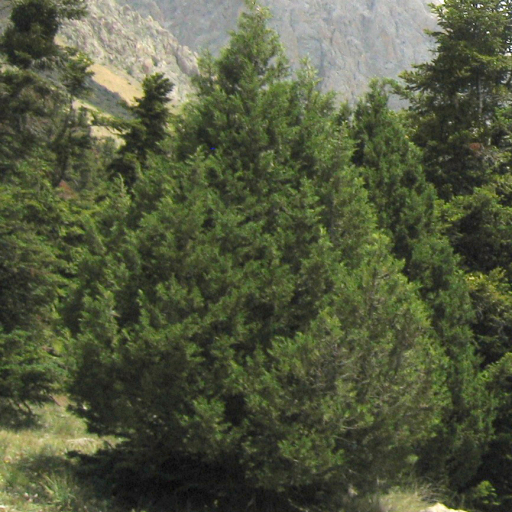
Known to many as the "Stinking Juniper," this resilient evergreen is an ancient survivor of the Mediterranean and West Asian mountains. While its name might sound uninviting, the pungent aroma is only released when the foliage is crushed—a clever chemical defense against hungry herbivores. These trees are the grand elders of the high altitudes, often living for over a thousand years in some of the harshest, rockiest terrains on Earth.
🔍 How to Identify
- 🌲 Growth Habit: It typically grows as a medium-sized tree with a dense, conical crown that becomes rugged, irregular, and broad as it reaches old age.
- 🌿 The Foliage: The leaves are mostly scale-like and arranged in opposite pairs. They are notably thicker and more "chunky" than those of the common juniper, giving the branchlets a sturdy, cord-like appearance.
- 🫐 Seed Cones: It produces globose, berry-like cones that are roughly 10mm in diameter. They transition from a dusty green to a deep, waxy blue-black when they mature over two years.
🏡 In Your Garden
- 🪨 Soil Nuances: This juniper is a dedicated "calciphile," meaning it craves calcium-rich, limestone soils. If your garden soil is too acidic, it may struggle to thrive or lose its vibrant green-gray hue.
- ⏳ Patience Required: Because it is adapted to high-altitude stress, it grows exceptionally slowly. It is best used as a structural specimen plant or a rock garden focal point rather than a quick-growing hedge. It hates "wet feet" and requires perfect drainage to avoid root rot.
⚠️ Safety & Toxicity
- 🚫 Status: Non-edible and potentially irritating.
- 🐾 Details: Like many members of the Juniperus genus, the berries and needles contain essential oils (including thujone) that can cause digestive upset if swallowed by pets or children. Handling the foliage without gloves may cause mild skin irritation or "juniper rash" in sensitive individuals.
✨ Fun Fact
In the high mountains of Greece and Turkey, some individual Juniperus foetidissima trees have been core-sampled and dated to be over 1,000 years old, making them silent witnesses to the rise and fall of ancient empires.

Detailed Care Instructions

Place in a bright room that is sun drenched almost all day. Or directly in a south-facing window.

The plant should be watered deeply but infrequently, allowing the soil to dry out between waterings. When watering, make sure to soak the entire root system and avoid getting water on the foliage. In general, it is better to underwater than overwater this type of plant. It is important to note that the watering needs may vary depending on the location and climate in which the plant is growing.
The ideal soil to use for the plant in question is a well-draining soil mix that consists of a combination of loam and sand. It should have a pH level of around 6.5 to 7.5, indicating slightly acidic to slightly alkaline conditions.
It is important to avoid soil that is too heavy and compacted, as this can lead to poor drainage and root rot. Additionally, the soil should be rich in nutrients, which can be achieved through the addition of organic matter such as compost.
The plant is native to rocky and mountainous habitats, so a soil mix that mimics these conditions can be beneficial. This can be achieved by including gravel or small rocks in the soil mix, which can help with drainage and provide the plant with the well-draining conditions it craves.
Overall, choosing the right soil for the plant is crucial to ensuring its health and longevity. By providing it with the proper soil mix, you can help the plant thrive and achieve its full growth potential.








