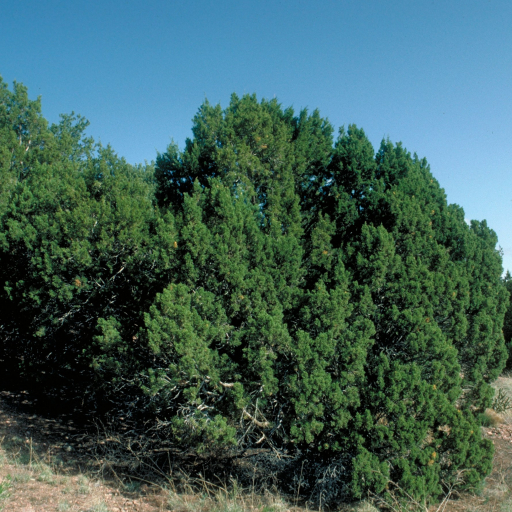
Plant Overview
Often called the "One-seed Juniper" or "Cherrystone Juniper," this rugged evergreen is a quintessential symbol of the American Southwest. It is famously hardy, often found clinging to rocky mesas and high-desert slopes where other trees would wither. Its aromatic wood and resinous scent define the "smell of the desert" after a summer monsoon rain.
🔍 How to Identify
- 🌿 Scale-like Leaves: Unlike pines with long needles, this juniper has tiny, overlapping scales that feel rough to the touch and range from dull green to gray-green.
- 🪵 Shreddy Bark: The trunk is usually multi-stemmed and covered in fibrous, gray-brown bark that peels away in long, thin vertical strips.
- 🫐 The Single Seed: Its most defining feature is its small, fleshy cone (which looks like a berry). Unlike most junipers, each copper-to-blue-black berry typically contains only one solitary seed.
🏡 In Your Garden
- 🏜️ Xeriscaping Star: This plant is the gold standard for water-wise gardening. Once established, it requires almost no supplemental water, making it perfect for high-desert or Mediterranean-style landscapes.
- 🧱 Taproot Strength: It develops a massive, deep taproot early in life to find water. Because of this, it is notoriously difficult to transplant; it is best to choose a permanent "forever home" for it right from the start.
- 🌬️ Natural Windbreak: Due to its dense, bushy growth habit and tolerance for wind, it is an excellent choice for creating privacy screens or protecting more delicate plants from harsh gusts.
⚠️ Safety & Toxicity
- 🤧 Allergy Alert: This tree is a heavy pollen producer. During late winter and early spring, it can trigger significant "cedar fever" or hay fever symptoms for sensitive individuals.
- 🐾 Mild Irritant: While not considered deadly, the berries can cause mild digestive upset in curious pets or children if eaten in large quantities. The prickly foliage can also cause minor skin irritation or scratches during pruning.
✨ Fun Fact
The One-seed Juniper is a true ancient; some specimens in the wild are estimated to be over 1,000 years old. Because they grow so slowly in harsh conditions, a tree only five feet tall might already be a century old!

Detailed Care Instructions
To grow Juniperus Monosperma, also known as one-seed juniper, follow these steps:
- Choose an appropriate location: Juniperus Monosperma prefers full sun but can tolerate some shade. The soil should be well-draining and slightly acidic. The plant can also tolerate poor soil conditions, such as sandy or rocky soil.
- Acquire Juniperus Monosperma: Obtain a sapling or seeds from a local nursery or online. Make sure the sapling is healthy, and if using seeds, follow the instructions for germination.
- Prepare the soil: Clear the area of any competing vegetation, rocks, or debris. Loosen the soil to a depth of about 12 inches using a garden fork or hoe. Add organic matter, such as compost or aged manure, to improve soil fertility and drainage.
- Planting: Dig a hole slightly larger than the root ball or seedling. Place the plant in the hole, ensuring that the base of the stem is level with or slightly above the surrounding soil. Backfill the hole with soil, gently firming it around the roots to remove air pockets.
- Watering: Water the plant thoroughly after planting to help settle the soil and ensure good root-to-soil contact. For the first few weeks, water deeply about once or twice a week, depending on rainfall. After establishment, Juniperus Monosperma is drought-tolerant and requires minimal watering.
- Mulching: Apply a layer of organic mulch, such as wood chips or bark, around the base of the plant. This helps retain moisture, suppress weeds, and insulate the roots from extreme temperatures.
- Pruning and maintenance: Juniperus Monosperma generally requires minimal pruning. However, you can lightly trim or shape it in early spring if desired. Regularly check for any dead, diseased, or damaged branches and promptly remove them.
- Pest and disease control: This juniper species is relatively resistant to pests and diseases. However, common issues may include spider mites, scale insects, or root rot. Monitor the plant regularly for any signs of infestation or disease, and take appropriate measures, such as insecticidal soap or fungicide, as needed.
- Fertilization: Juniperus Monosperma does not typically require regular fertilization. However, if the soil is severely deficient in nutrients, you may apply a slow-release, balanced fertilizer in early spring.
- Enjoying your juniper: With proper care, Juniperus Monosperma will grow into an attractive, low-maintenance evergreen shrub. Enjoy its unique blue-green foliage, distinctive berry-like cones, and its ability to withstand harsh conditions.
Please note that specific care requirements may vary depending on your location and climate, so it's always advisable to consult local gardening resources or experts for tailored guidance.

Place in a bright room that is sun drenched almost all day. Or directly in a south-facing window.

To water this plant, pour water gently and slowly at the base of the plant, allowing the soil to absorb the water and ensuring that the roots are getting sufficient moisture. Avoid watering the foliage as this can lead to fungal diseases and other issues. How often you water will depend on a variety of factors including the type of soil, the temperature, humidity, and light conditions. Monitor the soil regularly to ensure it is neither too dry nor too wet. Watering too much can lead to root rot, while underwatering can cause the plant to wilt and dry out. Adjust the frequency and amount of water as needed based on the plant's response and environmental conditions.
For best results, fertilize this plant in the spring and again in the fall. Use a slow-release fertilizer with a balanced NPK ratio of 10-10-10 or 16-16-16. Be sure to apply the fertilizer according to the package instructions and water thoroughly after application. Avoid fertilizing during periods of drought or extreme heat as this can cause damage to the plant.
The recommended soil for Juniperus Monosperma is a light, well-draining soil with a pH level between 6.0 and 7.5. It is important to avoid heavy or compacted soils that can hold onto excess moisture and prevent proper drainage. Sandy loam soils are ideal for this plant as they provide good aeration and drainage. Additionally, it is recommended to mix organic matter into the soil, such as compost or aged manure, to improve soil fertility and water-holding capacity. It is important to monitor soil moisture levels and avoid over-watering to prevent root rot and other moisture-related issues.
To propagate this plant, you will need to collect mature seeds from the parent plant in the fall or winter, when they are ripe. The seeds can be germinated indoors in a well-draining potting mix, by placing them on the surface of the soil and lightly covering with a thin layer of soil. Keep the soil consistently moist, but not soggy, and provide bright light and moderate temperatures.
Another method of propagation is through softwood cuttings taken in the spring or early summer. Take 4-6 inch cuttings from the parent plant, making sure they have a few sets of leaves and are not too woody. Remove the lower sets of leaves and dip the cut end in rooting hormone powder. Plant the cutting in a well-draining potting mix and keep it moist, but not waterlogged. Place in bright, indirect light and provide moderate temperatures.
Both methods will take several weeks to several months for the plant to establish and grow new roots. It is important to keep the soil moist, but not too wet, and to avoid exposing the plant to extreme temperatures or direct sun while it is still establishing.








