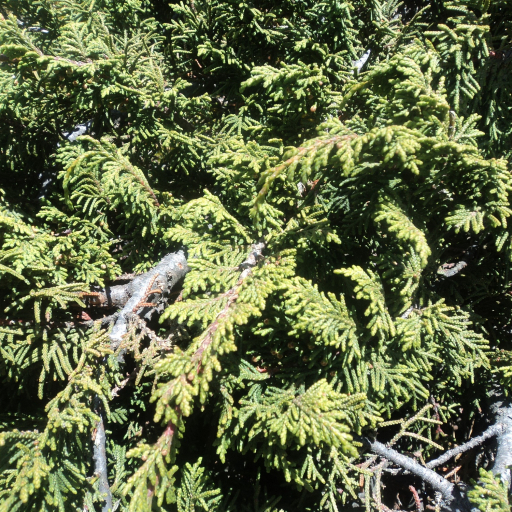
Plant Overview
Known as the Mexican Mountain Juniper or Mountain Cedar, this resilient evergreen is a master of survival. Found clinging to the volcanic peaks of Mexico at staggering altitudes, it often takes on a twisted, windswept appearance known as "krummholz." In Mexican folklore, high-altitude junipers are often seen as silent guardians of the sacred mountain passes.
🔍 How to Identify
- 🌿 Scale-Like Leaves: The mature foliage consists of tiny, overlapping scales that pressed tightly against the twigs, giving the branches a cord-like appearance.
- 🫐 Berry-like Cones: Female plants produce small, fleshy seed cones that look like berries. They are dark blue to black and often covered in a waxy, whitish "bloom."
- 🪵 Growth Habit: Depending on the wind, it can grow as a low, creeping shrub that carpets the ground or as a gnarled, multi-stemmed small tree.
🏡 In Your Garden
- ⛰️ Alpine Specialist: This plant is perfect for rock gardens or high-elevation landscapes. It craves "lean" soil—meaning it prefers rocky, nutrient-poor earth over rich, heavy potting mixes.
- ☀️ Sun Seeker: It requires full, unobstructed sunlight to maintain its dense foliage. If planted in the shade, it will become "leggy" and lose its signature compact, rugged charm.
⚠️ Safety & Toxicity
- 🐾 Mildly Toxic: Like many members of the Juniper family, the foliage and berries contain essential oils (such as thujone) that can cause stomach upset if eaten in large quantities.
- 🧤 Skin Irritation: Some gardeners may experience a mild itchy rash or "contact dermatitis" when pruning the needles without gloves. Keep it away from areas where pets might be tempted to chew on the low-growing branches.
✨ Fun Fact
- ⏳ Ancient Survivors: On the slopes of Mount Tlaloc, researchers have found specimens of Juniperus monticola that are hundreds of years old, having survived centuries of volcanic ash, freezing winters, and intense mountain sun.

Detailed Care Instructions
Juniperus Monticola, also known as the Monta Mountain Juniper, is a slow-growing evergreen shrub that is native to the Himalayas. Here are some tips on how to grow and care for this plant:
- Location: Plant your Juniperus Monticola in a spot that receives full sun to partial shade. Make sure the soil is well-drained to prevent waterlogging, as these plants do not like soggy conditions.
- Soil: Monta Mountain Juniper prefers slightly acidic to neutral soil with good drainage. You can amend heavy clay soil with sand or organic matter to improve drainage.
- Water: Water your Juniperus Monticola regularly, especially during the first growing season to help establish a strong root system. Once established, these plants are drought-tolerant and only need occasional watering during dry periods.
- Fertilizer: Monta Mountain Juniper does not require regular fertilization. You can apply a balanced fertilizer in the spring if needed, but be sure not to over-fertilize as this can harm the plant.
- Pruning: Juniperus Monticola can be pruned to maintain its shape and size. Prune in late winter or early spring before new growth begins. Remove dead or diseased branches and shape the plant as desired.
- Pests and Diseases: Monta Mountain Juniper is generally pest and disease resistant, but it can be susceptible to spider mites in hot, dry conditions. Keep an eye out for any signs of pests or disease and treat them promptly.
- Propagation: Propagate Juniperus Monticola through seeds or cuttings. Collect seeds from mature cones and sow them in a well-draining potting mix. Cuttings can be taken from semi-hardwood in late summer or early fall.
By following these tips, you can successfully grow and care for Juniperus Monticola in your garden or landscape. Enjoy the beauty of this unique and hardy evergreen shrub!

Place in a bright room that is sun drenched almost all day. Or directly in a south-facing window.

When watering this particular plant, it is important to take into consideration its specific needs. Typically, it is best to water deeply and infrequently rather than shallowly and frequently. The soil should be allowed to dry out slightly between watering sessions, but not to the point of becoming bone dry. It is important to avoid getting water on the foliage, as this can lead to fungal diseases. Watering should occur at the base of the plant, and it is best to avoid watering during the hottest part of the day. Additionally, it is important to ensure that the soil has good drainage, as this plant does not tolerate standing water. Overall, a consistent and careful approach to watering is key to maintaining a healthy Juniperus Monticola plant.
To fertilize Juniperus Monticola, use a balanced slow-release fertilizer in early spring. Apply the fertilizer around the base of the plant, following the recommended dosage on the packaging. Water the plant thoroughly after fertilizing to help the nutrients penetrate the soil. Avoid over-fertilizing, as this can harm the plant. Repeat this process once a year for optimal growth and health.
For Juniperus Monticola plants, it is recommended to use a well-draining soil mix that is rich in organic matter. The pH level of the soil should be slightly acidic to neutral, ideally between 5.5 and 7.0. The soil should be able to hold moisture, but not be waterlogged, as the plant does not tolerate standing water. Adding sand or perlite to the soil mixture can improve drainage. It is important to avoid using heavy clay soils or soils that are overly compacted. When planting, make sure the root ball is slightly above the soil surface to prevent rotting.
Juniperus Monticola plants can be propagated through various methods such as seed propagation, cuttings, and layering. Here is a step-by-step guide on how to propagate Juniperus Monticola plants:
- Seed propagation: Collect ripe seeds from the plant and sow them in a well-draining soil mix. Keep the soil consistently moist until the seeds germinate. Transplant the seedlings into individual pots once they have developed several sets of true leaves.
- Cuttings: Take semi-ripe cuttings from healthy, mature stems of the plant. Remove any lower leaves and dip the cut end into a rooting hormone to promote root development. Plant the cuttings in a well-draining soil mix and keep them in a humid environment until roots develop.
- Layering: Select a healthy, low-growing branch of the plant and gently wound a section of the stem. Secure the wounded section to the ground with a U-shaped wire or peg, making sure the wounded area is in contact with the soil. After a few months, roots will develop from the wounded area, and the new plant can be separated from the parent plant.
It is important to provide the propagated Juniperus Monticola plants with proper care, including adequate sunlight, water, and nutrients, to ensure successful growth and establishment.








