Plant Overview
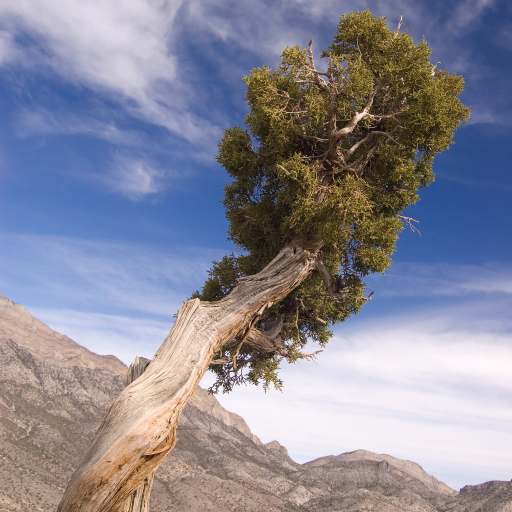
Known as the rugged "Sentinel of the Great Basin," the Utah Juniper (Juniperus osteosperma) is the quintessential tree of the American West. It is famous for its gnarled, twisted trunks and its ability to survive in some of the harshest, most arid environments on Earth. Often found clinging to rocky canyon rims, this tree carries a sense of ancient wisdom, with some individual specimens living for well over a millennium.
🔍 How to Identify
- 🌿 The Foliage: Unlike many pines, its leaves are tiny, yellow-green scales that overlap tightly like shingles on a roof, giving the branches a rounded, rope-like appearance.
- 🫐 The "Berries": It produces small, pea-sized cones that look like dusty blue-gray berries. These are distinctively dry and mealy inside, containing one or two very hard, "bony" seeds.
- Bark The Bark: The bark is ash-gray and fibrous, peeling away in long, shaggy longitudinal strips—a feature that many desert birds use for nesting material.
🏡 In Your Garden
- 🏜️ Hardiness & Soil: This plant is the ultimate "xeriscape" candidate. It thrives in poor, rocky, or alkaline soils where other plants would wither. The most important rule for the Utah Juniper is perfect drainage; it will quickly succumb to root rot if left in "wet feet."
- ⏳ Growth Habit: Be patient! This tree grows at a glacial pace. Because it invests so much energy into a deep, wide-reaching root system to find water, you won't see much vertical height for the first few years. It is best used as a permanent, structural focal point rather than a quick privacy screen.
- 🐦 Wildlife Magnet: If you want to attract cedar waxwings or jays, this is the tree for you. The berry-like cones provide a vital winter food source for desert birds and small mammals.
⚠️ Safety & Toxicity
- 🟢 General Safety: The Utah Juniper is considered non-toxic to humans and most pets. In fact, many indigenous cultures have used the berries and needles for medicinal teas for centuries.
- 🐕 Pet Note: While not poisonous, the high concentration of volatile oils and tannins in the foliage can cause mild stomach upset if a dog or cat decides to chew on the branches in large quantities.
- 🌵 Physical Caution: The wood is incredibly dense and the dead branches become "iron-like." Be careful when pruning, as the dry, brittle twigs can be quite sharp and cause skin scratches.
✨ Fun Fact
The species name osteosperma literally translates to "bony seed" in Greek. This refers to the incredibly hard, stone-like seeds inside the cones, which are so tough they often need to pass through the digestive tract of a bird or coyote to be "scarified" before they can germinate!

Detailed Care Instructions
Growing Juniperus osteosperma, also known as Utah juniper, requires the right conditions and care. Here are a few steps to help you grow this plant:
- Planting: Choose a suitable location with well-draining soil. Dig a hole that is slightly wider than the root ball of the plant. Place the plant in the hole, making sure it is at the same depth as it was in the container or nursery. Backfill the hole and gently tamp down the soil.
- Watering: Water the newly planted juniper deeply after planting to help settle the soil around the roots. Keep the soil consistently moist but not overly saturated. Water deeply once every 7-10 days during the growing season and adjust based on weather conditions.
- Sunlight: Juniperus osteosperma prefers full sun exposure. Ensure that the plant receives at least 6-8 hours of direct sunlight each day.
- Pruning: You may need to prune the plant to control its size and shape. Prune in late winter or early spring before new growth emerges. Remove dead, damaged, or diseased branches. Shape the plant carefully by cutting back branches to promote bushiness and maintain the desired size.
- Fertilization: This plant doesn't usually require regular fertilization, as it is adapted to thrive in nutrient-poor soils. However, you can apply a slow-release granular fertilizer in the spring if desired. Follow the package instructions for dosage.
- Mulching: Apply a layer of organic mulch, such as wood chips or bark, around the base of the plant to help conserve moisture, suppress weed growth, and insulate the roots. Keep the mulch a few inches away from the trunk to prevent rot.
- Winter care: Juniperus osteosperma is hardy and can tolerate cold temperatures. However, if you live in an area with harsh winters, consider protecting the plant with a layer of burlap or a windbreak to shield it from strong winds.
- Monitoring: Regularly check for pests and diseases, such as spider mites, scale insects, and root rot. If any issues are found, treat accordingly with the appropriate pest control products or seek advice from a local nursery or gardening professional.
By providing the right conditions, regular maintenance, and care, you can enjoy the beauty of Juniperus osteosperma in your garden or landscape.

Place in a bright room that is sun drenched almost all day. Or directly in a south-facing window.

To water this plant, it is important to consider its natural habitat and watering needs. This plant is a member of the Juniper family and is drought-tolerant, meaning it requires minimal watering.
The plant should be planted in well-draining soil and placed in a spot that receives plenty of sunlight. When watering, it is important to avoid overwatering, as this can lead to root rot.
To water, make sure the soil is dry to the touch. Then, use a watering can or hose to water the base of the plant until the soil is moist but not saturated. It's important to let the soil dry out slightly between waterings.
It is also important to note that during the winter months, when the plant is dormant, it requires even less water and can often go for weeks without needing to be watered.
Regularly monitoring the soil moisture levels and adjusting watering accordingly will help ensure the health and long life of this plant.
To fertilize this type of plant, apply a slow-release nitrogen-based fertilizer in early spring. Use caution not to apply too close to the trunk as this can damage the plant. Water thoroughly after application and repeat every six months if needed. Monitor soil moisture and adjust watering as necessary to avoid over-fertilization.
The best soil to use with this plant is one that has good drainage and is well aerated. It should have a pH level of around 6.0 to 7.5, and be able to retain moisture without becoming waterlogged. Sandy loam or rocky soil is preferable, as it will allow for good drainage and aeration. Adding organic matter, such as compost or peat moss, to the soil will help to improve its fertility and moisture-holding capacity. It is important to avoid using heavy soils, such as clay, as they are prone to becoming waterlogged and can lead to root rot. Overall, the soil used with this plant should be well-draining, nutrient-rich, and able to retain moisture without becoming waterlogged.
There are several ways to propagate this particular plant species. One method is through stem cuttings. Take a healthy stem cutting and remove the leaves from the lower portion of the stem. Dip the cut end in a rooting hormone and plant it in a well-draining potting mix. Keep the soil moist and place the cutting in a location with indirect sunlight. After a few weeks, roots should begin to form and the plant can be transplanted into a larger container or planted outside.
Another way to propagate this species is through layering. Take a low-hanging branch and create a small wound on the underside of the branch. Dust the wound with rooting hormone and then bury the wounded portion of the branch in a shallow trench. Anchor the branch in place with a small rock or stake. After a few months, the buried portion of the branch will have developed roots and can be cut from the parent plant and transplanted.
The final way to propagate this species is through seeds. Collect mature seeds from the plant and plant them in a well-draining potting mix. Keep the soil moist and in a location with indirect sunlight. After a few weeks, seedlings should begin to emerge and can be transplanted into larger containers or planted outside. However, it's important to note that growing from seed can be a slower process than propagating through cuttings or layering.








