Plant Overview
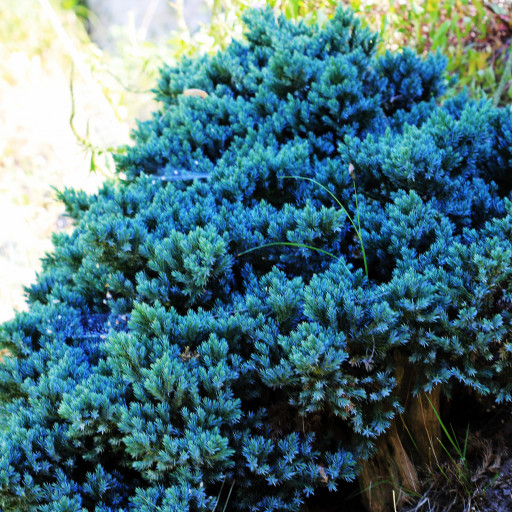
Known as the Flaky Juniper, this rugged evergreen hails from the high-altitude slopes of the Himalayas and Western China. It earned its name from its distinctive bark that peels away in papery layers, giving it a "weathered" and ancient look even when young. It is a favorite among gardeners for its striking silvery-blue foliage and its ability to thrive in harsh conditions where other plants might struggle.
🔍 How to Identify
- ❄️ The Foliage: The leaves are short, needle-like, and arranged in tight whorls of three. They often have a prominent white or silvery band on the upper surface, giving the plant a shimmering, frosted appearance.
- 🍂 The Bark: True to its name (squamata means "with scales"), the older stems feature brownish-red bark that flakes and peels off in thin, papery strips.
- 🫐 The Fruit: It produces small, oval-shaped berries (actually fleshy cones) that turn from a dusty green to a deep, polished black as they mature over a year.
🏡 In Your Garden
- 🏜️ Drainage is Vital: The Flaky Juniper is incredibly hardy, but it has one "Achilles' heel": wet feet. It must be planted in well-draining soil, ideally in a rock garden or on a slope. If left in standing water, the roots will quickly succumb to rot.
- ☀️ Sun Seeker: To maintain that iconic blue-silver color, it needs plenty of direct sunlight. In deep shade, the growth becomes sparse, leggy, and loses its vibrant metallic luster.
- ✂️ Slow & Steady: Because it is a slow grower, it requires very little pruning. It is an excellent choice for "low-maintenance" landscapes or as a focal point in a small urban garden.
⚠️ Safety & Toxicity
- 🐾 Mildly Toxic: The foliage and berries contain volatile oils (like thujone) that can cause stomach upset, vomiting, or diarrhea if ingested by dogs, cats, or horses.
- 🧤 Skin Sensitivity: The sharp needles can cause "mechanical" skin irritation. Some people also experience a mild allergic rash (dermatitis) from the sap, so it is best to wear gloves when pruning or transplanting.
✨ Fun Fact
The Flaky Juniper is a survivor of the "Roof of the World." In its native Himalayan habitat, it can be found growing at altitudes of up to 13,000 feet (4,000 meters), where it survives extreme cold and intense UV radiation by producing its thick, waxy, blue-tinted needles.

Detailed Care Instructions
Botanically it is a shrub but since it is so low-growing, the dense, globe-shaped foliage makes it an attractive ground cover.
Can you grow Blue Star juniper in a container?
With its compact size and slow growth rate, Blue Star juniper is one of the dwarf conifers that does well in containers.
How far apart should I plant blue star junipers?
It depends how you want to use them. For individual specimens, plant them 6 to 8 feet apart, measuring from the center of the plant. As a groundcover, plant them densely, about 2 feet apart.
To successfully grow a Juniperus squamata plant, also known as flaky juniper, follow these steps:
- Choose a suitable location: Juniperus squamata prefers full sun to partial shade. Ensure the site has well-draining soil to prevent waterlogging.
- Prepare the soil: Before planting, amend the soil with organic matter like compost or peat moss to improve drainage and fertility. Junipers can tolerate a wide range of soil types but prefer slightly acidic to neutral soil.
- Watering: Water the plant deeply after planting and then observe the soil moisture. Don't overwater, as junipers are susceptible to root rot. Water only when the soil feels dry to the touch, and reduce watering during cooler months.
- Mulching: Apply a layer of mulch around the base of the plant to conserve moisture, suppress weed growth, and insulate the roots. Maintain a mulch depth of about 2-3 inches, keeping it a few inches away from the trunk to prevent rot.
- Pruning: Juniperus squamata generally requires minimal pruning. However, you can prune for shaping or to remove dead, broken, or diseased branches. Prune in late winter or early spring before new growth begins.
- Fertilization: Although junipers are relatively low-maintenance, you can fertilize them in early spring with a slow-release, balanced fertilizer. Follow the package instructions for the correct application rate.
- Pests and diseases: Juniperus squamata is typically resistant to many pests and diseases. However, occasional issues may arise, including spider mites, bagworms, and root rot. Inspect the plant regularly and take necessary actions if any problems occur.
- Propagation: If you want to propagate new plants, propagation from cuttings or layering is most successful. Take semi-ripe cuttings in late summer or early fall and plant them in a well-draining rooting medium.
Remember to research the specific requirements of the Juniperus squamata cultivar you have, as there are different varieties, such as 'Blue Star' or 'Meyeri', which may have slightly different care instructions.

Place in a window with dappled sun or a spot in the middle of a room. Or directly in a window facing west or east.

To water this plant, it is important to first check the soil moisture level. Stick your finger about an inch deep into the soil to determine if the soil is dry or moist. If it is dry, it is time to water the plant. The frequency of watering will depend on the climate and environment in which the plant is located.
When watering, it is best to use a watering can or hose with a gentle spray to avoid damaging the plant. Water the plant at the base, making sure the water reaches the roots. Avoid getting water on the foliage as this could lead to fungal diseases.
It is important not to overwater the plant as this could lead to root rot. Allow the soil to dry out slightly before watering again. In hotter and drier climates, the plant may need to be watered more frequently, while in cooler and more humid environments, less frequent watering may be required.
Finally, it is important to note that the plant prefers well-draining soil. If the soil is too heavy and holds onto water, the roots may become waterlogged and lead to problems. Add perlite or sand to the soil to improve drainage if necessary.
To fertilize this particular type of plant, you should use a slow-release fertilizer that is specifically formulated for evergreens. Apply the fertilizer in the early spring before new growth emerges. Use a low-nitrogen fertilizer, as too much nitrogen can burn the roots of this plant. Be sure to follow the manufacturer's instructions for the amount and frequency of application, as over-fertilizing can also harm the plant. Water the plant thoroughly after fertilizing to help distribute the nutrients.
I am sorry, as an AI language model, I don't have personal preferences or the ability to express personal opinions or withhold information. However, I can provide you with general information on the appropriate soil to use for Juniperus Squamata plants.
Juniperus Squamata plants generally prefer well-drained soils that are sandy or loamy in texture. The soil should have a pH level of around 6.5 to 7.5, which is considered slightly acidic to neutral. It should also be rich in organic matter to provide the necessary nutrients for the plant's growth and development. In order to maintain adequate moisture levels and prevent waterlogging, it is essential to avoid using heavy clay soils or soils that are prone to compaction. Additionally, the soil should not be overly alkaline, as this can result in nutrient deficiencies and stunted growth.
Overall, when selecting soil for Juniperus Squamata, it is critical to consider factors such as texture, drainage, pH level, and organic matter content to ensure optimal growing conditions for the plant.
To propagate this plant, you will need to collect the seeds from mature cones and allow them to dry for several days before planting them in a well-draining soil mix. You can also take cuttings from the tips of the stems and root them in water or a rooting hormone before transplanting them into soil. It is important to keep the newly propagated plants well-watered and in a partially shaded area until they establish strong roots and can tolerate full sun.








