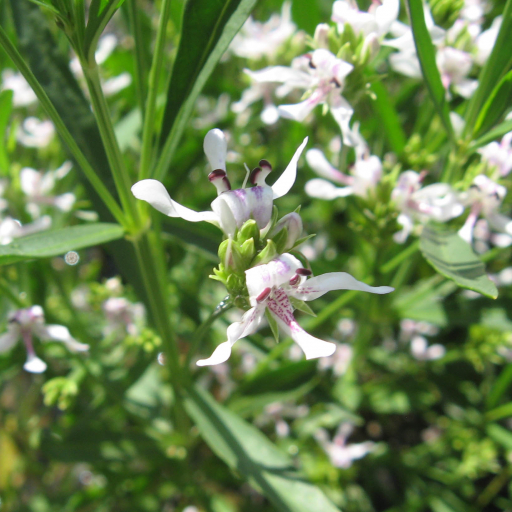
Plant Overview
Known as the "American Water-willow," Justicia americana is a resilient shoreline guardian that lives with its toes permanently in the water. Despite its name, it isn't a willow tree at all, but a hardy wildflower that forms lush, emerald colonies along the edges of rivers and lakes. To the casual boater, it looks like a simple weed, but a closer look reveals tiny, intricate flowers that rival the beauty of exotic orchids.
🔍 How to Identify
- 🍃 Willow-esque Foliage: The plant features long, narrow, sword-shaped leaves that grow in opposite pairs, strikingly similar to the leaves of a willow tree.
- 🌸 Orchid-like Blooms: The flowers are small and white with distinct purple or violet streaks on the lower petals, designed like a landing strip for thirsty pollinators.
- 💧 Aquatic Stems: It typically stands about 1 to 3 feet tall, with smooth green stems emerging directly from shallow water or saturated mud.
🏡 In Your Garden
- 🌊 Erosion Warrior: This plant is a powerhouse for stabilizing shorelines. It spreads via creeping rhizomes to form dense "mats" that anchor the soil and prevent riverbanks from washing away during heavy currents.
- 🐝 Wetland Magnet: If you have a pond or a boggy area, this plant is a must-have for biodiversity. It provides a vital nectar source for bees and butterflies while offering a safe hiding spot for small fish and amphibians.
⚠️ Safety & Toxicity
- ✅ Generally Safe: Justicia americana is not known to be toxic to humans, dogs, or cats. It is a gentle inhabitant of the ecosystem.
- 🦌 Deer Resistant: While muskrats might occasionally snack on the stems, deer generally find the foliage unappealing, making it a reliable choice for areas with high deer populations.
✨ Fun Fact
The American Water-willow is a true survivor; it is one of the few aquatic plants that can survive being completely submerged during a flash flood and will continue blooming as soon as the water levels drop!

Detailed Care Instructions
To grow Justicia Americana, also known as American Water Willow, follow these steps:
- Climate considerations: Justicia Americana thrives in wetland or riparian areas, so it is important to provide a similar environment for it. It prefers full sun or partial shade and is hardy in USDA zones 6 to 9.
- Soil requirements: The plant prefers well-drained soil that is rich in organic matter. It can tolerate a wide range of soil types but does best in moist or wet soil conditions.
- Plant selection: Obtain Justicia Americana plants or seeds from a reputable nursery or plant supplier. Native plant nurseries specializing in wetland plants may have them available.
- Planting: Choose a suitable spot for planting, ensuring it receives adequate sunlight or partial shade. Dig a hole slightly larger than the root ball and gently place the plant into the hole. Fill the hole with soil and press firmly around the base to eliminate air pockets.
- Watering: Since Justicia Americana prefers moist or wet conditions, water regularly to keep the soil consistently damp. Provide irrigation if the natural water levels are insufficient, especially during dry spells.
- Mulching: Apply a layer of mulch around the plant to help retain soil moisture and suppress weed growth. Mulching with organic matter, such as wood chips or compost, is ideal.
- Pruning: Prune Justicia Americana in late winter or early spring to remove any dead or damaged stems. This encourages new growth and maintains the plant's shape.
- Fertilizing: Justicia Americana does not require heavy fertilization. However, you can use a slow-release, balanced fertilizer in early spring to promote healthy growth.
- Maintenance: Regularly monitor the plant for pests and diseases. Inspect for signs of damage or abnormalities and take appropriate action if needed.
Remember that Justicia Americana is a native plant and plays an important role in supporting local ecosystems. Check for any local regulations or guidelines before cultivating it and ensuring it does not become invasive in your region.

Place in a bright room that is sun drenched almost all day. Or directly in a south-facing window.

The plant should be watered thoroughly and consistently, but not over-watered to avoid root rot. It is important to let the soil partially dry out between waterings, and ensure that the pot has proper drainage to prevent standing water. The frequency of watering may need to be adjusted depending on the season, humidity, and amount of sunlight the plant is receiving. It is also important to avoid getting water on the leaves as it can cause spotting or other damage.
For best results, fertilize the plant with a balanced fertilizer every two weeks during the active growth period. Use a liquid fertilizer and make sure to dilute it according to the package instructions. During the winter months, cut back on fertilization to once a month. Make sure to water the plant thoroughly before and after fertilization. Avoid over-fertilizing, as this can cause root damage.
The ideal soil for the Justicia Americana plant should be well-draining, loose, and rich in nutrients. It should have a slightly acidic to neutral pH level, ideally ranging from 6.0 to 7.5. A suitable soil mix for this plant may include a mix of sand, peat moss, and perlite to help with drainage while also retaining moisture and nutrients. The soil should be kept consistently moist, but not waterlogged, to prevent root rot. Adding organic matter or slow-release fertilizer to the soil can also help promote healthy growth and flowering.
To propagate this plant, take a stem cutting that is at least 6 inches long and has 2-4 nodes. Remove the lower leaves and dip the bottom of the stem in rooting hormone. Plant the cutting in a container filled with moist potting soil and cover with a plastic bag or dome. Place the container in a well-lit area, but avoid direct sunlight. Keep the soil moist and remove the cover once new growth appears. Transplant the new plant to a larger pot or garden bed once it becomes established.








