Plant Overview
The Justicia brandegeana, better known as the Mexican Shrimp Plant, is a tropical showstopper that looks like a seafood feast growing on a shrub. Native to Mexico, it has become a worldwide favorite for its peculiar, layered bracts that resemble the curved body of a shrimp. Whether it’s spilling over a hanging basket or brightening up a patio, this plant is a master of visual deception and year-round color.
🔍 How to Identify
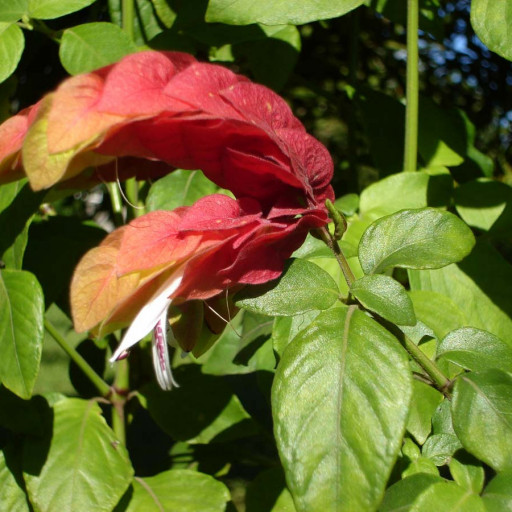
- 🦐 The "Shrimp" Bracts: The most striking feature is the overlapping, heart-shaped bracts (modified leaves) that transition from pale pink to a deep rusty red or bronze.
- 🤍 True Flowers: Peeking out from between the scales of the "shrimp" are small, white, tubular flowers with delicate purple markings—these are the actual blooms.
- 🍃 Soft Foliage: The leaves are oval-shaped, light green, and have a slightly velvety or fuzzy texture, growing on somewhat spindly, brittle stems.
🏡 In Your Garden
- ✂️ The Leggy Habit: This plant is a fast grower but can become "leggy" or thin very quickly. Regular pinching and pruning are essential to encourage a bushier, more compact shape and more "shrimp" production.
- ☀️ Light and Color: While it survives in partial shade, the bracts will only achieve their vibrant, deep orange-red color if the plant receives plenty of bright, filtered sunlight.
- 💧 Thirsty but Picky: It enjoys consistent moisture but hates "wet feet." In containers, ensure the soil is rich and well-draining to prevent the roots from rotting while keeping the humidity high.
⚠️ Safety & Toxicity
- ✅ Safe for All: The Mexican Shrimp Plant is generally considered non-toxic to humans, cats, and dogs.
- 🌿 Skin Sensitivity: While not poisonous, the sap or the fuzzy leaves may cause very mild skin irritation in particularly sensitive individuals or curious pets who try to nibble on the foliage.
✨ Fun Fact
The Mexican Shrimp Plant is an absolute magnet for hummingbirds! The long, tubular shape of the white flowers is perfectly designed to fit a hummingbird's beak, making it a "living bird feeder" in tropical landscapes.

Detailed Care Instructions
To successfully grow Justicia brandegeana, also known as the Shrimp Plant, follow these steps:
- Choose the right location: Place your plant in a location that receives bright, indirect sunlight. Avoid direct sunlight as it can scorch the leaves.
- Temperature: Shrimp plants prefer moderate temperatures between 65-75°F (18-24°C). They can tolerate slightly cooler temperatures but are not frost-tolerant.
- Watering: Keep the soil consistently moist but not waterlogged. Allow the top inch of soil to dry out between waterings. Use well-draining soil and avoid water accumulation at the bottom of the pot.
- Humidity: These plants prefer higher humidity levels. If the air in your home is dry, you can increase humidity around the plant by misting it regularly or placing a tray of water near the plant.
- Fertilizing: Feed your plant with a balanced, water-soluble fertilizer once a month during the growing season (spring and summer). Follow the instructions on the fertilizer packaging for proper dosage.
- Pruning: Regularly trim back the growing tips to encourage bushier growth and promote more flower production. Pruning can be done throughout the year but is best done after the plant finishes blooming.
- Propagation: Shrimp plants can be propagated by stem cuttings. Take a 4-6 inch cutting from a healthy stem, remove the lower leaves, dip the cut end in rooting hormone, and plant it in a well-draining potting mix. Keep the soil moist and place the cutting in a warm, bright location until roots develop.
- Pests and diseases: Keep an eye out for common houseplant pests like aphids, mealybugs, and spider mites. If you notice any infestation, treat it with insecticidal soap or neem oil.
Remember to regularly monitor your plant's moisture, light, and temperature requirements to ensure optimal growth. With proper care, your Justicia brandegeana plant should thrive and produce vibrant shrimp-like flowers.

Place in a window with dappled sun or a spot in the middle of a room. Or directly in a window facing west or east.

To properly water this plant, it is important to keep the soil consistently moist. This can be achieved by watering thoroughly and deeply, ensuring that the entire root system is reached. It is best to water when the top inch of soil feels dry to the touch. This plant prefers well-draining soil, so it is important to avoid overwatering and allowing the plant to sit in standing water. Additionally, it is important to avoid getting water on the foliage as this can promote fungal growth and damage the plant.
To fertilize this plant, apply a balanced fertilizer with equal parts nitrogen, phosphorus, and potassium every four to six weeks during the growing season. Mix the fertilizer according to the instructions on the packaging, then apply it evenly around the base of the plant. Water the plant thoroughly after fertilizing to help the nutrients reach the roots. Avoid over-fertilization, as this can lead to burned or damaged roots.
Without using its common names, the recommended soil for the plant of the genus Justicia is a well-draining, loamy soil that is rich in organic matter. The pH level of the soil should be slightly acidic to neutral, ranging from 5.5 to 7.0. A potting mix formulated for flowering shrubs or tropical plants is suitable for the plant's growth. The soil should be kept moist but not waterlogged, and the plant should be grown in a location with good air circulation and bright, indirect sunlight. It is also recommended to fertilize the plant monthly during the growing season with a balanced fertilizer.
There are a few ways to propagate this plant, but one common method is through stem cuttings. Choose a healthy stem and make a clean cut just below a node (where a leaf grows from the stem). Remove any leaves from the lower half of the stem. Dip the cut end into a rooting hormone powder and plant it in a well-draining potting mix. Keep the soil moist and place the cutting in a bright, but indirect light. After a few weeks, new roots should begin to grow and the plant will start to establish itself. Once the new plant has grown and become strong enough, it can be transplanted into its final container or location. Another option for propagating this plant is through division, where the plant is carefully separated into smaller sections and replanted.
Common pests of the shrimp plant include Spider mites, whiteflies. Make a habit of checking your shrimp plant frequently for pests so that any infestations can be caught and managed early.







