Plant Overview
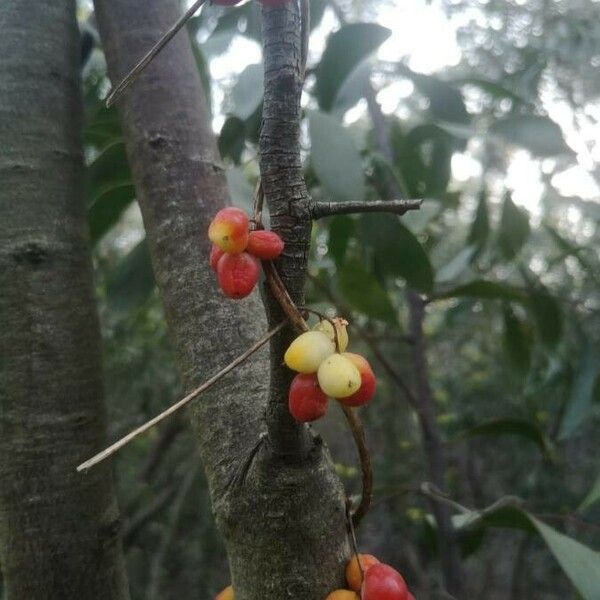
Known as the Scarlet Vine or Long-peduncled Kadsura, this plant is a hidden gem from the misty forests of East Asia. It is a woody climber that looks like it belongs in a fantasy novel, draping over slopes and tree trunks with glossy foliage and "exploding" red fruit clusters. While it is prized in traditional herbalism, most gardeners adore it for its architectural beauty and the way its berries hang like rubies on thin, delicate threads.
🔍 How to Identify
- 🍃 Glossy Foliage: The leaves are thick, leathery, and deep green, often with a subtle shine that helps them stand out in shaded environments.
- 🌸 Dangling Blooms: It produces solitary, cream-colored or pale yellow flowers that hang downward on exceptionally long, slender stalks (peduncles).
- 🍒 Ruby Clusters: The most striking feature is the fruit—a spherical "aggregate" of bright red berries that look like a loosely packed, oversized raspberry or a cluster of miniature pomegranate seeds.
🏡 In Your Garden
- 🧗 Support is Key: As a woody vine, this plant is not a ground-hugger. It requires a sturdy trellis, pergola, or a "host tree" to climb, using its twining stems to reach for the light.
- ⛅ Woodland Vibes: It thrives in conditions that mimic the forest floor. This means it prefers dappled sunlight or partial shade and acidic, well-drained soil that stays consistently moist but never soggy.
- ❄️ Hardiness Nuance: While tougher than many tropical vines, it prefers temperate to subtropical climates and may need protection from harsh, drying winter winds.
⚠️ Safety & Toxicity
- ✅ Generally Safe: The berries of the Kadsura genus are often considered edible and are used in various traditional tonics in China and Vietnam.
- 🐾 Pet Caution: While not listed as a high-risk toxin, the high tannin content in many wild vines can cause mild stomach upset or lethargy in cats and dogs if they decide to chew on the woody stems.
✨ Fun Fact
The name longipedunculata is a literal Latin description: longi (long) and pedunculata (stalked). It refers to the unusually long stems that hold the fruit, which allow the berries to swing in the breeze to attract birds for seed dispersal!

Detailed Care Instructions

Place in a window with dappled sun or a spot in the middle of a room. Or directly in a window facing west or east.

When the top few inches of soil dry out, water your plants. If the top few inches of soil are still moist, do not water your plant. Wait a few days, then poke your finger into the soil to see if anything has changed. Overwatering poses a disease risk, such as the development of fungal diseases in the roots. These plants have adaptations in there leaves that allow them to survive in low water supply.








